





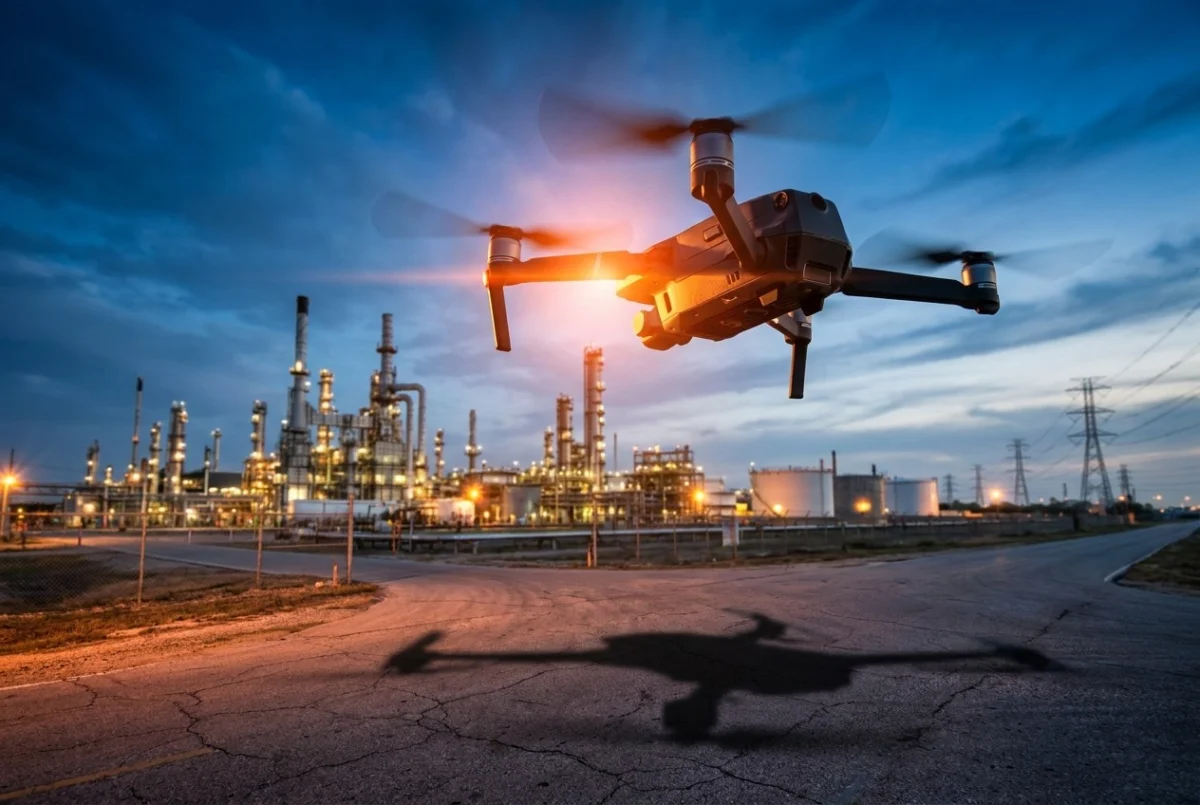
The era of American invulnerability, long bolstered by the protection of two vast oceans and a dominant conventional military, has reached a quiet, unsettling end. The proliferation of inexpensive, high-precision drone technology has fundamentally altered the global security landscape, turning the once-theoretical threat of domestic sabotage into a tangible, immediate danger. We are entering an era of distributed drone warfare, where the same tactical capabilities that crippled Saudi oil pipelines and disrupted Qatari energy exports can be replicated by lone actors or small, non-state cells within the heart of the United States.
This is not a matter of alarmist speculation; it is the logical byproduct of the rapid democratization of aerospace technology. With cheap guidance systems, open-source AI, and a sprawling, largely undefended homeland, the barriers to entry for lethal kinetic action have collapsed. As the national security establishment remains tethered to outdated paradigms of defense, the question is no longer whether drones will be used to target American critical infrastructure, but when.
The Fragility of the American "Glass House"
America’s critical infrastructure—its refineries, electrical substations, data centers, and pipelines—functions as a modern "glass house." These facilities are vast, stationary, and meticulously mapped. Their locations are cataloged in publicly accessible satellite imagery and government databases that have, in many instances, been compromised by foreign intelligence services and cyber-espionage operations.
The inherent vulnerability of these assets is not a secret; it is a matter of public record. A single, well-placed strike on a key node in a regional power grid or a vital fuel refinery can trigger a cascading failure. The recent shutdown of the Joliet refinery serves as a sobering case study: the facility’s temporary failure sparked a regional diesel panic, exposing the extreme "just-in-time" fragility of our supply chains. If such a disruption were to be replicated simultaneously across a dozen major hubs, the resulting economic paralysis would be catastrophic.
Our current defensive posture, which relies heavily on traditional perimeter security like fences and human patrols, is fundamentally mismatched against aerial threats. You cannot secure hundreds of square miles of pipeline with barbed wire. As the global landscape shifts, other nations have begun to recognize this reality with far greater urgency than the United States. In Russia, for example, the state has empowered commercial entities—including banks—to deploy anti-drone measures and arm personnel, effectively blurring the lines between private industry and air defense. The Russian government has even moved to authorize the temporary seizure of commercial infrastructure that fails to meet minimum security standards against aerial incursions.
Chronology of a Shifting Threat Landscape
The evolution of the drone threat has been rapid and non-linear. It has moved from the hobbyist sector into the realm of high-stakes, state-level, and non-state warfare.
- 2010s: The Toy Revolution. Drone technology transitioned from niche military hardware to consumer-grade electronics. High-definition cameras and GPS-guided flight controllers became accessible to the general public.
- 2019: The Saudi Aramco Attack. A sophisticated drone and cruise missile strike on Saudi oil facilities briefly knocked out half of the kingdom’s production capacity. This event proved that drones could be used to inflict strategic, multi-billion-dollar damage on high-value targets.
- 2022–Present: The Ukraine Conflict as an Accelerant. The war in Ukraine has transformed drones from surveillance tools into primary weapons of war. Both sides have deployed massive swarms, AI-enabled kamikaze drones, and autonomous loitering munitions, normalizing the use of cheap drones to destroy multi-million-dollar armored vehicles and critical port infrastructure.
- 2024: The Global Incursions. Recent incidents, such as unidentified drone swarms breaching restricted airspace at Barksdale Air Force Base in Louisiana—the home of the B-52 bomber fleet—and the paralyzing of major airports in Belgium, signify that even the most sensitive military installations are struggling to detect and mitigate these threats.
Supporting Data: The Economics of Asymmetry
The primary driver of this threat is the brutal math of cost asymmetry. The current defense model is economically unsustainable. When an attacker can deploy a $30,000 kamikaze drone to target a multi-million-dollar substation or a sensitive military asset, the defender is forced to expend a $4 million interceptor missile to stop it.
Even when the defense is "successful," it is a fiscal defeat. During recent escalations in the Middle East, Gulf states and their allies were forced to intercept over 1,500 Iranian missiles and drones in a single operational window. While the defensive success rate was high, the sheer volume of low-cost aerial assets placed unsustainable pressure on sophisticated air defense systems.
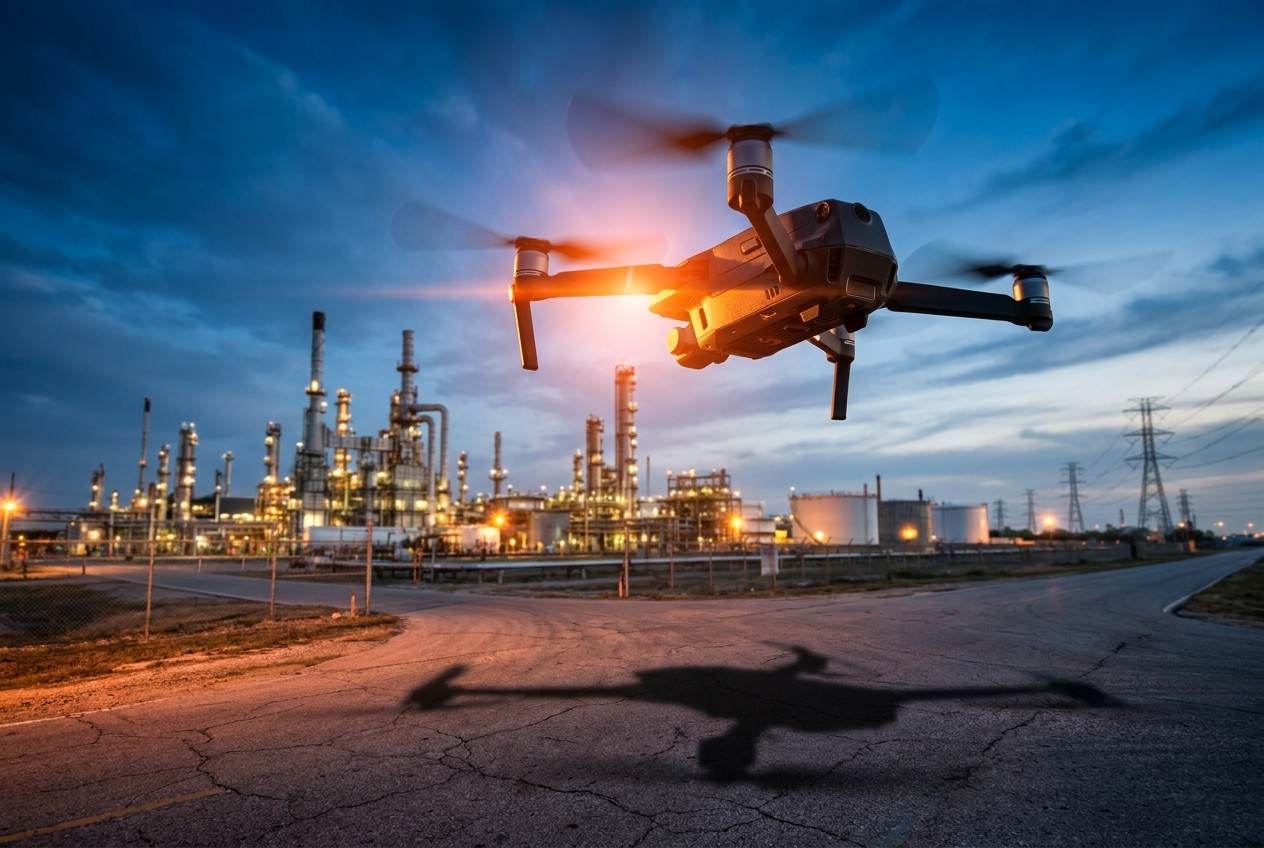
This democratization of destruction means that the monopoly on advanced weaponry, held by nation-states for centuries, has dissolved. Today, cartels, extremist groups, and lone wolves can access lethal drone technology with nothing more than a credit card and access to the dark web. The barrier to entry for building a drone capable of carrying a significant payload is now measured in thousands of dollars, not millions.
Official Responses and Bureaucratic Inertia
The U.S. government has, at times, acknowledged the severity of this issue, yet the transition from acknowledgment to action remains agonizingly slow. The FBI has publicly warned that low-cost commercial drones pose a significant threat to homeland security, noting their ability to cause mass casualties and infrastructure failure. However, these warnings are rarely met with the necessary policy overhauls or the rapid deployment of regional, layered counter-drone (C-UAS) technology.
The Pentagon’s DARPA (Defense Advanced Research Projects Agency) has indeed made strides in autonomous systems, including hypersonic stealth drones like the Falcon HTV-2, which is designed to travel at Mach 20. However, these assets are designed for high-end, nation-state conflict, not for the domestic protection of the electrical grid against decentralized, swarming threats. There is a glaring gap between the high-tech military capabilities of the future and the immediate, low-tech vulnerabilities of our current civil infrastructure.
Implications: The Need for Decentralized Resilience
The implications of this new reality are profound. If the centralized state is unable or unwilling to protect the entirety of our infrastructure from a decentralized, ubiquitous threat, then the burden of security must inevitably shift.
We are entering an era of "decentralized machine cognition," where autonomous swarms operate with minimal human oversight, identifying and engaging targets with millisecond decision loops. Traditional jamming technology is increasingly ineffective against drones that utilize autonomous, AI-driven optical targeting.
To survive in this new environment, the paradigm must shift from centralized protection to decentralized resilience. This includes:
- Systemic Redundancy: Building infrastructure that can survive the loss of single, critical nodes.
- Community-Level Response: Developing local capabilities for emergency power, water purification, and communication that do not rely on the integrity of the national grid.
- Individual Preparedness: Moving toward self-reliance, including off-grid energy production and the stockpiling of essential resources, to mitigate the impact of long-term infrastructure outages.
The "cavalry" is not coming. The government, often reactive and constrained by bureaucratic inertia, is ill-equipped to handle a multi-vector, distributed drone attack on domestic soil. The window for preparation is still open, but the encroaching reality of autonomous, cheap, and lethal drone technology is closing that window rapidly. We must embrace a new model of resilience, one that assumes the failure of centralized systems and prepares the individual and the community to weather the coming storm of the drone age.