











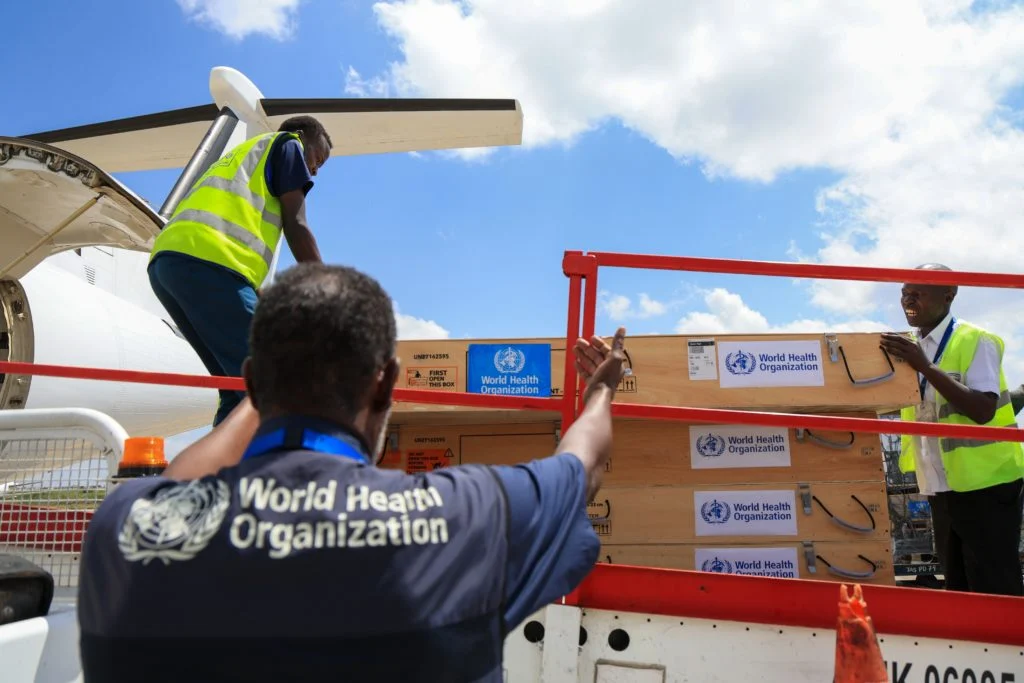
NEW YORK — In a significant shift in U.S. infectious disease policy, the Trump administration is finalizing plans to establish a specialized quarantine and treatment facility in Kenya. This center is intended to serve as a regional hub for American citizens who are exposed to or contract Ebola while working in the Democratic Republic of the Congo (DRC), effectively bypassing the previous practice of medical evacuation to the United States.
The initiative, spearheaded by the Departments of Defense, State, and Health and Human Services (HHS), aims to provide rapid clinical intervention for U.S. personnel operating in Central Africa. By positioning a dedicated facility closer to the epicenter of the outbreak, officials argue they can minimize the risks associated with long-range medical airlifts while maintaining a "no-entry" policy for potential Ebola cases on American soil.
The Strategic Rationale: Proximity and Containment
For decades, the standard protocol for managing highly infectious, fatal pathogens like Ebola involved moving patients to advanced bio-containment units in their home countries. However, the Trump administration has signaled a departure from this reliance on domestic treatment.
An administration official, speaking on condition of anonymity, stated that the Kenya facility will be equipped to handle the "full spectrum" of Ebola care. The logic is twofold: first, it prevents the logistical and psychological strain of an hours-long medical evacuation to the U.S.; second, it aligns with President Trump’s long-standing public stance that American medical responders must be treated near the site of their service rather than being brought back to domestic hospitals.
The decision to utilize Kenya as a regional staging ground suggests that Washington is seeking to formalize a "containment-abroad" strategy. While the facility is designed for initial care, officials noted that patients requiring more advanced life support or specialized treatments may still be transported elsewhere if the facility’s capacity is exceeded or if the patient’s condition demands higher-tier intervention.
Chronology of a Shifting Policy
The evolution of this policy can be traced through the political rhetoric of the last decade and the evolving realities of the current outbreak in the DRC.
- 2014-2015 (The West African Crisis): During the massive Ebola epidemic in West Africa, the U.S. successfully repatriated more than half a dozen infected American aid workers. These individuals were treated in high-level biocontainment units across the country.
- 2014 (The Political Pivot): Then-businessman Donald Trump was a vocal critic of the Obama administration’s decision to bring these patients home. In a series of social media posts, Trump argued that the U.S. should not "allow EBOLA infected people back" and suggested that responders should be treated "at the highest level, over there."
- 2018-Present (The Current Outbreak): As the DRC faces a renewed and stubborn outbreak, the administration has doubled down on its commitment to containment. Secretary of State Marco Rubio reaffirmed this stance during a recent Cabinet meeting, stating unequivocally: "We cannot and will not allow any cases of Ebola to enter the United States."
- Recent Precedents: Earlier this month, an American doctor, identified as Dr. Peter Stafford, contracted the virus in the Congo. Rather than being flown to the U.S., he was transported to Germany for treatment. His family members, though asymptomatic, were also isolated in Berlin. Recent reports from Charite University Hospital indicate that Dr. Stafford has responded well to antiviral therapy, with his viral load dropping significantly.
Supporting Data: The Scale of the Crisis
The challenge facing the international community in the DRC is immense. The current outbreak is widely regarded as one of the most complex in history, characterized by the presence of armed conflict, a transient population, and significant distrust in some local communities regarding medical interventions.
According to data from the DRC’s health ministry and the World Health Organization (WHO), the crisis is currently outpacing response efforts:
- Suspected Cases: The number of suspected Ebola cases in eastern Congo is rapidly approaching the 1,000 mark.
- Fatalities: There have been at least 220 suspected deaths linked to the current outbreak.
- Confirmed Cases: As of the latest reporting, 101 cases have been officially confirmed.
- Contact Tracing: Health officials are currently tracking more than 3,000 possible contacts, a logistical nightmare in a region marked by poor infrastructure and ongoing insecurity.
The WHO has emphasized that the "geographical spread" of the virus, combined with the security environment, makes this outbreak particularly difficult to suppress compared to previous iterations.
Official Responses and Diplomatic Tensions
The announcement of the Kenyan facility has been met with both cooperation and caution. While the U.S. is pushing for the project, the Kenyan government has been careful to emphasize its own sovereignty and public health standards.
Kenya’s Health Minister, Aden Duale, confirmed that discussions between Nairobi and Washington are ongoing regarding "preparedness and response mechanisms." However, he stopped short of confirming that Kenya would host the facility, noting that any such arrangement would be "guided by Kenya’s national laws, public health regulations, biosafety and biosecurity standards."
Duale emphasized the government’s primary duty to "safeguard the health and welfare of Kenyans," signaling that the U.S. proposal is subject to rigorous oversight by local authorities.
Meanwhile, the U.S. State Department has remained focused on regional stability. Secretary of State Marco Rubio highlighted the interagency effort to contain the virus within the borders of the DRC, emphasizing that the U.S. is providing significant resources to support local health workers in their fight against the virus.
Implications for Public Health and Medical Ethics
The administration’s plan has sparked a vigorous debate among medical experts regarding the ethics of patient care versus the imperatives of national security.
Dr. Ali Khan, dean of the College of Public Health at the University of Nebraska Medical Center, noted that the medical consensus has historically favored minimizing the movement of Ebola patients to prevent clinical deterioration. However, he stressed that the primary concern must always be the quality of care. "You’ve got to make sure the patient gets the best quality care, and you need to ensure excellent infection control," Khan said. He warned that if a regional facility cannot provide the equivalent of American-standard care, the policy could be medically compromised.
Dr. Craig Spencer, an emergency medicine physician at Brown University and an Ebola survivor himself, was more critical. Spencer argued that refusing to repatriate American citizens for treatment constitutes a "moral abdication" of the government’s responsibility. He questioned whether a facility in Kenya—no matter how well-funded—could truly replicate the specialized infrastructure and expertise available at top-tier U.S. biocontainment centers.
Conclusion: A New Era of Risk Management
The construction of a regional treatment center in Kenya represents a fundamental shift in how the United States handles the risks associated with global health crises. It is a policy driven by a fusion of "America First" political ideology and the practical, if controversial, necessity of managing infectious disease at a distance.
As the DRC continues to struggle with an outbreak that defies easy containment, the success or failure of the Kenya facility will likely become a benchmark for future American responses to global health threats. Whether this policy serves as a model for efficient regional response or as a point of contention regarding the government’s duty to its own citizens remains to be seen. For now, the administration remains committed to its path: prioritizing domestic safety through the rigid containment of potential exposure within Africa.