Editor’s note: This story includes discussion of suicide. If you or someone you know needs help, the national suicide and crisis lifeline in the U.S. is available by calling or texting 988.
BOSTON — The high-profile murder trial of Lindsay Clancy, the 36-year-old former labor and delivery nurse accused of strangling her three young children in January 2023, reached a pivotal juncture this Friday. As the defense rested its case, the courtroom was left to grapple with a harrowing narrative: a portrait of a mother who, according to her family, descended into a state of profound psychological collapse, and a prosecution that maintains these acts were not the result of illness, but of calculated intent.
With the defense phase concluded, the trial—which has captivated the nation and sparked intense debate over mental health, the medical system, and criminal responsibility—is now entering its final phase. As the jury prepares for closing arguments, the case stands as a stark reminder of the complexities inherent in cases where severe mental illness intersects with the legal system.
The Core Facts: A Tragedy in Duxbury
In January 2023, the quiet coastal town of Duxbury, Massachusetts, was shattered by the discovery of three young children—Callan, Dawson, and Cora Clancy, ranging from 8 months to 5 years old—dead in the basement of their family home. Lindsay Clancy, their mother, was found injured outside the home, having jumped from a second-story window in an apparent suicide attempt that left her paralyzed from the waist down.
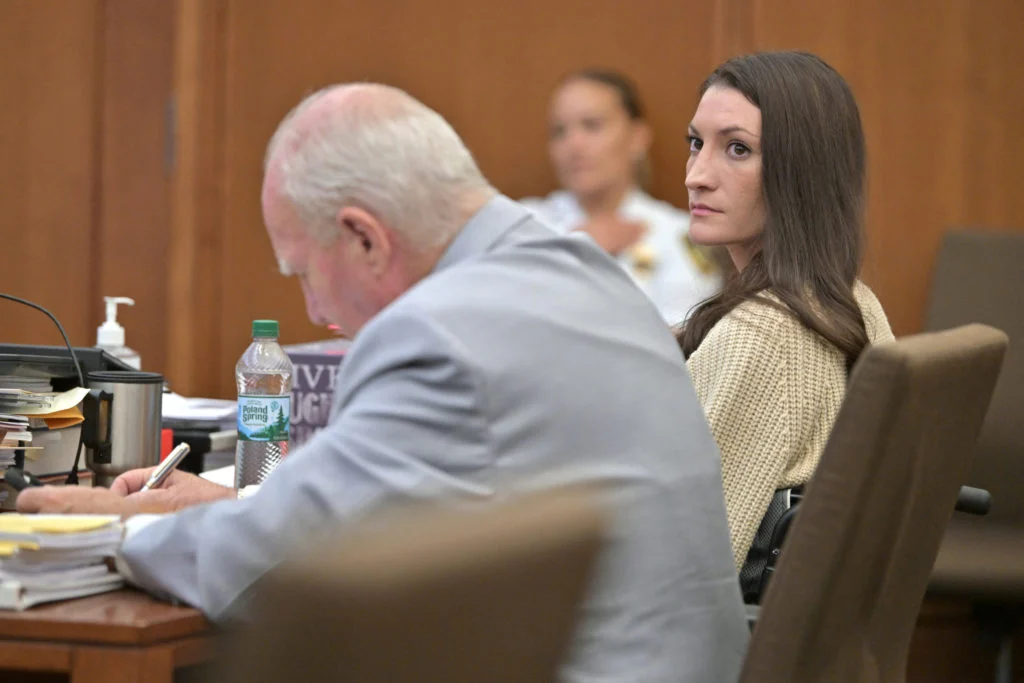
Clancy has pleaded not guilty to three counts of murder and strangulation. Her defense attorney, Kevin Reddington, does not contest that Clancy caused the deaths of her children. Instead, the legal battle centers on criminal responsibility. The defense argues that Clancy was suffering from severe postpartum psychosis, a rare but dangerous medical emergency characterized by hallucinations, delusions, and a detachment from reality. The prosecution, conversely, contends that the events of that day were premeditated, arguing that Clancy intentionally cleared the house of her husband to carry out the act.
A Chronology of Declining Mental Health
The defense’s case relied heavily on establishing a timeline of Clancy’s mental health deterioration. Throughout the trial, testimony from family members painted a picture of a woman struggling to reconcile her identity as a "dedicated and loving mom" with an encroaching, inexplicable illness.
Late 2022: The Descent
According to testimony provided by Paula Musgrove, Clancy’s mother, the signs of distress began in October 2022. Musgrove described her daughter’s transition from a high-functioning nurse to someone overwhelmed by a mounting, invisible burden. A text message presented to the jury served as a haunting piece of evidence: "Mom, will you please come up and stay with me for a bit? I’m really sick. Something is wrong."
The alarm grew significantly in December 2022. Musgrove recalled a chilling evening in the family kitchen when Lindsay Clancy, in the presence of both her mother and her then-husband, Patrick Clancy, made a terrifying disclosure: she was experiencing intrusive, violent thoughts regarding her own children.
The Final Months: The Search for Help
Susan Clancy, the defendant’s former mother-in-law, provided further testimony highlighting the desperate nature of the months leading up to the tragedy. Through a series of text messages, the jury saw a woman pleading for relief from severe insomnia and an escalating reliance on benzodiazepines.
"I’m not okay and I’m terrified of taking meds tonight," Lindsay texted on November 30, 2022. These messages support the defense’s broader assertion that Clancy was not only battling postpartum psychosis but was also suffering from undiagnosed bipolar disorder, potentially exacerbated by an overmedicated state.
Psychological and Medical Testimony
A significant portion of the defense’s strategy involved the testimony of Paul Zeizel, a psychologist who treated Clancy in the hospital following the tragedy. Zeizel provided expert testimony aimed at stripping away the prosecution’s theory of "premeditation."
"She was unable to conform her behavior to the rule of law," Zeizel testified. "She had no appreciation for the wrongfulness of her act."
Zeizel emphasized that Clancy was suffering from a "mental disease or defect" so severe that it rendered her incapable of understanding the reality of her actions. Perhaps most crucially, he noted that psychological testing conducted by state-appointed doctors revealed no evidence of malingering—or the feigning of psychiatric symptoms. This testimony strikes at the heart of the prosecution’s case, which seeks to categorize her actions as the result of a rational, albeit cruel, decision-making process.
Official Responses and Prosecution Strategy
The Commonwealth of Massachusetts has remained steadfast in its approach. Prosecutors have consistently argued that while Clancy was seeking treatment for anxiety and depression, the leap to "psychosis" is an evidentiary stretch that does not account for the actions taken on the day of the killings.
The prosecution has pointed to evidence suggesting that Clancy orchestrated the day’s events, specifically focusing on the timeline of how she sent her husband out of the house to run errands, creating the window of opportunity required to carry out the crime. By highlighting these tactical steps, prosecutors aim to show the jury that Clancy possessed the executive function and clarity of mind necessary to plan a murder, a stark contrast to the defense’s argument of a mind in total dissociation.
Broader Implications: Postpartum Psychosis and the Law
The Clancy trial has become a flashpoint for a national conversation regarding maternal mental health. Postpartum psychosis affects approximately one to two in every 1,000 births and is widely considered a medical emergency. However, the legal system is often ill-equipped to handle the nuance of a condition that causes a person to lose their grasp on reality while appearing, to the outside observer, to be functioning normally.
The Stigma of Maternal Mental Health
The case highlights the often-inadequate support systems for new mothers in the United States. Many advocates point to the "medicalization" of motherhood, where women are often told that their symptoms—insomnia, anxiety, and extreme mood swings—are "normal" parts of the transition to parenthood. When these symptoms cross the threshold into psychosis, the window for intervention is often missed.
The "Not Guilty by Reason of Insanity" Defense
The legal standard for insanity in Massachusetts requires the defense to prove that, due to mental disease or defect, the defendant lacked the substantial capacity to appreciate the wrongfulness of their conduct or to conform their behavior to the requirements of the law. This is a notoriously difficult threshold to meet.
If the jury accepts the defense’s argument, the outcome would be a commitment to a mental health facility rather than a prison. If the prosecution prevails, it would set a precedent that even severe mental health struggles do not excuse the taking of a life, regardless of the biological or psychological context.
The Future of Clinical Oversight
Finally, the trial has raised questions about the standard of care for patients with complex mental health needs. With evidence presented about the over-prescription of medications and the potential for polypharmacy to cause adverse psychiatric events, the medical community is watching the trial closely. The question remains: how much responsibility lies with the healthcare providers who were treating Clancy in the months before the incident?
Conclusion: A Jury’s Burden
As the court moves toward closing arguments, the jury is tasked with an impossible burden: to look past the horrific nature of the crime and determine if, in those moments in January 2023, Lindsay Clancy was a woman in control of her faculties or a woman lost in the throes of a profound, biological malfunction.
The tragedy in Duxbury has left a community permanently scarred and a nation divided. Regardless of the verdict, the case of Lindsay Clancy will likely serve as a foundational study for years to come regarding the intersection of motherhood, mental health, and the cold, unyielding mechanics of the American judicial system.