In the high-stakes environment of emergency cardiology, time is the ultimate arbiter of patient outcomes. When a heart attack occurs, the immediate priority is mechanical—clearing blocked arteries to restore blood flow. However, once the flow is restored, clinicians are often left with a secondary, equally devastating crisis: the biological aftermath of cell death and the formation of non-contractile scar tissue. For decades, medicine has lacked a viable way to reverse this damage, leaving millions to grapple with the long-term, often fatal progression toward congestive heart failure.
A groundbreaking development from the University of California San Diego (UCSD) is poised to rewrite this narrative. Bioengineers have successfully developed an injectable biomaterial that can be delivered directly through the bloodstream, offering a minimally invasive "smart" solution to quiet inflammation and stimulate tissue repair. By leveraging the body’s own circulatory network, this innovation promises to turn the heart’s own blood supply into a delivery vehicle for regenerative medicine.
The Core Innovation: A Shift in Regenerative Engineering
The biomaterial, described in the journal Nature Biomedical Engineering, represents a departure from traditional surgical interventions. Unlike previous generations of regenerative therapies that required direct, needle-based injection into the heart muscle—a procedure inherently limited by the risks of puncturing fragile, damaged tissue—this new material is designed for systemic or intravascular delivery.
"This biomaterial allows for treating damaged tissue from the inside out," explains Karen Christman, a professor of bioengineering at UCSD and the lead researcher behind the project. "It’s a new approach to regenerative engineering."
The material is derived from decellularized, enzymatically digested, and fractionated ventricular myocardium—the natural scaffolding of heart muscle, known as the extracellular matrix (ECM). By refining this biological material into a nanoparticle-sized format, researchers have created a solution that can be infused through an IV or during standard coronary artery procedures like angioplasty. Once inside the bloodstream, the material naturally localizes to areas of injury, effectively "seeking out" the damaged microvasculature.
Chronology of Discovery: From Hydrogels to Nanoparticles
The path to this breakthrough began years ago with the development of an injectable hydrogel. In 2019, Christman’s team reached a significant milestone when they reported the results of a Phase 1 clinical trial for "VentriGel." This earlier iteration used the same cardiac ECM, but it was designed to be injected directly into the heart wall via a catheter. While the trial proved the approach was safe and feasible for patients with left ventricular dysfunction, the logistical limitations were clear. Direct injection is complex, risky, and generally cannot be performed in the immediate "golden hour" following a heart attack.
Recognizing these constraints, the team pivoted to a new design challenge: How could they make the material small enough to travel through the bloodstream and reach the site of injury naturally?
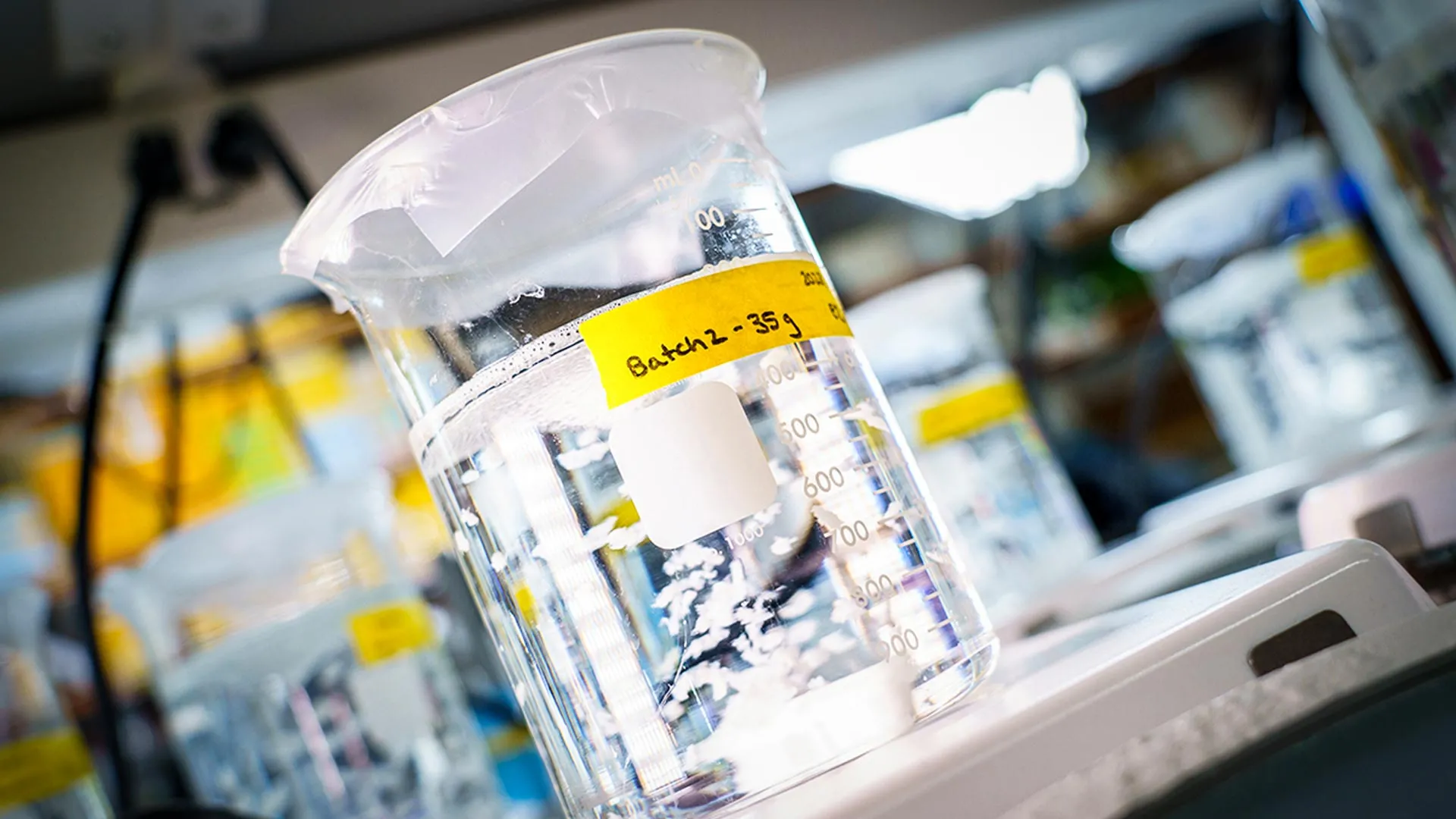
Martin Spang, the paper’s first author and a former doctoral student in Christman’s lab, spearheaded the technical evolution of the material. By utilizing high-speed centrifugation, the team was able to separate the hydrogel precursor into nano-sized particles, discarding the larger, non-functional remnants. These nanoparticles were then dialyzed, sterile-filtered, and freeze-dried into a shelf-stable powder. Upon hydration with sterile water, the material becomes a potent therapeutic agent capable of being delivered through standard clinical catheters or intravenous lines.
Supporting Data: Mechanisms of Repair
The efficacy of the material was first tested in rodent models of acute myocardial infarction. The initial hypothesis was that the material would passively migrate through the leaky blood vessels characteristic of damaged tissue. However, the results revealed a more sophisticated biological interaction.
The researchers observed that the biomaterial not only permeated the site of injury but actively adhered to the endothelial cells—the lining of the blood vessels—that had been compromised by the heart attack. By "patching" these cellular gaps, the material promoted the healing of the vasculature itself. This, in turn, dampened the systemic inflammatory response that typically exacerbates tissue damage following an ischemic event.
In subsequent tests involving porcine models—which offer a physiological profile closer to that of humans—the results remained consistent. Intracoronary infusion of the material was associated with:
- Reduced left ventricular volumes: A key marker in preventing the heart’s structural degradation.
- Improved wall motion scores: Indicating that the heart muscle was retaining its ability to contract effectively.
- Favorable gene expression: Molecular analysis confirmed an upregulation of pathways associated with tissue regeneration and a downregulation of inflammatory signaling.
Furthermore, a 2025 study published in Nature Communications, which included Christman’s team, utilized advanced spatial transcriptomics to delve deeper into these mechanisms. The research provided a high-resolution map of how these ECM-based therapies influence the microenvironment, identifying specific benefits in immune modulation, the development of new blood vessels, and even neurogenesis within the injured heart tissue.
Official Responses and Medical Implications
For the clinical community, the prospect of an "off-the-shelf" regenerative therapy is highly compelling. Dr. Ryan R. Reeves, a physician in the UC San Diego Division of Cardiovascular Medicine, emphasizes the massive public health burden that this technology aims to address.
"Coronary artery disease, acute myocardial infarction, and congestive heart failure continue to be the most burdensome public health problems affecting our society today," says Dr. Reeves. "As an interventional cardiologist, I would love to have another therapy to improve patient outcomes and reduce debilitating symptoms. This easy-to-administer therapy has the potential to play a significant role in our treatment approach."
The implications extend far beyond cardiology. Because the biomaterial relies on the circulatory system to reach its target, it is theoretically agnostic to the specific organ, provided that organ has a vascular supply. The researchers have already conducted successful proof-of-concept experiments in rat models for traumatic brain injury and pulmonary arterial hypertension. By proving that the biomaterial can be "homed" to inflamed or damaged tissues regardless of location, the team has opened a new frontier in bioengineering that could address a myriad of diseases that are currently considered "difficult-to-access."
Looking Toward the Future: The Path to Clinical Translation
While the laboratory results have been uniformly promising, the transition from animal models to human patients is a rigorous, multi-step process. Christman and her team, through the startup Ventrix Bio, Inc., are now working toward seeking FDA authorization to begin formal human clinical trials.
The upcoming phases of development will focus on three primary metrics:
- Safety: Confirming that systemic infusion of the ECM nanoparticles does not trigger adverse immune reactions or distal embolic events.
- Practicality: Demonstrating that the delivery process can be seamlessly integrated into existing hospital workflows (e.g., during a standard stent procedure).
- Efficacy: Proving that the biological repair seen in animal models translates into tangible improvements in human heart function and quality of life.
Simultaneously, the broader field is watching the progress of VentriGel, which remains in the clinical pipeline for other conditions, such as hypoplastic left heart syndrome in pediatric patients. The ongoing research into how these scaffolds influence cellular behavior—ranging from fibroblast activation to lymphatic development—continues to refine the "recipe" for regenerative success.
Conclusion
The evolution of the cardiac ECM biomaterial represents a paradigm shift in how we view the aftermath of a heart attack. Rather than merely managing the symptoms of a weakening heart, the medical field is inching closer to an era where we can actively guide the body’s own repair processes from the inside out.
If successfully translated to the clinic, this injectable therapy could transform the management of cardiovascular emergencies, offering a lifeline to patients who have traditionally been left with few options beyond lifestyle management or surgical repair. By turning the bloodstream into a pathway for healing, UC San Diego researchers have provided a glimpse into the future of medicine: a future where the most sophisticated tool in the surgeon’s kit is a targeted, bio-intelligent material designed to restore, rather than just replace, damaged life.