By Lizzy Lawrence
STAT News
WASHINGTON — The tenure of Food and Drug Administration Commissioner Marty Makary has come to an abrupt and dramatic end. According to administration sources familiar with the internal workings of the White House, Makary has officially resigned from his post, concluding a period defined by high-level personnel turnover, internal organizational friction, and intense scrutiny regarding the role of political influence in the agency’s scientific decision-making processes.
President Donald Trump confirmed the departure during a brief exchange with reporters on the White House lawn as he prepared to depart for a state visit to Beijing. When asked about the vacancy, the President remained characteristically brief but notably complimentary toward the departing physician.
"He’s going to go on and he’s going to lead a good life," President Trump stated. "He was having some difficulty. He’s a great doctor. He’s going to go on and do well. Everybody wants that job."
The administration has announced that Kyle Diamantas, previously the agency’s top food regulator, will step into the role of acting commissioner effective immediately. The transition marks the beginning of what promises to be a challenging period of stabilization for an agency currently grappling with both a leadership vacuum and a series of unresolved regulatory hurdles.
A Tenure Defined by Turbulence
Marty Makary’s time as FDA Commissioner was never characterized by calm. A well-known surgeon and public health advocate before his appointment, Makary entered the role with the stated goal of modernizing the agency. However, his tenure was quickly overshadowed by a series of high-profile departures within the agency’s senior leadership ranks.

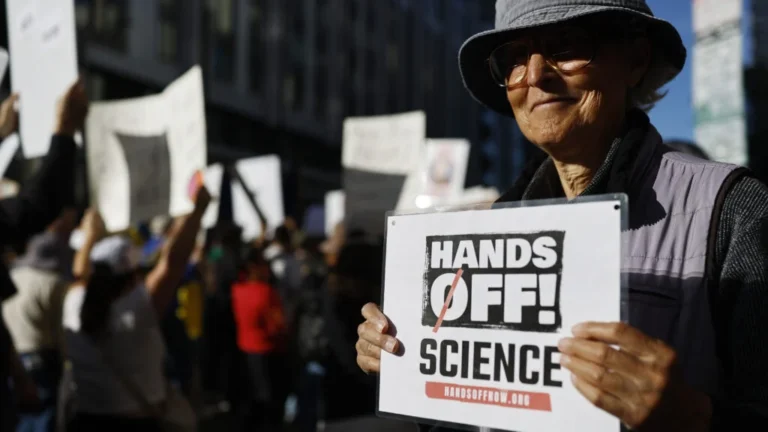
Observers within the regulatory space suggest that the friction stemmed from a fundamental misalignment between the agency’s traditional, evidence-based culture and the administration’s aggressive push for accelerated product approvals and policy shifts. Throughout his time at the helm, Makary faced persistent rumors of internal discord, with career staff expressing frustration over what they described as an increasing intrusion of political considerations into the scientific review process.
The controversies were not merely confined to private memos or whispers in the hallways of the White Oak headquarters. Instead, they manifested in public disagreements over the oversight of medical devices, food safety protocols, and the accelerated approval pathways for emerging therapeutics.
Chronology: The Makary Era
The arc of Makary’s leadership can be traced through several critical junctures that define the challenges faced by the agency during his term:
- Appointment and Early Promises: Upon his arrival, Makary pledged to reduce "regulatory friction" and foster a more innovative environment for biotech and medical device companies.
- The First Wave of Departures: Within six months of his tenure, several veteran career officials resigned from key offices, citing concerns over the transparency of the agency’s decision-making.
- Congressional Scrutiny: As rumors of political pressure grew, the House Committee on Oversight and Reform initiated a series of informal inquiries into the agency’s handling of several controversial approval dossiers.
- Internal Reorganizations: Makary’s attempts to restructure reporting lines within the Center for Drug Evaluation and Research (CDER) met with significant pushback from both staff and external advocacy groups, who feared a dilution of the agency’s scientific rigor.
- The Final Stretch: The weeks leading up to the resignation were marked by an intensifying "brain drain," with the agency losing several key subject matter experts in the fields of toxicology and clinical trial design.
Supporting Data: The Cost of Instability
The impact of the administrative instability at the FDA is reflected in several key performance metrics. During the period of Makary’s leadership, the agency saw a measurable increase in the "review clock" duration for non-priority medical devices. While the administration maintained that this was a result of increased complexity in submissions, industry insiders argue that the turnover in the review teams—often leaving junior staff to handle high-stakes applications—contributed to the delays.
Furthermore, FOIA (Freedom of Information Act) filings from external research organizations indicate a 22% increase in internal disagreements logged by the agency’s Ombudsman office during the last 18 months. This data point serves as a quantitative proxy for the underlying cultural tension that defined the latter half of Makary’s tenure.
Official Responses and Political Implications
The resignation has triggered a flurry of responses from Capitol Hill and the public health community. Senate leaders from both sides of the aisle have signaled that the confirmation of a permanent successor will likely be a contentious process, especially as the administration nears the end of its current term.

"The FDA is the bedrock of public trust in our medical system," said a spokesperson for the Senate Committee on Health, Education, Labor, and Pensions. "The next commissioner must be someone who can restore the morale of the career staff and demonstrate an unwavering commitment to science over political expediency."
Industry advocates, conversely, are calling for a smooth transition to ensure that the "pro-innovation" policies initiated under Makary are not abandoned. "Dr. Makary recognized that the agency needed to evolve," noted a senior official at a major pharmaceutical industry trade group. "While his time was marked by friction, the core goal—speeding up access to life-saving technology—remains vital."
The Path Forward: What Lies Ahead for Kyle Diamantas?
As Kyle Diamantas assumes the role of acting commissioner, the primary challenge will be to stop the exodus of talent. Diamantas, a career civil servant who has garnered respect for his steady hand in managing the agency’s food safety division, faces the daunting task of re-establishing internal cohesion.
The most immediate tests for Diamantas will include:
- Staff Retention: Can the agency provide the reassurances needed to prevent further resignations among senior scientists?
- Restoring Credibility: How will the agency handle the upcoming high-profile decisions on gene therapies and new vaccine platforms, given the current climate of public skepticism?
- Congressional Relations: With oversight hearings likely on the horizon, the acting commissioner must navigate a hostile legislative environment while keeping the agency focused on its core mission.
Conclusion: A Legacy of Complexity
Marty Makary’s departure marks the end of a chapter that will be studied for years by experts in public health administration. His tenure stands as a reminder of the inherent tension between the executive branch’s political mandates and the FDA’s foundational requirement for scientific independence.
Whether his successor will be able to balance these competing interests remains the central question. For now, the agency remains in a state of flux, awaiting a new permanent leader who can navigate the complex, often treacherous, intersection of medicine, industry, and politics. The eyes of the global medical community remain fixed on Washington, waiting to see if the FDA can reclaim its mantle as an unimpeachable arbiter of safety and efficacy.