In the expansive landscape of functional fitness, few exercises command the universal respect of the forearm plank. Often overshadowed by flashier, high-intensity movements, the "low plank" remains the definitive litmus test for core stability, spinal integrity, and total-body endurance. As we navigate the complexities of aging, maintaining this specific form of isometric strength becomes more than just a fitness goal—it becomes a prerequisite for sustained physical independence.
For those aged 55 and older, the ability to hold a proper forearm plank is not merely a party trick or a gym-class requirement; it is a critical diagnostic tool. If you have ever wondered whether your current fitness routine is effectively combating the natural decline in muscle mass and postural stability, the clock on your plank hold may hold the answer.
The Science of Stillness: Why Isometric Strength Matters
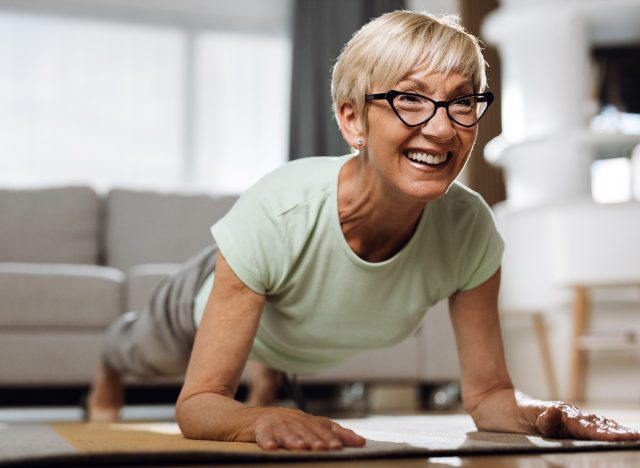
To the uninitiated, the forearm plank appears deceptively simple: maintain a straight line from your heels to the crown of your head while supporting your weight on your toes and forearms. However, this lack of movement is exactly what makes the exercise so potent.
"The forearm plank demands prolonged muscle contraction without movement, which reveals true postural stability that translates directly to daily function," explains Marwa Ahmed, a NASM-Certified Personal Trainer, Running Coach, and CEO of The BodyMind Coach in Toronto.
Unlike dynamic exercises—such as squats or deadlifts, which rely on momentum and muscle lengthening—the plank is an isometric exercise. It forces the body to resist gravity while keeping the spine in a neutral, protected position. "It exposes weaknesses in the deep core muscles that support spine health and prevent injury," Ahmed notes. "This makes it an excellent test of how well someone maintains posture under sustained effort, which is a key predictor of independence as core function naturally declines with age."
Defining the Elite: Benchmark Hold Times for the 55+ Demographic
In the world of fitness benchmarking, generalizations often fail to account for the unique physiological shifts that occur after age 55. As sarcopenia—the age-related loss of muscle mass—begins to accelerate, the capacity for sustained tension becomes harder to maintain.

According to Ahmed, we must view these benchmarks through a lens of both health and performance. For the average, active adult over 55, a consistent, well-formed hold of 30 to 60 seconds is the gold standard for "solid core endurance." This duration indicates that your deep stabilizers are firing efficiently and that your nervous system is capable of managing postural load.
However, for those looking to reach the "elite" tier, the bar is raised significantly. Holding a perfect forearm plank for 90 to 120 seconds or longer signals exceptional control. Achieving this level of performance indicates total-body tension that far exceeds the standard norms for this age bracket, suggesting not just physical strength, but a high degree of neurological efficiency.
What Are We Actually Testing?
When you drop into a plank, you are initiating a complex chain of muscular engagement. It is not simply an "ab exercise"; it is a total-body integration. The primary objective is the recruitment of the "inner corset"—the transverse abdominis, the internal and external obliques, and the rectus abdominis—while simultaneously requiring the lats, shoulders, and glutes to act as stabilizers.
"The position challenges your ability to resist spinal movement while maintaining proper shoulder positioning," Ahmed explains. "Essentially, it tests how well your entire body works together under fatigue. This reveals how effectively your muscles coordinate as a unit."
When the body begins to fatigue, the brain often attempts to compensate. You may notice your hips beginning to dip toward the floor or your shoulders beginning to shrug toward your ears. These are not just signs of exhaustion; they are markers of where your kinetic chain is failing. A successful plank test is one where form remains pristine until the very last second.
The Hierarchy of Muscles: Why Forearm Planks Outperform High Planks
While the "high plank" (the top position of a push-up) is a staple in many workout programs, research consistently points to the forearm variation as the superior choice for deep core activation.

The shift in center of gravity created by resting on the forearms forces the core to work significantly harder to keep the torso elevated. "Research shows forearm planks activate core muscles more intensely than high planks," says Ahmed. "For aging well, this matters because these deep stabilizers protect against back injury, improve balance, reduce fall risk, and maintain posture as muscle naturally declines after 55."
By removing the reliance on the arm bones to "lock out" the elbows, the forearm plank shifts the burden entirely onto the musculature of the torso. This isolation of the core is what makes it so effective for injury prevention in older adults, who are statistically more susceptible to lumbar strain and loss of balance.
The Paradox of Strength: Why Athletes Struggle with the Plank
One of the most common phenomena in personal training is the "strong athlete" who cannot hold a plank for more than 45 seconds. A client who can deadlift 300 pounds or squat their body weight may find themselves trembling and failing during a 60-second plank.
Why does this happen? The answer lies in the difference between dynamic force and isometric endurance.
"Those who are strong in dynamic movements often lack isometric endurance, proper breathing technique, and shoulder stability under sustained tension," Ahmed clarifies. "Poor shoulder positioning, weak stabilizing muscles, or hip flexor dominance can cause the hips to sag early. It’s typically a stability and control limitation, not a strength issue."
In essence, these athletes have trained their bodies to explode through a range of motion, but they haven’t trained their bodies to "lock in" and hold a position against constant gravity. For the individual over 55, this is a critical distinction. While lifting heavy weights is excellent for bone density, the ability to hold one’s own body weight in a static position is the ultimate insurance policy for daily life—whether you are reaching for a high shelf, gardening, or navigating uneven terrain.
Implications for Longevity and Independence
The data is clear: core strength is the foundation of mobility. As we age, the risk of falls becomes a significant health concern. Weakness in the core leads to a "slumped" posture, which shifts the center of gravity and increases the risk of tripping or losing balance.
By incorporating regular, focused forearm plank training into a weekly routine, individuals over 55 can:
- Stabilize the Spine: Reducing the incidence of chronic lower back pain by strengthening the muscles that support the lumbar vertebrae.
- Improve Proprioception: Teaching the brain how to align the body in space, which directly translates to better balance.
- Enhance Breathing Efficiency: Learning to breathe under the tension of a plank improves respiratory control, which is vital for cardiovascular health.
- Protect the Shoulders: Proper planking requires scapular stability, which is essential for maintaining upper body function.
How to Start Your Journey to "Elite" Status
If you are currently struggling to reach the 30-second mark, do not be discouraged. Consistency is the only variable that matters.
- Prioritize Form Over Duration: Never sacrifice your back alignment for the sake of the clock. If your lower back begins to arch, your set is over.
- Use Regressions: If a standard plank is too difficult, perform the plank on your knees or against an elevated surface, such as a sturdy bench or countertop. This allows you to build the necessary core tension without placing undue stress on your lower back.
- The Power of Breathing: Many people hold their breath during a plank, which causes a spike in blood pressure and premature fatigue. Practice rhythmic, controlled breathing to keep your nervous system calm under the stress of the hold.
- Frequency: Start by performing planks three to four times a week. Even 30 seconds of high-quality work is more effective than three minutes of "saggy", poorly formed effort.
In conclusion, the forearm plank is more than a gym movement; it is a mirror reflecting your current functional health. By mastering this simple, yet challenging exercise, you are investing in a future of independence, balance, and structural integrity. Whether you are currently at 20 seconds or aiming for that elite 120-second threshold, the path forward is the same: stay low, keep tight, and keep holding.