











In the landscape of modern medicine, we have long relied on a specific set of clinical "vital signs" to gauge the health of a patient: blood pressure, cholesterol levels, body mass index, and heart rate. However, a landmark study from the University of Leicester, published in the Mayo Clinic Proceedings in March 2026, suggests we may have been overlooking the most revealing metric of all—one that requires no laboratory, no blood draw, and no expensive equipment.
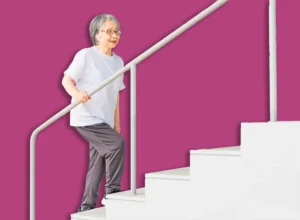
According to the analysis of 407,569 participants from the UK Biobank, walking pace is a more accurate predictor of mortality risk than almost any other standard clinical marker currently in use. This discovery challenges the conventional hierarchy of diagnostic tools, positioning the humble act of walking not just as a form of exercise, but as a sophisticated diagnostic instrument that reflects the collective health of our entire body.
The Science of the Stride: A Holistic Marker
Walking speed is far more than a measure of athletic ability. It is a "complex output" of the body’s various systems. To maintain a brisk pace, an individual requires synchronized cardiovascular capacity, muscular strength, neurological coordination, and vestibular balance. When a person’s walking speed begins to decline, it is rarely due to a single localized issue. Instead, it often acts as an early warning system, signaling a systemic decline in physiological function before traditional medical tests—such as a blood lipid panel or a blood pressure reading—can capture the change.
Among the study’s most significant findings was that the predictive power of walking pace was strongest in individuals already living with long-term health conditions. In these populations, the pace served as a "sharpening" mechanism, providing physicians with a more granular understanding of a patient’s trajectory than standard clinical markers could provide on their own.
Chronology of the Research
The study is the culmination of years of data aggregation regarding physical function.
- 2024: Preliminary research began to identify "physical function markers"—such as grip strength and muscle mass—as reliable predictors of stroke risk, independent of traditional cardiovascular markers.
- 2025: A massive analysis of 431,598 UK Biobank participants established a direct correlation between walking speed and cancer risk. Researchers found that faster walkers exhibited lower rates of lung, breast, colorectal, and stomach cancers, a phenomenon linked to reduced systemic inflammation and improved blood sugar regulation.
- March 2026: The University of Leicester study was published, definitively comparing walking pace to blood pressure and cholesterol. The results were conclusive: pace outperformed clinical markers in predicting all-cause mortality across the studied population.
- Ongoing: Researchers are now shifting their focus toward how "interval training" and specific strength exercises can be used as clinical interventions to improve walking speed and, by extension, extend lifespan.
Supporting Data: Quantifying the Pace
The mathematical relationship between gait and longevity is striking. Earlier research, which pooled data from over 34,000 older adults, quantified the "velocity benefit": for every 0.1 meter per second increase in walking speed, there is a corresponding 12 percent reduction in the risk of death.
Thresholds of Health
- The Gold Standard (1.0 m/s): A speed of one meter per second—roughly the pace required to cross a street before a traffic light changes—is associated with above-average life expectancy.
- The Caution Zone (Below 0.6 m/s): Speeds falling below this threshold are linked to a meaningfully higher risk of mortality.
- The Frequency Factor: Beyond speed, total volume matters. Studies published in the British Journal of Sports Medicine and JAMA indicate that whether one takes fewer steps at a higher intensity or more steps at a lower intensity, the total accumulation of activity consistently lowers the risk of death from heart disease, cancer, and other metabolic-related illnesses.
Official Responses and Clinical Perspectives
Public health bodies, including the National Institute for Health and Care Research and the Medical Research Council, have backed this research, emphasizing the need for accessible health metrics.
While doctors have traditionally viewed blood pressure and cholesterol as "changeable" variables that can be managed with medication, they are increasingly viewing walking pace as a "foundational" variable. The consensus among the researchers is that while clinical metrics remain important, they are often reactive. A decline in walking pace, however, is a proactive indicator that allows for lifestyle intervention before a condition becomes chronic.
"Walking pace is a window into the biological age of an individual," the researchers noted in their report. "When we see a patient’s speed drop, we are seeing their body’s efficiency decline. It is a call to action for both the patient and the physician."
Implications for Daily Health
The most empowering aspect of this research is that walking speed is malleable. Unlike genetics, which are fixed, walking performance can be improved through targeted lifestyle modifications.

1. The Interval Strategy
To boost speed, researchers recommend "interval walking." Instead of maintaining a steady, moderate pace for a walk, incorporate short bursts of speed:
- Walk at a normal pace for three minutes.
- Increase to a brisk, challenging pace for one minute.
- Repeat this cycle for the duration of your workout. This method is significantly more effective at increasing cardiovascular and muscular capacity than steady-state walking.
2. Targeted Strength Training
Many people walk slowly not because their heart is weak, but because their glutes and calves lack the power to propel them forward efficiently. Incorporating bodyweight squats, calf raises, and step-ups twice a week can drastically improve stride length and speed.
3. Anti-Inflammatory Nutrition
Because chronic inflammation can lead to joint discomfort—which naturally causes people to slow down—dietary choices play a role in physical performance. Diets rich in wild-caught fatty fish (omega-3s), turmeric, and olive oil help maintain joint health, making it easier to sustain a higher pace during daily activities.
4. Tracking, Not Just Counting
While "step counting" apps are popular, they do not measure quality. Researchers suggest occasionally timing yourself over a known distance, such as a city block or a local track. A healthy, brisk pace typically translates to covering one mile in roughly 15 to 20 minutes (3 to 4 miles per hour).
The Limits of Observation
It is essential to note that these studies are observational. A slow walking pace does not automatically mean an individual is destined for poor health. Factors such as orthopedic injuries, chronic joint pain, and neurological conditions can influence speed independently of overall fitness. Furthermore, genetics play a role in how our bodies age.
However, the researchers emphasize that the "signal" found in these cohorts of hundreds of thousands of people is too consistent to ignore. When hundreds of thousands of data points consistently point to the same conclusion, it serves as a powerful indicator for public health strategy.
Conclusion: A Simple Path to Longevity
The University of Leicester analysis does not suggest we abandon traditional medicine. Blood pressure, cholesterol, and body fat percentages are still vital clinical markers. Instead, the study advocates for the integration of physical function—specifically walking speed—into the standard health conversation.
In a world where we spend billions on complex diagnostic technology, the most accurate predictor of how long we will live may simply be how fast we walk to the grocery store. By focusing on interval intensity, lower-body strength, and anti-inflammatory nutrition, individuals can take direct control over this metric. As little as 150 minutes of moderate-to-brisk activity per week can fundamentally alter one’s long-term health trajectory, proving that the simplest solutions are often the most effective.
Whether you are walking on a treadmill, a local track, or a city sidewalk, the evidence is clear: pick up the pace, and you may be adding years to your life.