For millions of people worldwide, the most significant challenges of their lives are those that remain entirely invisible to the outside world. Chronic pain—a condition that persists long after the initial injury or illness has healed—is a complex, multifaceted experience that defies simple definition. It is a thief of time, a drain on mental energy, and a constant companion that refuses to be ignored.
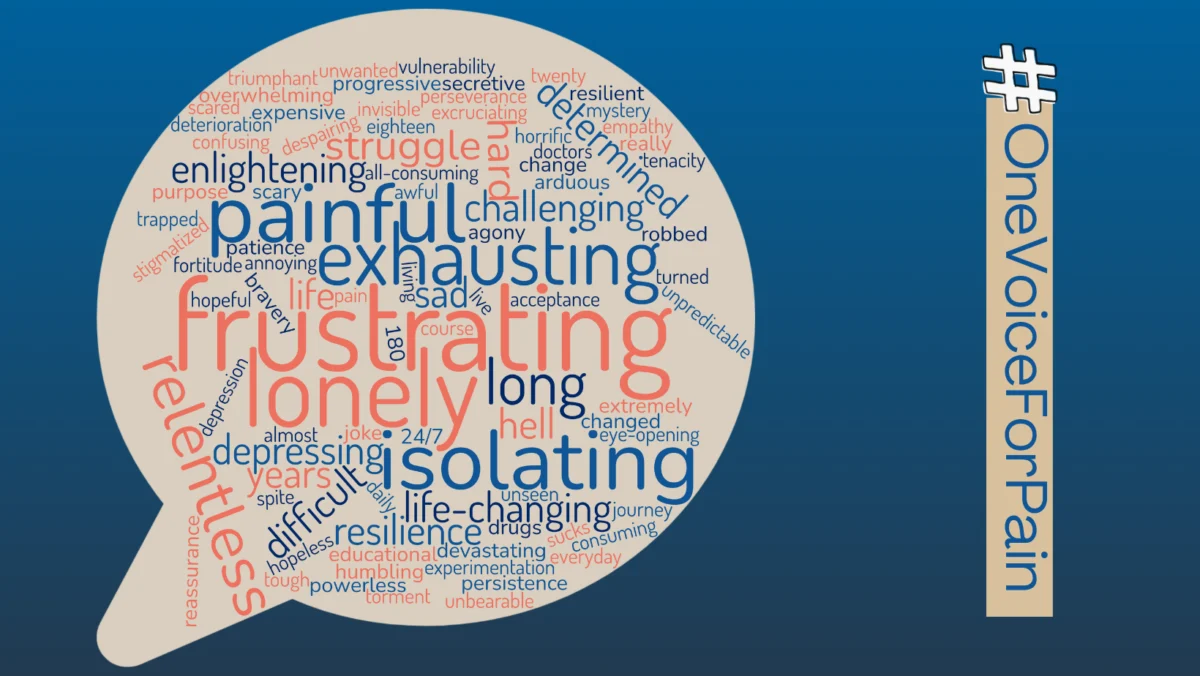
This September, in recognition of Pain Awareness Month, we sought to strip away the clinical jargon and medical charts to ask a fundamental question: What is it truly like to live with chronic pain? We invited individuals from diverse backgrounds, each navigating their own unique journey with persistent pain, to distill their experiences into just three words. The result was not merely a collection of phrases, but a profound, heart-wrenching map of the human experience under duress.
The Lexicon of Suffering: An Analysis of the Data
When we compiled the responses, a striking pattern emerged. Despite the vast differences in the underlying causes of their pain—ranging from fibromyalgia and neuropathy to autoimmune disorders and post-surgical complications—the emotional vocabulary remained remarkably consistent.
The Dominant Themes
The most frequently cited words were "Isolating," "Frustrating," "Exhausting," "Lonely," and "Painful." These terms highlight the duality of the condition: the physical sensation of agony coupled with the psychological erosion caused by the inability to articulate that agony to others.
The repetition of these specific terms suggests a collective trauma. Chronic pain often forces individuals into a state of social withdrawal. When the simple act of sitting, standing, or holding a conversation becomes an ordeal, the world outside begins to feel distant and inaccessible. This is the "loneliness of the sufferer"—a state where the pain acts as a barrier, preventing authentic connection with those who do not share the burden.
Beyond the Physical
While physical agony is the foundation, the auxiliary words provided by our participants reveal a broader narrative of personal transformation. Terms such as "Long," "Relentless," "Challenging," and "Depressing" speak to the temporal nature of the condition—the feeling that there is no finish line.
However, the data also captured the paradoxical nature of the human spirit. Words like "Enlightening," "Resilience," and "Purpose" emerged alongside the expected descriptions of "Struggle" and "Devastation." This indicates that while pain is undeniably destructive, it is also a catalyst for profound personal evolution, forcing individuals to redefine their identities, their values, and their relationship with their own mortality.
The Chronology of a Pain Journey
To understand the impact of chronic pain, one must look at it not as a static event, but as a longitudinal experience. The trajectory of a life altered by pain often follows a predictable, albeit painful, timeline.
Phase 1: The Onset and the Search for Answers
The journey typically begins with an acute event or the gradual emergence of symptoms. This phase is defined by "Confusion" and "Experimentation." Patients often bounce from specialist to specialist, undergoing a battery of tests that frequently return normal results. During this time, the financial and emotional costs begin to mount, leading to what many described as an "Expensive" and "Powerless" chapter of their lives.
Phase 2: The Normalization of Suffering
As the pain persists beyond the six-month mark, it shifts from an acute medical problem to a chronic lifestyle condition. This is when the "Life-changed" and "Change of course" sentiments take hold. Careers are stalled, relationships are tested, and hobbies are abandoned. The sufferer begins to realize that their previous life is no longer an option, necessitating a painful period of grieving for the person they used to be.
Phase 3: The Search for Meaning and Adaptation
The final phase, represented by words like "Acceptance" and "Vulnerability," is the most complex. It is where the individual stops fighting the reality of their pain and begins to "Live in spite." It is a phase of strategic management rather than cure. This is where the "180-degree turn" occurs, as the sufferer finds new ways to derive meaning and joy in a world that has been irrevocably altered.
The Personal Narratives: When Three Words Tell a Story
Sometimes, the most powerful insights come from the short, clipped sentences that define a person’s entire reality. These three-word summaries act as emotional anchors for the data:
- "Live in spite": A testament to the defiance required to get out of bed every morning.
- "It really sucks": A blunt, honest acknowledgment that sometimes, the pain is simply unbearable and there is no silver lining to be found in the immediate moment.
- "My life changed": A simple, objective statement that captures the seismic shift in perspective that chronic pain inevitably brings.
- "Living in hell": A raw, visceral description of the sensory overload and emotional toll that 24/7 pain can take on the psyche.
These personal accounts highlight the "Stigmatized" aspect of the condition. Many respondents noted that their biggest battle wasn’t just with their nerves or their joints, but with a society that often dismisses their suffering as psychosomatic or exaggerated.
Supporting Data: The Broader Context
Chronic pain is not a niche issue; it is a global public health crisis. According to data from the Centers for Disease Control and Prevention (CDC) and various global health organizations, approximately 20% of adults experience chronic pain. This translates to millions of individuals whose daily function is hampered by persistent, often debilitating, discomfort.
The Economic Impact
The financial burden of chronic pain is astronomical. It encompasses not only direct healthcare costs—medications, physical therapy, surgeries, and specialized consultations—but also indirect costs such as lost productivity, disability payments, and the economic toll on family caregivers. The "Expensive" tag identified by our participants is supported by research indicating that chronic pain is a leading cause of long-term work disability.
The Psychological Comorbidity
The link between chronic pain and mental health is well-documented. The constant stimulation of pain pathways in the brain often leads to changes in mood, sleep architecture, and cognitive function. The high prevalence of "Depressing" and "Exhausting" in our study correlates with clinical findings that patients with chronic pain are at a significantly higher risk for anxiety and depressive disorders.
Official Responses and the Movement for Change
The medical community has begun to shift its approach from a purely biomedical model—which focuses on fixing the "broken part"—to a biopsychosocial model, which recognizes that pain is a complex interaction between biological, psychological, and social factors.
The Move Toward Multidisciplinary Care
Leading pain management organizations are increasingly advocating for integrated care pathways. This approach includes not just medication, but cognitive-behavioral therapy, physical medicine, nutritional support, and mindfulness-based stress reduction. The goal is no longer just the elimination of pain, but the improvement of quality of life and functional independence.
OneVoiceForPain: A Call to Action
The initiative #OneVoiceForPain, which gathered the data for this report, serves as a crucial platform for advocacy. By bringing these individual, disparate stories together, the campaign aims to dismantle the stigma surrounding chronic pain. It seeks to inform policymakers that pain is not a personal failure, but a structural challenge that requires investment in research, better pain education for healthcare providers, and more equitable access to multidisciplinary treatment.
Implications for the Future
What does this collective testimony mean for the future of pain management? It suggests that we need a radical shift in how we listen. If a patient describes their pain as "All-consuming" or "Torment," the current clinical approach of "rate your pain from 1 to 10" is woefully inadequate.
Empathetic Medicine
There is a clear mandate for healthcare providers to move toward empathetic, narrative-based medicine. By acknowledging the patient’s lived experience as valid data, doctors can form stronger therapeutic alliances, which in turn leads to better adherence to treatment and improved patient outcomes.
Societal Awareness
Beyond the clinic, we must foster a society that understands the concept of invisible disability. When we see someone "living in spite," our response should be one of support rather than skepticism. Pain awareness is not just about understanding the physiology of nerves; it is about acknowledging the humanity of those who walk through life carrying a heavy, silent burden.
As we conclude this Pain Awareness Month, let these words serve as a reminder. Behind every statistic and every medical diagnosis is a human being struggling to reclaim their life. Whether their path is defined by "Resilience" or "Struggle," their voice matters. By uniting as #OneVoiceForPain, we can move closer to a world where chronic pain is not just managed, but understood—and where the invisible burden is finally shared.