









Maintaining physical autonomy after the age of 60 is the gold standard of healthy aging. While society often equates youth with chasing personal records from decades past, true physical longevity is defined by something far more practical: the ability to navigate your environment with strength, confidence, and fluid coordination.
If you have ever wondered how "young" your body truly moves, the answer lies not in a calendar date, but in your capacity to perform fundamental, functional movement patterns. When you can lower yourself to the ground, push back up, navigate obstacles, and recover your balance without a sense of stiffness or apprehension, you are effectively "aging in reverse."
This comprehensive guide serves as a "Vitality Audit"—a series of six bodyweight assessments designed to evaluate your current level of physical resilience. By testing these movements, you gain an honest, actionable assessment of how your body handles the demands of daily life.
The Core Philosophy: Why Functional Strength Matters
For those over 60, exercise is no longer about aesthetics; it is about preservation and power. As we age, the body naturally experiences a decline in muscle mass (sarcopenia) and bone density. However, this process is not an inevitable slide into frailty.
Professional trainers often utilize bodyweight movements as a barometer for health because they require more than just raw force. They demand a sophisticated interplay of stability, neurological coordination, and bracing. If you can perform the following six exercises with clean form, it is a definitive sign that your body retains significant "functional currency"—the ability to perform life’s tasks with ease and safety.
1. The Pause Push-Up: Measuring Upper-Body Integrity
The push-up is the classic assessment of upper-body strength, but the pause variation adds a critical layer of honesty. By halting at the bottom of the movement, you eliminate the possibility of using momentum or "bouncing" off the floor.
The Mechanics of the Move
When you hold the bottom position, your chest, shoulders, and triceps are forced to work from a dead stop. Simultaneously, your core must engage intensely to keep your spine neutral and your hips from sagging. This exercise evaluates your pressing power while confirming that your core is strong enough to protect your lower back.
- Target Muscles: Pectorals, anterior deltoids, triceps, and transverse abdominis.
- The Benchmark: Aim for 3 sets of 5 to 8 reps.
- Pro Tip: Maintain a straight line from your head to your heels. If you cannot maintain tension, scale back to an incline push-up (using a sturdy bench or countertop) to protect your shoulders while building necessary strength.
2. The Reverse Lunge: Assessing Lower-Body Coordination
While forward lunges can sometimes place undue stress on the knees, the reverse lunge offers a safer, more stable way to challenge your legs. It tests your ability to stabilize a single-leg stance—a skill essential for climbing stairs and navigating uneven terrain.
Why It Matters
Stepping backward forces your front leg to bear the brunt of the load while simultaneously stabilizing your hip. This movement mimics the "catch" mechanism required if you trip or need to shift weight suddenly.
- Target Muscles: Gluteus maximus, quadriceps, hamstrings, and stabilizers of the hip.
- The Benchmark: 3 sets of 8 to 10 reps per leg.
- Pro Tip: Keep your weight centered over the mid-foot of your front leg. Avoid pushing off the back toes; let the front leg do the work of driving you back to a standing position.
3. The Bodyweight Squat: The Foundation of Independence
The squat is the most fundamental movement pattern for human longevity. From sitting down in a chair to picking up a bag of groceries, the squat is the movement that dictates your ability to live independently.
Evaluating Your Range
A high-quality squat after 60 shows that your joints—specifically the hips and knees—are moving in sync and that your posterior chain is functional. The goal here is not necessarily depth, but rather control. Can you descend slowly, maintain a flat back, and rise without your knees caving inward?
- Target Muscles: Quadriceps, glutes, core, and lower back.
- The Benchmark: 3 sets of 10 to 15 reps.
- Pro Tip: If your heels lift off the ground, focus on opening your stance slightly or using a box to gauge your target depth until your mobility improves.
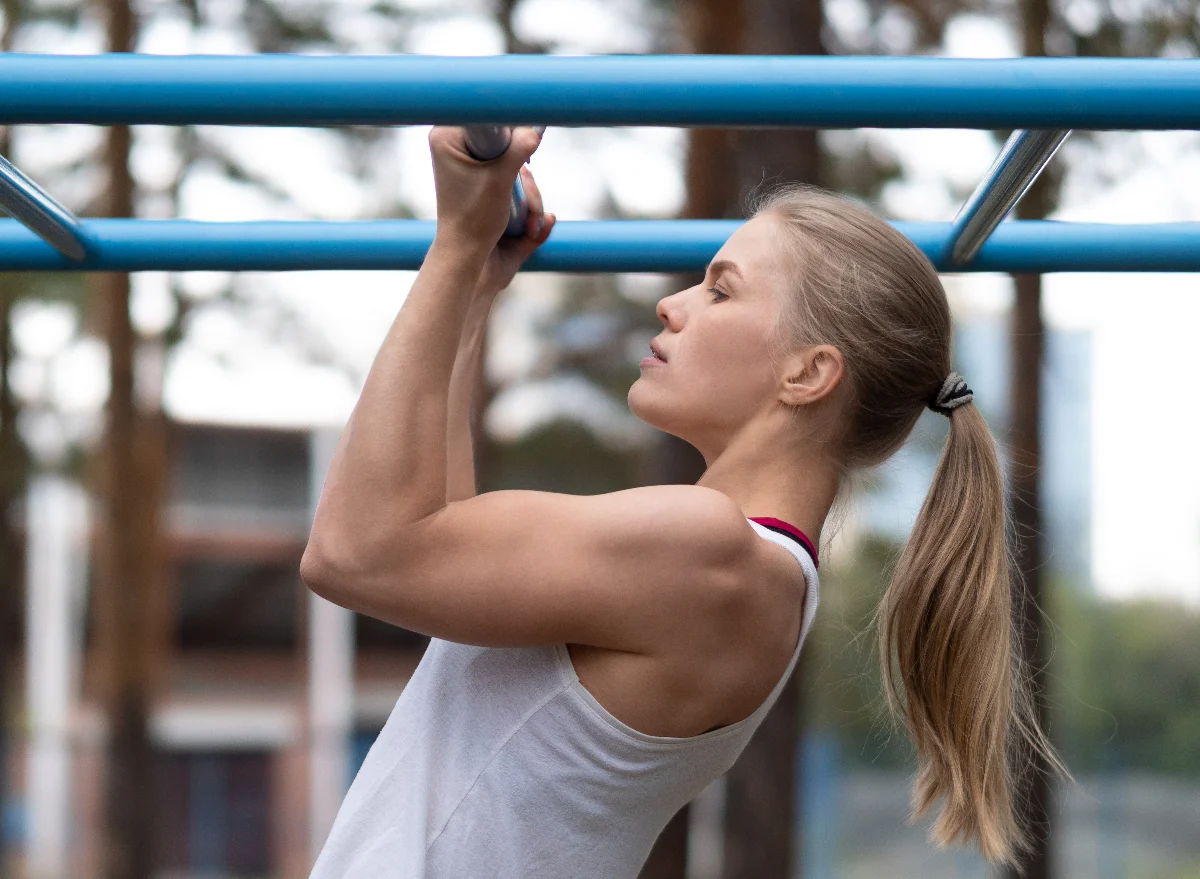
4. The Chin-Up: Testing Pulling Power and Grip
Perhaps the most challenging of the six, the chin-up is a true test of relative strength. It requires your lats, biceps, and back to haul your own body weight—a feat that becomes increasingly difficult if you have lost muscle mass.
The Significance of the Pull
Pulling movements are often neglected, yet they are crucial for posture and shoulder health. Beyond the arms, the chin-up tests your grip strength—a primary indicator of overall longevity and mortality risk in older adults.
- Target Muscles: Latissimus dorsi, biceps, forearms, and posterior deltoids.
- The Benchmark: 3 sets of 3 to 6 reps.
- Pro Tip: If you cannot perform a full chin-up, utilize "negatives." Jump or step up to the bar so your chin is above it, then lower yourself as slowly as possible (aiming for 5 to 10 seconds). This builds the eccentric strength required for the full movement.
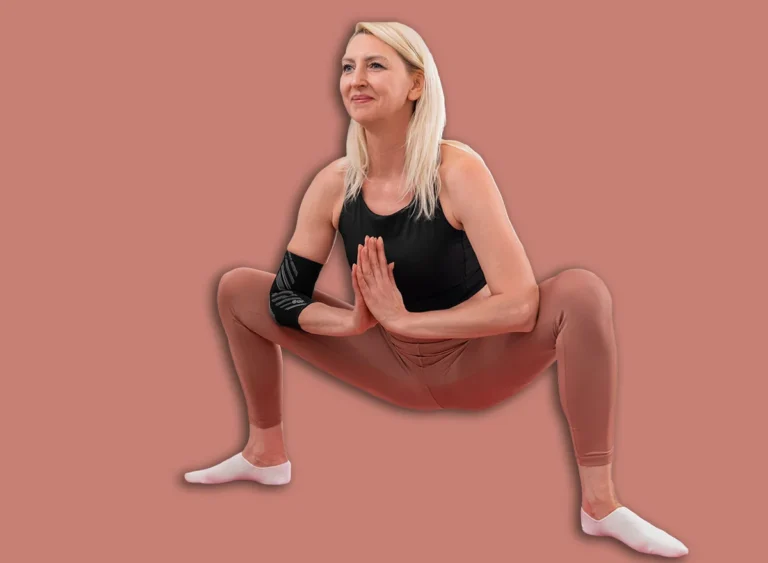
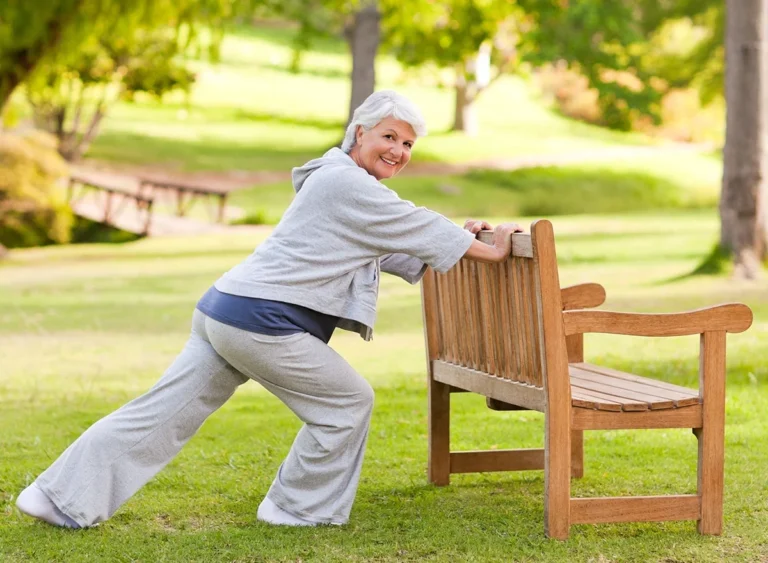
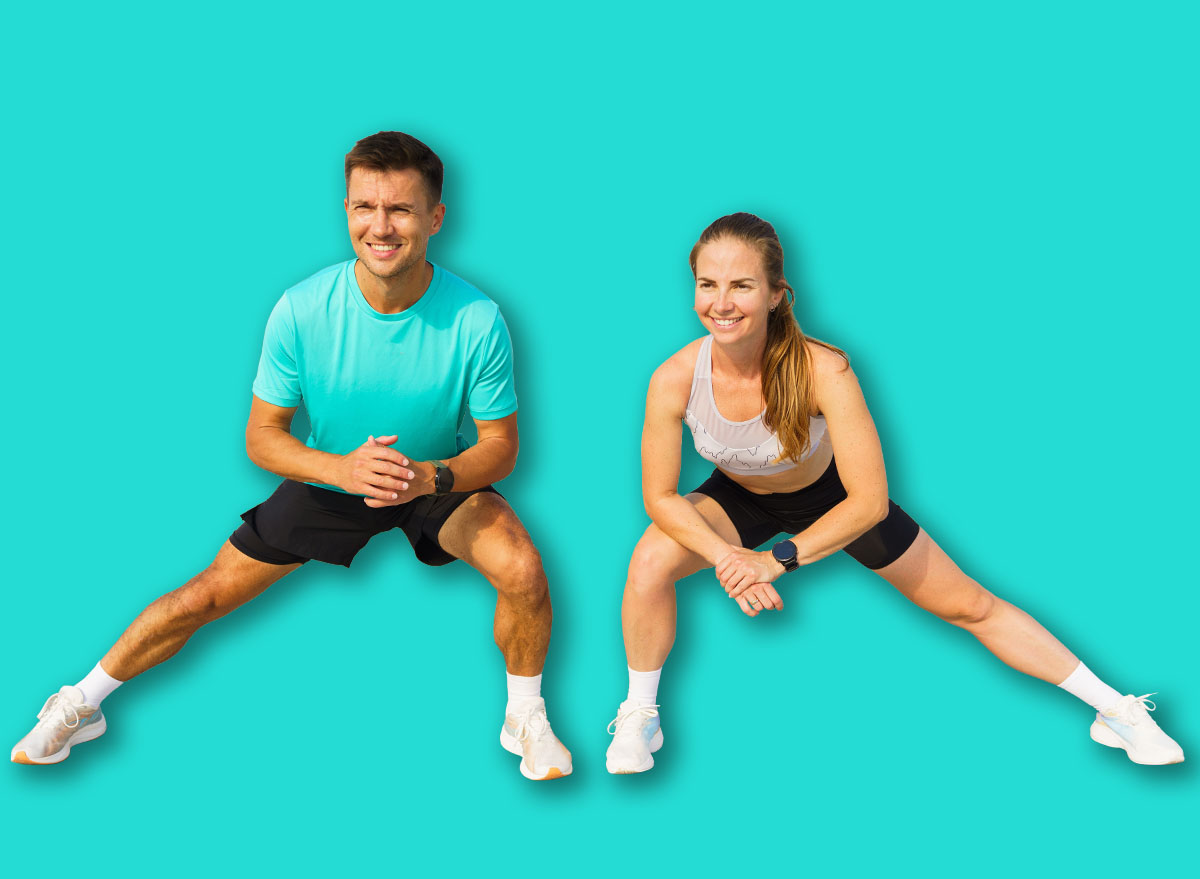
5. The Lateral Lunge: Mastering Multi-Planar Movement
Most of our daily lives are spent moving forward and backward. However, life often happens in the side-to-side plane. The lateral lunge is the ultimate test of hip mobility and inner-thigh strength.
Stability in Motion
If you lose your footing on a hike or slip on a slick floor, your ability to recover depends on your lateral hip strength. This exercise prevents the "collapsing" of the knee that often occurs during unexpected sideways movements.
- Target Muscles: Gluteus medius, adductors (inner thighs), and quads.
- The Benchmark: 3 sets of 8 to 10 reps per side.
- Pro Tip: Think of this as "sitting back" into your hip rather than "leaning" into the knee. Keep your chest up and your trailing leg straight.
6. The Jump Squat: The Power Factor
Power—the ability to exert force quickly—is the first physical attribute to decline with age. While many seniors focus on slow, steady resistance training, adding a controlled "jump" pattern helps maintain the fast-twitch muscle fibers essential for an athletic, responsive body.
The Goal: Controlled Force
You do not need to aim for maximum height. The objective is to produce enough force to leave the ground and, more importantly, to land softly. A soft, silent landing is the hallmark of a body that still possesses excellent neuromuscular control.
- Target Muscles: Entire lower body, calves, and core.
- The Benchmark: 3 sets of 5 to 8 reps.
- Pro Tip: If jumping feels too aggressive, start with a "squat to calf raise," rising onto your toes as quickly as possible to simulate the explosive phase of the jump.
Implications: Building a Resilient Future
The "Vitality Audit" is not meant to be a pass-fail exam that determines your worth. Instead, view these movements as a diagnostic tool. If you find that your squat lacks depth, or that your push-ups feel shaky, you have identified a specific area of your physical infrastructure that requires attention.
The Science of Longevity
Research consistently shows that functional fitness directly correlates with reduced fall risk, improved metabolic health, and better cognitive function. By incorporating these movements into your weekly routine, you are doing more than just "working out." You are investing in your future independence.
Final Considerations
Before beginning any new exercise program, particularly if you have pre-existing joint issues or cardiovascular conditions, consult with your primary care physician. Once cleared, prioritize form over frequency. The goal is to accumulate "clean reps" that reinforce proper movement patterns.
By regularly checking these six markers, you are ensuring that your body remains a capable vessel, allowing you to explore the world with the same vigor you had decades ago. Remember: you are not trying to be the person you were at 30; you are building the strongest, most capable version of the person you are today.