August 24, 2026 — The state of Louisiana is mourning a heartbreaking loss this week following the death of an 8-year-old girl, Lillian Smart, who succumbed to a primary amoebic meningoencephalitis (PAM) infection caused by the rare, water-borne organism Naegleria fowleri. The tragedy marks the first confirmed case of the "brain-eating" amoeba in the state since 2013, reigniting public discourse regarding water safety and the changing environmental conditions that may be expanding the reach of this lethal pathogen.
The Tragic Loss of Lillian Smart
The ordeal began in the northern region of Louisiana, where 8-year-old Lillian Smart is believed to have contracted the infection while swimming in Lake Claiborne. The infection, which causes rapid and near-total destruction of brain tissue, progressed with terrifying speed.
On Sunday, her parents, Daniel and Rebecca Smart, shared the devastating news of her passing in a public statement posted to social media. "Last night, Lillian ran from our arms to the arms of Jesus," they wrote. "The injuries to her brain were too severe for her little body to recover from. Everyone did everything they could to keep her here."
The community response has been one of profound grief. Louisiana Governor Jeff Landry took to social media platform X to express his condolences, stating, "Heartbroken over the news of Lillian’s passing." Her death serves as a stark reminder of the unpredictable and devastating nature of environmental pathogens that, while statistically rare, leave an indelible mark on families and communities.
Understanding Naegleria fowleri: A Silent Predator
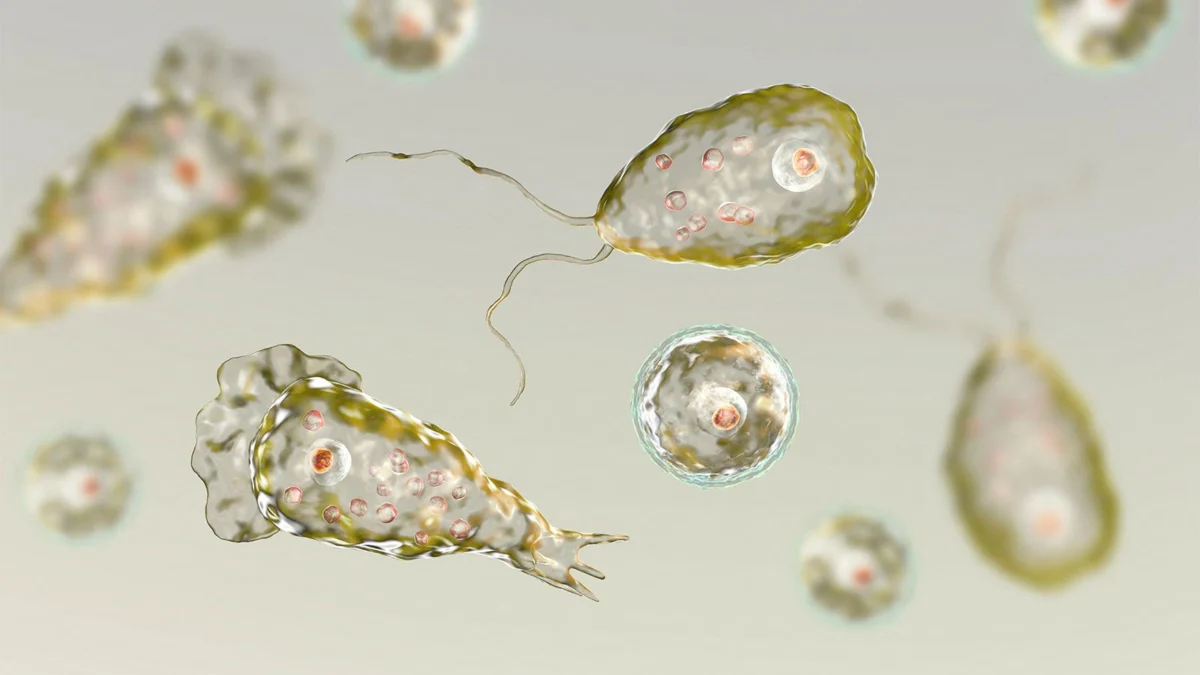
Naegleria fowleri is a thermophilic, free-living ameboflagellate commonly found in warm freshwater environments, including lakes, rivers, canals, and ponds. It thrives in temperatures exceeding 77°F (25°C), becoming increasingly active as water temperatures rise during the summer months.
How Infection Occurs
The organism does not cause infection by being swallowed; rather, it enters the human body exclusively through the nasal cavity. When water containing the amoeba is forced up the nose—often during activities like diving, water skiing, or jumping into water—the amoeba travels along the olfactory nerve directly into the brain.
Once in the brain, the amoeba causes primary amoebic meningoencephalitis (PAM). The infection leads to the destruction of brain tissue and intense inflammation, causing symptoms that begin with headaches, fever, nausea, and vomiting, and rapidly progress to stiff neck, seizures, and coma. The disease is nearly always fatal, with a survival rate of less than 3% in the United States. Between 1937 and 2025, there have been approximately 180 confirmed cases in the U.S., reflecting the extreme rarity of the infection.
Chronology of the 2026 Incident
While the Louisiana Department of Health (LDH) maintains strict privacy protocols regarding individual patients, the timeline of the incident highlights the rapid onset of the disease:
- Mid-August 2026: Lillian Smart visits Lake Claiborne, where health officials believe the exposure occurred.
- Late August 2026: Symptom onset occurs shortly after the visit to the lake. The rapid escalation of neurological symptoms necessitates emergency medical intervention.
- August 20, 2026: Medical professionals confirm the presence of Naegleria fowleri. The Louisiana Department of Health issues an internal notification regarding the state’s first confirmed case in over a decade.
- August 23–24, 2026: Despite the heroic efforts of medical staff, Lillian Smart succumbs to the infection. Her passing is confirmed by family representatives, Kyle Roberts.
The Environmental Shift: A Changing Landscape
For decades, Naegleria fowleri infections were seen almost exclusively in the southern United States, where high summer temperatures are the norm. However, recent data suggests a shifting landscape. Scientists have noted sporadic cases in northern states, including Maryland, Indiana, and Minnesota.
Why the Shift?
Researchers point to climate change and rising ambient temperatures as potential drivers for the expanded range of the amoeba. As bodies of water in northern latitudes remain warmer for longer periods, the conditions for Naegleria fowleri to survive and proliferate become more favorable.
"The amoeba is naturally occurring, and there is no routine environmental test for Naegleria fowleri in bodies of water," the Louisiana Department of Health stated in a recent advisory. This lack of testing capability poses a significant challenge for public health officials. Because the amoeba is so common in warm water, it is impossible to eliminate it from natural environments, making total avoidance of swimming in warm, stagnant freshwater the only foolproof method of prevention.
Official Responses and Public Health Guidance
The Louisiana Department of Health (LDH) has maintained a stance of transparency regarding the risks while emphasizing the inherent difficulty in mitigation. Because the organism is naturally present in the environment, health departments cannot "close" or "clean" a lake, as the amoeba would simply return.
"The risk of infection is extremely low, but it is real," said one public health official speaking on condition of anonymity. "The primary focus must be on education. Swimmers should be aware that if they choose to enter warm freshwater, they assume a level of risk, however minute."
Recommended Safety Precautions
Health authorities, including the CDC, provide the following guidelines for those swimming in warm freshwater:
- Avoid Submergence: Keep your head above water. Use nose clips or hold your nose shut if you intend to jump or dive into the water.
- Avoid Sediment: The amoeba lives in the sediment at the bottom of lakes and ponds. Avoid digging or stirring up the bottom while playing in shallow, warm freshwater.
- Recognize the Temperature: Be particularly cautious during heatwaves or when water temperatures are high, as these conditions are optimal for the amoeba’s growth.
Implications for the Future
The death of Lillian Smart has prompted a renewed conversation about public health messaging. Critics argue that while the risk is statistically minuscule—with fewer than 10 cases annually in the United States—the psychological and physical toll of such a tragedy necessitates better public warning systems.
Conversely, health experts caution against inciting mass panic. The focus, they argue, should remain on the reality that Naegleria fowleri is not a widespread threat like a communicable virus. It cannot be spread from person to person, and it is not a contaminant in chlorinated swimming pools or properly maintained water systems.
A Community in Mourning
As the state of Louisiana moves forward, the memory of Lillian Smart serves as a somber reminder of the vulnerabilities inherent in our relationship with nature. The scientific community continues to study the amoeba in hopes of developing better diagnostic tools or, eventually, more effective treatments for PAM.
Until such advancements are made, the loss of this 8-year-old girl remains a heartbreaking testament to the lethal power of a microscopic organism that has existed for millennia, and the suddenness with which it can alter the course of a family’s life. For now, the Smart family, supported by their community, is left to navigate a grief that has resonated far beyond the borders of Louisiana, serving as a solemn warning to families across the nation to exercise caution in the waters where they play.