As the global population ages, the approach to physical fitness is undergoing a significant paradigm shift. For decades, the gold standard for "ab workouts" involved crunches, sit-ups, and various floor-based exercises. However, for adults over the age of 60, these traditional methods are increasingly being viewed as outdated—and, in some cases, counterproductive.
Modern kinesiology and personal training experts are now pivoting toward "floor-free" movements, which prioritize functional stability, spine protection, and real-world utility. According to Adam Dobrez, a seasoned personal trainer and owner of Red Fox Gym, the goal for older adults should no longer be to "feel the burn" in their midsection, but rather to build a resilient, functional core that supports independence for the long haul.
The Paradigm Shift: Why Traditional Crunches Fall Short
To understand why the fitness industry is moving away from floor-based abdominal training, one must first understand the biological reality of aging. Sarcopenia—the natural, age-related loss of muscle mass—is an inevitable process. While resistance training is the antidote, the way we train matters significantly.
Traditional floor exercises, such as crunches and sit-ups, rely heavily on spinal flexion. For an older adult, this repetitive bending of the spine, often performed while lying on a hard surface, can exacerbate existing conditions like neck stiffness, lower back disc issues, or limited mobility. Furthermore, these exercises isolate the rectus abdominis—the "six-pack" muscle—while largely ignoring the deep core stabilizers that actually prevent falls and maintain posture.
"Instead of just ‘feeling the burn,’ core exercises after 60 should promote balance, posture, stability, and use everyday real-life movements," says Dobrez. "I suggest training the core in the way it is actually used in daily life. This looks like supporting balance, protecting the spine, and maintaining posture during your movements."
The Core as a Stabilizer: The Science of Functional Movement
The human core is not merely a set of muscles designed to flex the torso forward. It is a complex, three-dimensional system consisting of the diaphragm, the pelvic floor, the multifidus (deep back muscles), and the transverse abdominis. Together, these muscles act as a natural corset, stabilizing the spine and transferring force between the upper and lower body.
When we move in the real world—carrying groceries, stepping over an obstacle, or reaching for a high shelf—our core works to keep us upright. By focusing on standing, gravity-defying movements, we train these muscles to function in a way that directly correlates to daily safety. This is the essence of functional training: building a body that is not just aesthetically fit, but practically capable.
Four Essential Floor-Free Moves for Longevity
Dobrez recommends a specific set of gym-based movements that prioritize safety and structural integrity. These exercises minimize spinal strain while maximizing core engagement.
1. The Step-Up: Building Dynamic Balance
The step-up is perhaps the most underrated movement for leg and core strength. By stepping onto a raised platform, you force your core to engage to stabilize your pelvis as you transition from a two-legged base to a single-legged one.
- Why it works: It forces unilateral stability. As you lift your body weight, your obliques and deep stabilizers must fire to keep you from leaning or swaying, mimicking the movement of climbing stairs or navigating uneven terrain.
2. The Farmer’s Carry: The Ultimate Posture Trainer
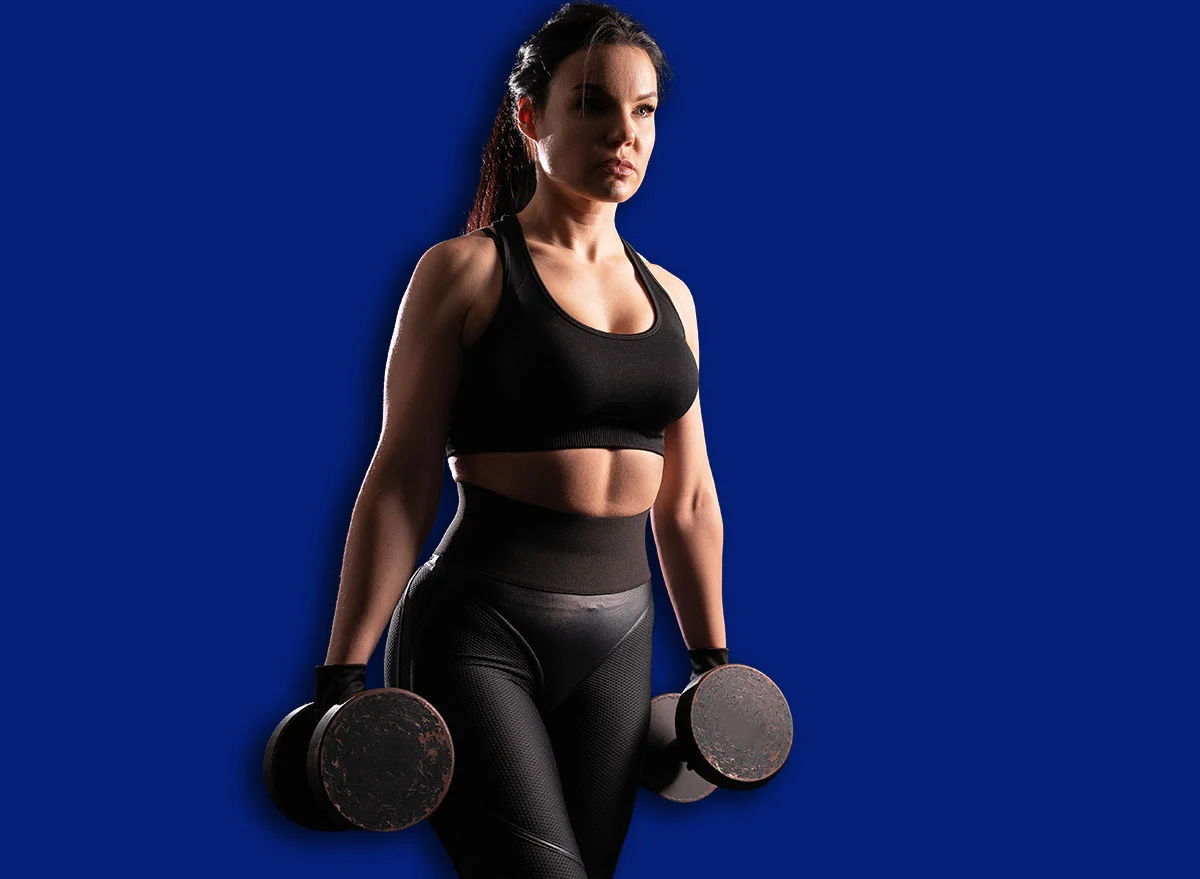
The Farmer’s Carry is simple: pick up heavy weights in each hand and walk with a tall, rigid spine. It is the gold standard for grip strength, shoulder stability, and core bracing.
- Why it works: It creates a "weighted vertical" challenge. As you walk, your core must fight the tendency of the weights to pull you forward or sideways. This teaches the body to keep the spine neutral under load, a vital skill for carrying heavy objects in daily life.
3. Standing Cable Rows: Protecting the Posterior Chain
Many seniors focus exclusively on the front of the body, leading to a "hunched" posture. Standing cable rows pull the shoulders back, strengthening the muscles between the shoulder blades and the core simultaneously.
- Why it works: By performing this in a standing position rather than seated, you engage your glutes and core to keep your body steady against the resistance of the cable. It fosters a tall, confident posture that counteracts the forward-slumping effects of aging.
4. Standing Cable Pallof Press: Anti-Rotation Mastery
The Pallof Press is a revolutionary move for core health. By standing perpendicular to a cable machine and pressing the handle straight out from your chest, you force your core to resist rotation.
- Why it works: This is the definition of "anti-rotation." It builds the ability to resist external forces that would otherwise knock you off balance. This type of strength is critical for preventing falls, as most injuries occur when we are knocked off-center.
Implications for Aging Well: The Long-Term View
The shift toward these movements carries profound implications for the aging population. By avoiding the floor, seniors remove the "barrier to entry" associated with gym workouts. Many older adults avoid training because they fear they won’t be able to get back up once they lie down.
When you remove the floor from the equation, you remove the anxiety. This creates a sustainable habit. Consistency is the primary factor in long-term health, and by making workouts more comfortable and less intimidating, trainers like Dobrez are successfully helping their clients remain active well into their 70s, 80s, and beyond.
Expert Consensus and Future Outlook
The consensus among modern geriatric physical therapists and personal trainers is clear: fitness after 60 is about preserving the ability to move through space safely. The transition from spinal-flexion-based training to stabilization-based training is a necessary evolution.
As we look toward the future of fitness, we can expect to see more gym designs incorporating functional training zones—areas dedicated not to machines that pin the user down, but to free-standing equipment that allows for natural, human movement.
Key Takeaways for Your Routine
- Prioritize Stability: If an exercise makes you feel unstable, modify it. Your goal is controlled movement.
- Think Vertically: Whenever possible, choose exercises where you are standing. Gravity is your partner in building bone density and core strength.
- Focus on Function: Ask yourself, "How does this movement help me in my daily life?" If the answer is "it makes me more balanced," keep doing it.
By adopting these principles, older adults can reclaim their physical agency. Strength is not just about muscle size; it is about the capacity to navigate the world with confidence, stability, and resilience. Moving away from the floor is not about doing "less"—it is about doing what matters most.