








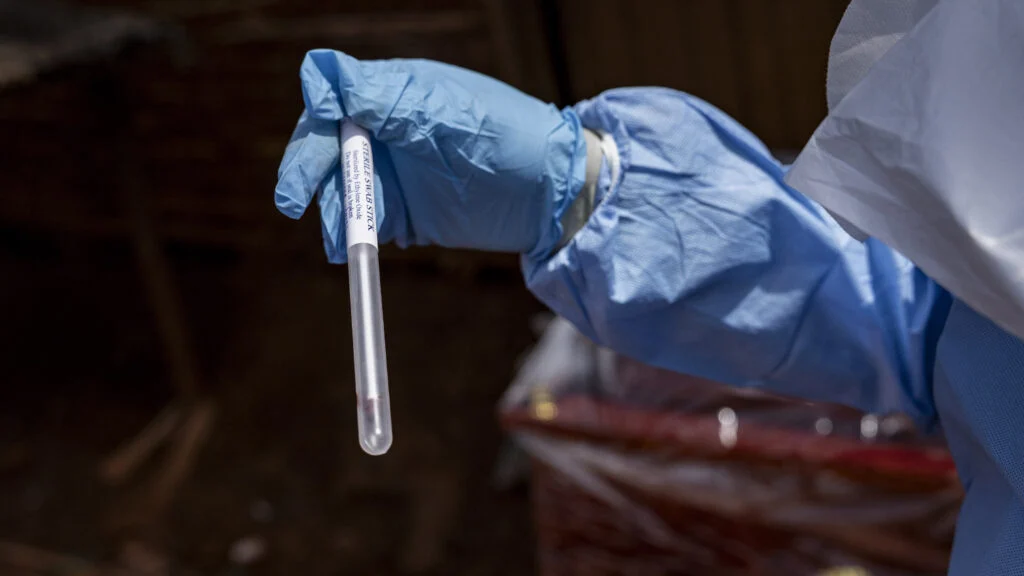
The U.S. Department of Health and Human Services (HHS) confirmed this week that Americans identified as having high-risk exposure to the ongoing Ebola outbreak in Central Africa will have access to a cutting-edge, experimental antibody treatment. The drug, known as MBP-134, has demonstrated significant potential in animal models but has yet to undergo rigorous clinical trials to determine its efficacy in human patients.
As the outbreak—centered in the northeastern Democratic Republic of the Congo (DRC) and parts of Uganda—continues to evolve, the administration is moving to secure the health of American personnel on the ground. However, the deployment of this therapeutic, managed by the Biomedical Advanced Research and Development Authority (BARDA), occurs against a backdrop of geopolitical friction and logistical challenges that have complicated the global response to the viral threat.
The Science of MBP-134: A Pan-Ebola Hope
MBP-134 is the product of years of intensive research by San Diego-based Mapp Biopharmaceuticals. Founded in 2003 with a mandate to address unmet needs in biodefense and global health, the company has long focused on developing medical countermeasures for infectious diseases.
What makes MBP-134 particularly compelling to the World Health Organization (WHO) and other international health bodies is its potential as a "pan-Ebola" therapy. Unlike previous treatments that may be specific to one strain, MBP-134 is designed to enhance survival rates regardless of the specific Ebola species involved. The current outbreak is being driven by the Bundibugyo ebolavirus, a rare variant that has only been documented in three major outbreaks throughout history. Preliminary testing in primates has suggested that MBP-134 is effective against the Bundibugyo, Zaire, and Sudan strains, making it a critical asset in the medical arsenal.
Despite its promise, the drug remains unproven. An expert advisory panel convened by the WHO recently prioritized MBP-134 for inclusion in potential clinical trials, noting that its primary advantage lies in its potency: "MBP-134 represents a promising option for treatment at a single dose," the technical advisory group stated.
Chronology of the Current Crisis
The urgency surrounding the deployment of MBP-134 stems from recent incidents involving American medical professionals stationed in the region.
- Last Month: An American physician, Dr. Peter Stafford, contracted Ebola while working in the outbreak zone. He was subsequently evacuated to Germany for high-level clinical care. His wife, also a physician, and their four children were placed under quarantine in Germany as a precautionary measure. Dr. Stafford is currently undergoing treatment and is reportedly in the recovery phase.
- Ongoing: Another physician from the same Christian missionary organization, who was identified as having high-risk exposure to the virus, remains in quarantine in the Czech Republic. To date, that individual has remained healthy and shown no symptoms of infection.
- Current Status: Beyond these cases, there are no other known exposures among U.S. citizens. However, the potential for further risk remains high, given the fluid nature of the outbreak in the DRC and Uganda.
Official Responses and the Logistics of Care
The U.S. government’s strategy for handling exposed Americans is managed by BARDA, which is currently coordinating the shipment of monoclonal antibodies. According to an HHS spokesperson speaking on condition of anonymity, the therapy will be administered under the Food and Drug Administration’s (FDA) "investigational use mechanisms." These regulatory pathways allow for the emergency deployment of experimental treatments that have not yet received formal licensure, provided they meet specific safety and oversight criteria.
A significant point of contention is the total inventory of MBP-134. When queried by STAT regarding the number of doses currently available for deployment, Mapp Biopharmaceuticals deferred to federal authorities, stating that BARDA retains ownership of the supply and maintains control over distribution figures.
The Kenya Containment Controversy
The administration’s broader strategy for managing exposed citizens—specifically the plan to construct a 50-bed quarantine and treatment facility in Kenya—has sparked intense debate. The facility is intended to serve as a high-containment site for the initial treatment of any American who develops symptoms.
The plan has faced fierce local opposition. Residents in the proposed host area have engaged in violent protests, and the construction process was officially halted by a Kenyan court ruling on May 29. Despite these setbacks, the administration remains steadfast. Mehmet Oz, administrator of the Centers for Medicare and Medicaid Services, stated earlier this week that officials are confident they will eventually "work out something with Kenya."
The government maintains that evacuating patients to Europe is faster and more efficient than transporting them back to the United States. This assertion has drawn sharp criticism from public health experts who point to the successful model used during the 2014–2016 West African Ebola outbreak. At that time, the U.S. invested millions of dollars into a domestic network of specialized biocontainment units. Eight patients were repatriated to the U.S. under that program; all but one survived. Critics argue that bypassing this established, high-capacity infrastructure in favor of an unproven and diplomatically fraught facility in Kenya undermines both public safety and international goodwill.
Implications for Future Clinical Trials
While the immediate goal is to protect high-risk Americans, the global health community views the current outbreak as a narrow window of opportunity to generate real-world data on MBP-134.
"The partners’ protocol is in front of the Congolese regulatory authorities," said Dr. Armand Sprecher, an emergency physician and veteran of multiple Ebola responses with Doctors Without Borders. "They’ve got their ethical review done. The folks from the Institute of Tropical Medicine in Antwerp are poking around in Ituri—the epicenter of the outbreak—doing site evaluations. All the machinery is in motion."
The U.S. government has not yet committed to providing doses of MBP-134 specifically for a clinical trial, leaving researchers in a state of cautious uncertainty. At a press conference last week, a government official acknowledged that a formal request for supplies had been received but remained non-committal, stating, "We are working to assess the availability and to best identify how to distribute and utilize the courses that we have."
The Burden of Proof
The central challenge remains the tension between individual patient care and scientific validation. For those currently at high risk, the priority is the compassionate use of an experimental drug. For the global health community, the priority is the establishment of a randomized, controlled trial.
Because Ebola outbreaks are sporadic and often occur in resource-limited, high-conflict environments, the opportunity to study a potential "pan-Ebola" treatment like MBP-134 is rare. If the drug is reserved solely for individual, off-label usage among high-risk foreigners, the scientific community may miss a vital chance to validate a tool that could save thousands of lives in future epidemics.
As the situation develops, the path forward requires a delicate balance: addressing the legitimate safety concerns of U.S. personnel while ensuring that the limited supply of experimental therapeutics is used in a way that provides maximum long-term benefit to the global population. With local protests in Kenya persisting and the regulatory clock ticking, the U.S. administration faces an increasing need for transparent communication regarding its stockpiles and its strategy for reconciling domestic safety policies with the realities of international health crises.