




By Jackie Keating, LCSW
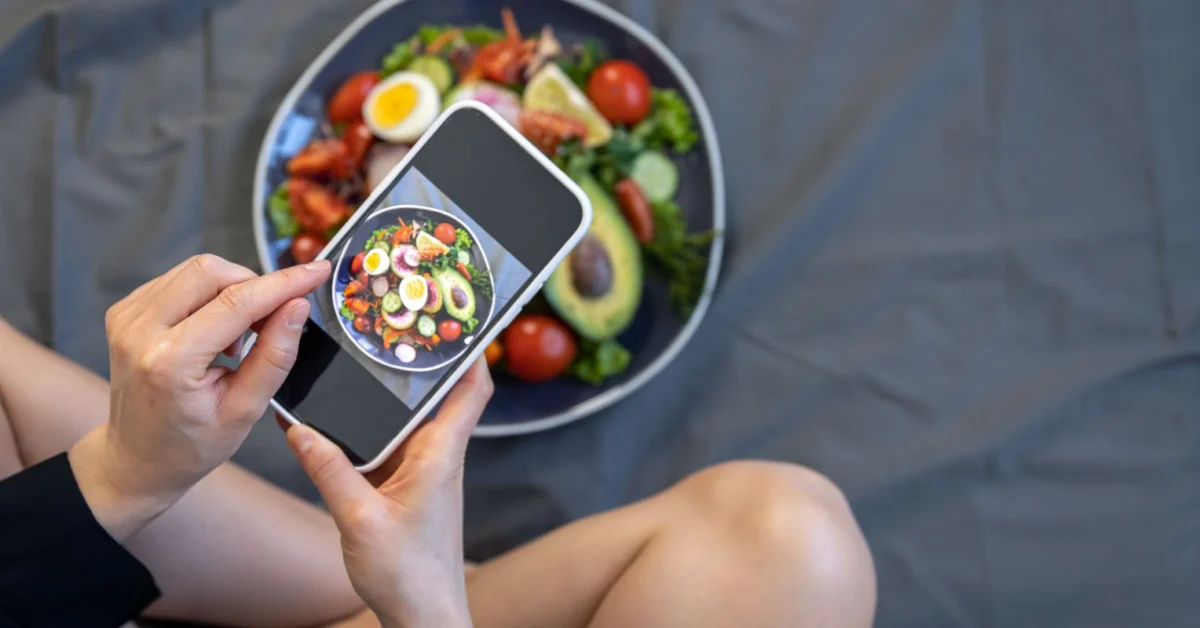
It is a familiar Sunday night ritual: you are tucked into bed, the room is dark, and the soft, blue light of your smartphone illuminates your face. As you scroll through endless feeds, you are looking for a brief moment of distraction. Instead, you are bombarded by the curated lives of digital influencers. One creator shares a “what I eat in a day” video, showcasing a plate of meticulously arranged, calorie-depleted greens. Another influencer pivots to a “relatable” post about using wine to cope with the stresses of motherhood, while a third promises that your life can be fundamentally “fixed” in three simple, high-intensity fitness steps.
The next morning, the digital noise spills into reality. A coworker mentions a restrictive new diet they are starting to “prepare for summer.” A friend sends a text lamenting their weight. Even high-profile celebrities, like Tom Brady, use their massive platforms to broadcast the latest proprietary health regimens. The message is relentless and ubiquitous: your body is a project, your worth is tied to your consumption, and happiness is merely a supplement away.
The Architecture of Diet Culture in the Digital Age
Social media was built to foster connection, yet it has evolved into a high-speed delivery system for some of the most harmful societal forces—specifically, diet culture and unrealistic beauty standards. Diet culture thrives by promising health and happiness while delivering a toxic cocktail of shame, guilt, and chronic anxiety.
The “wellness” industry is no longer a niche market; it is a global juggernaut. In 2024, the wellness market topped $160 billion, with projections suggesting it could reach $360 billion by 2034 (Finklea, 2025). This massive influx of capital is driven by the strategic exploitation of consumer insecurity. Digital creators, often acting as unpaid—or heavily paid—advertisers, promote restrictive habits, demonize specific food groups, and lean into “fat-shaming” under the guise of “tough love” or “wellness coaching.”
The underlying, dangerous implication is that physical appearance is a direct reflection of moral character. If you follow the influencer’s blueprint, you will be happy; if you fail, you are simply not trying hard enough. This creates a feedback loop where low self-esteem is transformed into pure profit.
A Chronology of Escalation: From Comparison to Pathology
The transition from casual social media use to disordered behavior is often subtle. It begins with "comparison culture." According to the REACH Institute (2025), nearly half of teens aged 13 to 17 report feeling worse about their bodies after spending time on social media. This is not a coincidence; it is a byproduct of algorithms designed to keep users engaged by showing them content that triggers emotional reactions.
- The Exposure Phase: The user is introduced to "thinspiration" or “fitspiration” content, often disguised as health advice.
- The Normalization Phase: Through repetitive exposure, the user begins to internalize the idea that extreme restriction is a standard, healthy way of living.
- The Coping Phase: As the stress of maintaining these unrealistic standards increases, the user begins to look for external tools to manage the resulting anxiety and hunger, often turning to substances or further restriction.
- The Pathological Phase: The behavior crosses the line into a formal Eating Disorder (ED) or Substance Use Disorder (SUD), where the individual loses the ability to regulate their intake or impulses.
Individuals who spend more than three hours a day on social media are twice as likely to develop eating disorders compared to their peers who limit their screen time (REACH Institute, 2025). The screen becomes a mirror, but one that is perpetually distorted.
The Intersection of Eating Disorders and Substance Use
Perhaps the most alarming trend in clinical mental health is the high rate of co-occurrence between eating disorders and substance use disorders. While they may appear to be opposite problems—one involving the refusal to consume and the other involving the consumption of harmful substances—they are both fundamentally coping mechanisms.
Both disorders are attempts to manage overwhelming emotional pressure, stress, and the desire to numb oneself from the realities of modern life. Data from the National Eating Disorders Association (2023) indicates that 50% of people suffering from an eating disorder also struggle with the misuse of alcohol or drugs.
The link is not merely correlation; it is causal. Research has established an interdependent relationship where each disorder serves to exacerbate the risk of the other (Xi & Galaj, 2025). Social media plays a pivotal role here as well. Platforms like TikTok and Instagram frequently glamorize extreme dieting in one frame and normalize “wine culture” or the use of stimulants for weight loss in the next (Holland & Tiggemann, 2023). This normalization makes it dangerously easy for an individual to slide from one coping mechanism to another, often without recognizing that they are in the grip of a multifaceted crisis.
Supporting Data: The Cost of Silence
The medical consequences of these co-occurring disorders are grave. Anorexia nervosa already holds the highest mortality rate of any mental illness. When you add substance use into the equation, the danger compounds exponentially.
According to research by Mellentin et al. (2022), the co-occurrence of alcohol or hard drug use with an eating disorder nearly quadruples the mortality risk. Beyond the physical toll, individuals with these comorbidities face higher rates of suicide attempts, severe mood disorders, and debilitating anxiety. The Substance Abuse and Mental Health Services Administration (SAMHSA, 2025) emphasizes that these individuals are often caught in a “fragmented care” system.
Clinical and Systematic Implications
One of the greatest barriers to recovery is the structure of the treatment system itself. Historically, medicine has treated eating disorders and substance use disorders as distinct entities, often housing them in separate clinics or under different insurance protocols.
For the patient, this leads to a frustrating experience that can feel like a game of “whack-a-mole.” A patient may receive treatment for an eating disorder, only for their underlying substance use to escalate because the emotional root cause was never addressed. Conversely, substance abuse treatment programs often lack the specialized nutritional and psychological support required to treat an active eating disorder.
Integrated, holistic care is no longer a luxury; it is a necessity. Treatment must shift toward an integrative model that addresses the “whole person.” This includes:
- Combined Modalities: Therapists must be trained to recognize the interplay between dietary restriction and chemical dependence.
- Media Literacy: Clinical programs must incorporate education on how to navigate the digital landscape, helping patients deconstruct the “influencer” messaging that fuels their triggers.
- Systemic Advocacy: We must challenge the profit-driven wellness industry that thrives on the insecurity of the vulnerable.
Conclusion: Reclaiming Health in a Profit-Driven World
The digital landscape is designed to keep us perpetually dissatisfied. It creates a vacuum of self-worth that is then filled with products, diets, and pills. Reclaiming one’s health in this environment is an act of rebellion.
It is time to acknowledge that what we see on our screens is not reality—it is a carefully constructed performance designed to monetize our insecurities. If you or someone you know is struggling, the first step is to recognize that you are not failing at a diet; you are being targeted by a system that profits from your struggle. Seeking professional help from providers who understand the intersection of eating disorders and substance use is the first step toward breaking the cycle.
True health is not found in a 3-step fitness plan or a restrictive diet. It is found in the freedom from the shame that social media so efficiently sells. We must, as a society, demand more from the platforms that shape our perception of self and prioritize human well-being over the bottom line of the $360 billion wellness industry.
References
- Dane, A., & Bhatia, K. (2023). The social media diet: A scoping review to investigate the association between social media, body image and eating disorders amongst young people. PLOS Global Public Health.
- Finklea, K. (2025). The wrong influence: The link between diet culture and eating disorder. HopeHealth.
- Holland, G., & Tiggemann, M. (2023). Social media and body image: A systematic review of experimental studies. PLOS Global Public Health.
- Mellentin, A. I., et al. (2022). The impact of alcohol and other substance use disorders on mortality in patients with eating disorders. The American Journal of Psychiatry.
- National Eating Disorders Association. (2023). Substance use and eating disorders.
- Pierce, S., Joy, J. M., & David, A. W. (2025). Abstinence-based treatment of comorbid eating disorders and ultra-processed food addiction. Frontiers in Psychiatry.
- SAMHSA. (2025). Breaking the silence: What everyone should know about eating disorders.
- The REACH Institute. (2025). How social media is impacting teens.
- Xi, Z.-X., & Galaj, E. (2025). Novel potential pharmacological approaches in treating eating disorders comorbid with substance use disorders. Biomedicine & Pharmacotherapy.