






On March 29, 2026, the global medical community and the millions of individuals living with Ehlers-Danlos Syndromes (EDS) and Hypermobility Spectrum Disorders (HSD) suffered an immeasurable loss. Professor Rodney Grahame, a pioneer in the field of rheumatology and a tireless champion for patients long overlooked by the medical establishment, passed away at the age of 93.
Dr. Grahame was not merely a physician; he was a revolutionary who transformed the way the world understands joint hypermobility. For decades, he stood as a beacon of validation for patients who were frequently dismissed as "just bendy" or misdiagnosed with psychosomatic illnesses. His departure marks the end of an era, but his intellectual and clinical legacy remains etched into the very foundations of modern connective tissue research.
The Architect of Awareness: A Chronology of Influence
To understand the impact of Dr. Rodney Grahame, one must look at the landscape of medicine in the 1970s and 80s, a time when hypermobility was largely treated as a benign anatomical curiosity.
Early Foundations (1971–1990)
Dr. Grahame’s interest in the musculoskeletal system began early in his career, but his pivotal shift occurred in the early 1970s. As early as 1971, he was publishing research that challenged the status quo. In 1983, he co-authored the seminal text Hypermobility of Joints alongside Drs. Peter Beighton and Howard Bird. This work became the "bible" for clinicians, providing the first rigorous framework for recognizing that joint laxity was frequently accompanied by chronic pain and a constellation of systemic complications.
Mid-Career Advocacy and Clinical Excellence (1991–2010)
Throughout the 1990s and 2000s, Dr. Grahame operated as a consultant rheumatologist in London, where he became a sanctuary for patients traveling from across the globe seeking an answer to their unexplained symptoms. His work on the genetic basis of hypermobility syndromes, notably his 2008 collaboration with Malfait, Hakim, and DePaepe, moved the field from symptomatic observation into the realm of genetic science.
The Era of International Recognition (2011–2026)
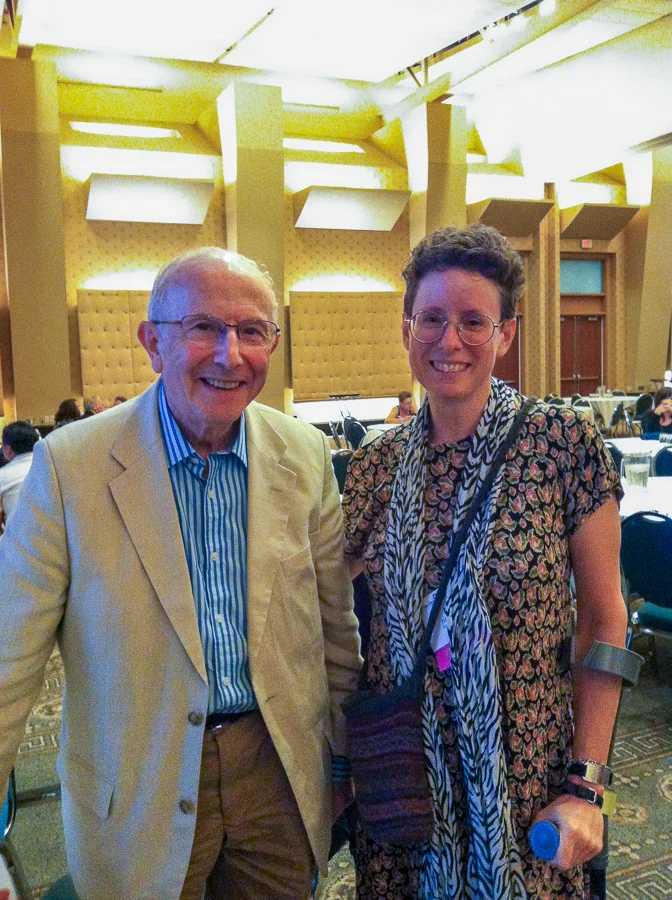
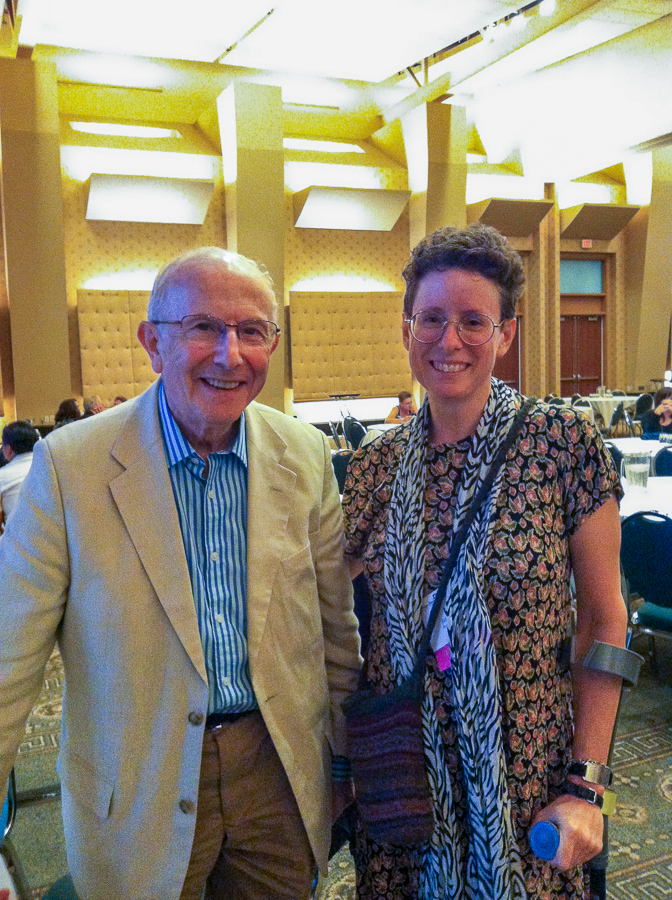
In the final fifteen years of his life, Dr. Grahame became a ubiquitous presence at EDS learning conferences worldwide. Whether in Rhode Island, London, or beyond, he consistently served as a bridge between high-level genetic research and the lived experience of the patient. His career was honored in 1998 when he was appointed a Commander of the Order of the British Empire (CBE) for his services to disabled people—a testament to his role in moving EDS from the shadows of clinical practice to the forefront of rheumatological research.
Clinical Contributions and Data: Changing the Medical Paradigm
Dr. Grahame’s work was defined by a rigorous, evidence-based approach to a condition that defied standard diagnostic criteria for decades. His research effectively dismantled the stigma surrounding "invisible" illnesses.
Key Publications and Research Milestones
- 1971: Early research into the musculoskeletal manifestations of hypermobility.
- 1983: Hypermobility of Joints (updated 2012) – Established the clinical diagnostic criteria that allowed doctors to categorize patients beyond mere "flexibility."
- 2008: The genetic basis of the hypermobility syndromes – A cornerstone paper that proved the underlying biological mechanism of the condition.
- 2010: Hypermobility, Fibromyalgia and Chronic Pain – Provided critical insights into the overlapping comorbidities that plague EDS patients, such as chronic fatigue and widespread pain.
Dr. Grahame was instrumental in the transition of medical terminology. He helped shepherd the medical community away from the vague "Joint Hypermobility Syndrome" toward the more precise diagnostic classifications of hypermobile Ehlers-Danlos Syndrome (hEDS) and the broader Hypermobility Spectrum Disorders (HSD) formalized in 2017.
"The Most Neglected Condition": A Voice for the Voiceless
Perhaps the most famous sentiment attributed to Dr. Grahame was delivered at the 2014 EDNF Conference: "No other condition in the history of modern medicine has been neglected in such a way as Ehlers-Danlos syndrome."
This quote resonated with thousands of patients. For many, it was the first time a medical authority had acknowledged the systemic gaslighting they faced in doctors’ offices. His clinical approach was characterized by a rare quality: deep, unwavering empathy. In an era where many specialists were dismissive of complex, multisystemic complaints, Dr. Grahame listened. He recognized that the pain, the dislocations, and the systemic fatigue were not "in the head," but were symptoms of a body whose internal scaffolding was inherently fragile.
Official Responses and Professional Tributes
The medical community and patient advocacy groups have been swift to honor his memory. The Ehlers-Danlos Society, in particular, has highlighted his 50-year commitment to the NHS as a standard of excellence.
"Professor Grahame did not just treat patients; he validated their existence," noted a representative from a leading advocacy group. His peers have described him as a "gentleman of medicine," a rare breed of clinician who prioritized the human element of medicine even while pushing the boundaries of scientific research.
The HMSA (Hypermobility Syndromes Association), for whom he served as a long-term advisor, noted that his loss is "a profound blow to the community, but his blueprints for care remain the gold standard upon which we will continue to build."
The Lasting Implications of His Work
The implications of Dr. Grahame’s career are far-reaching. By providing the intellectual framework for EDS and HSD, he paved the way for current advancements in genetic testing, physiotherapy protocols, and pain management strategies.
1. Shift in Clinical Education
Dr. Grahame’s insistence that medical students be taught about connective tissue disorders has fundamentally changed the curriculum in many UK and international teaching hospitals. His efforts ensure that the next generation of rheumatologists is better equipped to spot the "zebra" in the room.
2. Validation as Medicine
By consistently publishing data on the systemic nature of hypermobility—including links to autonomic dysfunction and gastrointestinal issues—he forced the medical establishment to stop viewing EDS as an orthopedic issue and start viewing it as a systemic, multisystemic condition.
3. Empowerment of the Patient
Dr. Grahame’s legacy is perhaps most visible in the rise of patient-led advocacy. By providing the language and the evidence that patients needed, he empowered the community to advocate for themselves. His collaboration with patients—including figures like the late John Ferman—helped turn a fragmented group of sufferers into a cohesive, organized, and scientifically literate advocacy community.
Conclusion: A Legacy That Endures
As we look toward the future of EDS research, the absence of Professor Rodney Grahame will be felt deeply. However, his work has ensured that the "neglect" he decried in 2014 is being systematically corrected. From the GP Toolkits now used in primary care to the sophisticated genetic studies currently underway in laboratories across the globe, the path was cleared by Dr. Grahame.
He leaves behind a world that is more informed, more compassionate, and more capable of treating those with connective tissue disorders than the one he entered as a young doctor fifty years ago. For the countless patients who finally found an answer because of his research, his legacy is not just in the books he wrote, but in the improved quality of life and the restoration of dignity that he brought to thousands.
Professor Rodney Grahame, you were a giant in your field and a hero to our community. You will be sorely missed, but your work lives on in every patient who is finally told, "I hear you, I see you, and we have a name for this."
Jan Groh is the author of the blog OhTWIST and a co-author of the EDS GP Toolkit. She continues to advocate for the standards of care established by pioneers like Professor Grahame.