










In a breakthrough that could reshape the pharmacological landscape of cardiovascular medicine, researchers at the UT Southwestern Medical Center have identified a previously unrecognized protein, HELZ2, that serves as a critical "master switch" for how the liver manages cholesterol. By operating at the foundational level of genetic instruction, this discovery offers a sophisticated new pathway for managing hyperlipidemia and potentially addressing the growing crisis of fatty liver disease.
The study, published in the peer-reviewed journal Circulation, details how HELZ2 acts as a biochemical gatekeeper, governing the production of apolipoprotein B (apoB)—the essential protein scaffold required for the assembly of cholesterol-carrying lipoproteins. This finding challenges existing paradigms in lipid management, which have historically focused on inhibiting cholesterol synthesis after the fact.
The Biological Architecture of Lipid Transport
To understand the magnitude of this discovery, one must look at the mechanics of human metabolism. The liver acts as the body’s metabolic command center, processing fats and cholesterol and packaging them into lipoproteins for delivery to cells throughout the body. At the heart of this packaging process is apoB, a protein that acts like a shipping container for lipids. When the liver produces too much apoB, the result is an excess of LDL (the "bad" cholesterol) and triglycerides in the bloodstream, leading directly to the plaque buildup that characterizes atherosclerosis.
For decades, the medical community has relied on statins, which work primarily by inhibiting HMG-CoA reductase—an enzyme involved in cholesterol synthesis. While effective, statins do not address the assembly of the "shipping containers" themselves. This is where HELZ2 enters the narrative.
Chronology: From Genetic Anomaly to Scientific Discovery
The path to identifying HELZ2 was anything but conventional. The research was anchored in a high-throughput, large-scale genetic screening system pioneered by Nobel laureate Dr. Bruce Beutler, the Director of the Center for the Genetics of Host Defense at UT Southwestern.
The Initial Observation
The investigation began with an unexpected observation in murine models. Researchers noticed a group of mice exhibiting unusual fat accumulation patterns in the liver. Rather than dismissing these cases as outliers, the team utilized Dr. Beutler’s sophisticated genetic mapping tools to trace the phenotype back to a specific mutation.
Pinpointing the Protein
Through this screening process, the scientists identified a gain-of-function mutation in the gene responsible for producing the HELZ2 protein. They observed that in these specific mice, the mutation led to hyper-activity of HELZ2. Upon further investigation, the team discovered that this heightened activity directly correlated with a reduction in the stability of APOB messenger RNA (mRNA).
The Mechanism of Action
By mid-study, the researchers established the mechanism: HELZ2 functions as a molecular "shortener," degrading APOB mRNA before it can be translated into functional apoB proteins. By curbing the production of these proteins at the transcriptional level, HELZ2 effectively limits the number of lipid-laden particles that can be exported from the liver into the circulatory system.
The "Dial" Hypothesis: Balancing Blood Cholesterol and Liver Fat
One of the most intriguing aspects of the study is the delicate, inverse relationship between blood-borne cholesterol and hepatic (liver) fat storage. The research findings revealed a clear "dial" effect:
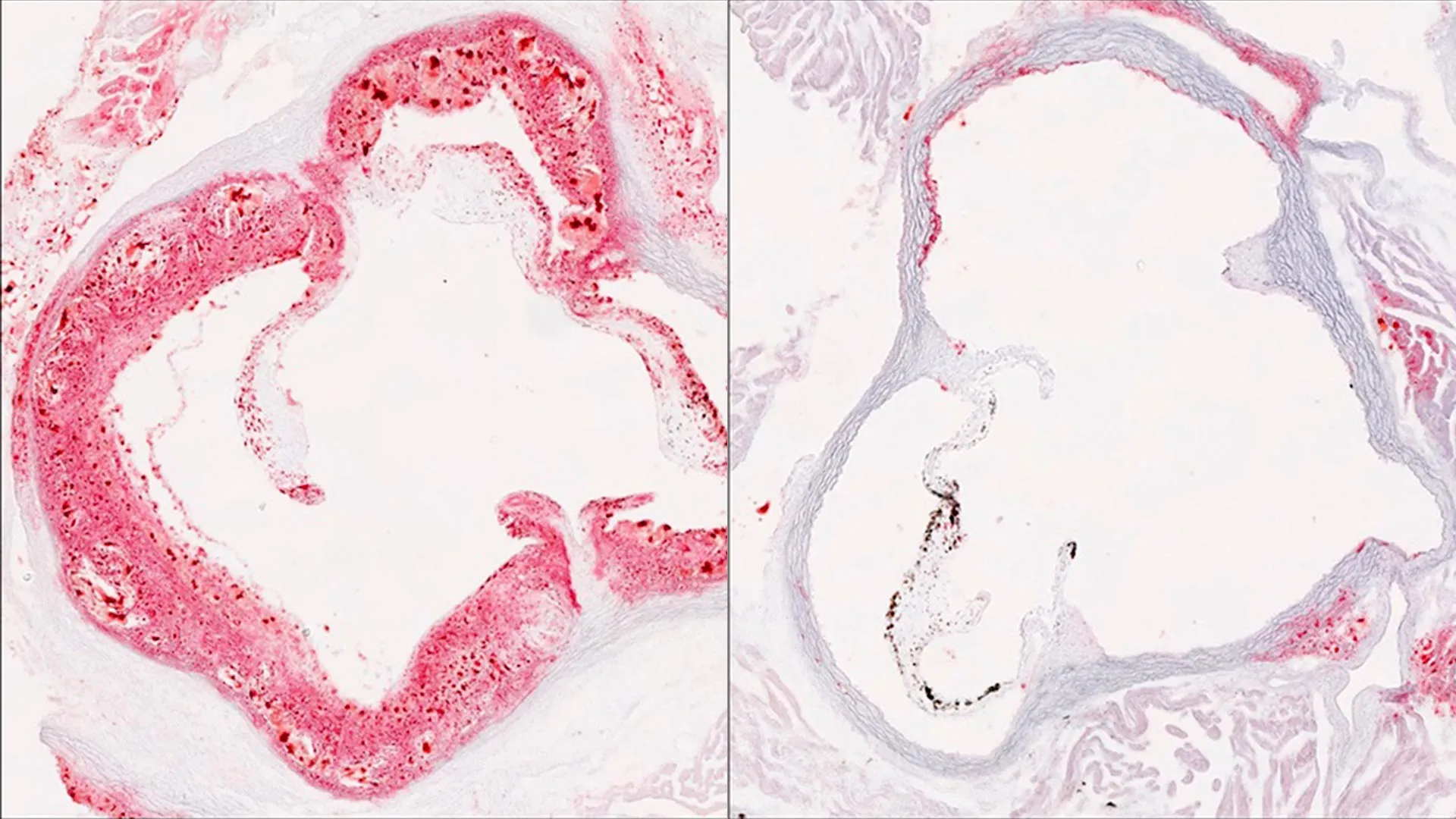
- When HELZ2 is "Turned Up": The liver produces fewer lipoproteins, leading to a significant decrease in circulating LDL cholesterol and triglycerides. The mice in this state showed marked resistance to atherosclerosis. However, because the lipids that would have been exported are instead retained, the mice experienced increased fat accumulation in the liver.
- When HELZ2 is "Turned Down": The opposite occurs. Lipid export increases, potentially clearing the liver of fat but simultaneously flooding the bloodstream with cholesterol-carrying particles.
Dr. Zhao Zhang, senior author and Assistant Professor in the Center for the Genetics of Host Defense and Internal Medicine, describes this as a biological rheostat. "We can think of HELZ2 as a kind of dial between the liver and the bloodstream," Dr. Zhang explained. "Turning it up lowers cholesterol in the blood but increases liver fat. Turning it down does the reverse. That balance makes HELZ2 especially interesting as a potential therapeutic target."
Implications for Future Medicine
The identification of HELZ2 introduces a paradigm shift in how clinicians might eventually treat metabolic syndrome. Currently, clinicians must often balance the need to lower cardiovascular risk against the health of the liver. The HELZ2 discovery suggests that by fine-tuning this protein, scientists might be able to create a "Goldilocks" therapy—a way to lower systemic cholesterol while simultaneously managing or preventing the onset of fatty liver disease.
Moving Beyond Statins
While statins remain the gold standard for cholesterol management, they are not universally effective or tolerated. Some patients experience muscle pain or fail to reach their target LDL levels. By targeting the mRNA stage of apoB production rather than the downstream synthesis of cholesterol, a HELZ2-based therapy would represent a completely different pharmacological approach.
"The idea that we can control apoB at the RNA level represents a major shift in how we think about cholesterol regulation," says Dr. Zhang. "It gives us a new molecular lever—and potentially a new set of tools—for tackling these conditions."
Expert Commentary and Scientific Context
The study was supported by significant grants from the National Institute of Diabetes and Digestive and Kidney Diseases (NIDDK), underscoring the potential public health impact of the research.
Dr. Yiao Jiang, a postdoctoral researcher in the Zhang Lab and a co-author of the study, emphasized the novelty of the team’s approach. "Most previous research focused on what happens to apoB after it’s already made," Dr. Jiang noted. "What surprised us is that HELZ2 acts much earlier, by controlling how long the apoB ‘message’ survives before the protein is even produced."
This "upstream" intervention is increasingly viewed by the scientific community as the future of precision medicine. By intervening at the mRNA level, researchers can potentially achieve more robust and stable control over metabolic processes than by attempting to block enzymes that are part of broader, more complex biological pathways.
Conclusion: The Path Forward
The discovery of HELZ2 at UT Southwestern is a testament to the power of basic science in unraveling the complexities of human metabolism. While the leap from murine models to human clinical trials is a long one, the identification of a new molecular regulator provides a clear roadmap for future drug development.
As the scientific community continues to explore the function of HELZ2, the focus will likely turn toward how to modulate this protein safely without causing excessive fat buildup in the liver. The goal is a therapeutic agent that can achieve the ideal equilibrium—reducing the risk of heart disease while maintaining optimal liver health.
For now, the HELZ2 findings offer a profound new understanding of how the body regulates its own lipid transport system, opening a door that had remained firmly shut for decades. As Dr. Zhang and his colleagues continue their work, the "molecular lever" they have discovered may well become a cornerstone of the next generation of cardiovascular treatments.
Acknowledgments and Research Support
- Principal Investigators: This study was led by Dr. Zhao Zhang, with critical contributions from Nobel Laureate Dr. Bruce Beutler.
- Institutional Support: The research was conducted at the Center for the Genetics of Host Defense at UT Southwestern Medical Center.
- Funding: This work was supported by grants R00DK115766 and R01DK130959 from the National Institute of Diabetes and Digestive and Kidney Diseases (NIDDK) of the National Institutes of Health.
- Academic Citation: The study, "HELZ2 regulates the stability of APOB mRNA and controls hepatic lipid secretion," was published in the American Heart Association journal Circulation.