BUNIA, Democratic Republic of the Congo — In the heart of the Democratic Republic of the Congo’s (DRC) eastern provinces, a quiet, deadly battle is being waged against the Bundibugyo strain of the Ebola virus. While the outbreak has claimed 43 lives across the DRC and neighboring Uganda, a flicker of hope has emerged from the very front lines of the crisis: the health workers who have survived the infection are now returning to their duties, offering a powerful testament to the efficacy of early intervention.
As the government of the DRC and international health agencies struggle to contain the virus across 22 distinct health zones, the situation remains precarious. With at least 282 confirmed cases and over 1,000 suspected infections, the international community is racing to provide the resources necessary to stem a tide that is being exacerbated by deep-seated regional instability.
Main Facts: A Virus Without a Cure
The current outbreak, characterized by the rare Bundibugyo species of the Ebola virus, presents a formidable challenge to global health authorities. Unlike other strains for which vaccines have been developed and deployed, this specific virus currently lacks an approved, standardized vaccine or therapeutic medicine. The virus, which spreads through close contact with the bodily fluids of infected individuals—both living and deceased—requires rigorous isolation and infection control measures to contain.
Health authorities in the DRC have identified the outbreak’s epicenter in the Ituri province, where 264 of the 282 confirmed cases are located. However, the virus has not remained static. It has radiated across three eastern provinces, infiltrating 22 health zones and breaching international borders. In Uganda, nine cases have been confirmed, prompting the government to take the drastic measure of closing the border with the DRC to mitigate the risk of further cross-border transmission.
The mortality rate, while lower than some historical Ebola outbreaks, remains a significant concern. With 43 deaths confirmed—42 in the DRC and one in Uganda—the focus of health officials has shifted toward the "four pillars" of containment: early detection, rapid isolation, rigorous contact tracing, and the implementation of safe, dignified burial practices.
Chronology of the Crisis
The emergence of this outbreak was subtle, as is often the case in remote, conflict-ridden regions. Weeks passed before the specific strain—Bundibugyo—was definitively identified by laboratory testing.
- Initial Detection: Health officials first noted a spike in hemorrhagic fever-like symptoms in the eastern provinces. Initially categorized as suspected cases, the classification shifted to a formal outbreak once the Bundibugyo virus was confirmed.
- Expansion: Within weeks, the virus moved from isolated pockets to encompass 22 health zones, stretching the limited resources of local clinics to their breaking point.
- Cross-Border Spread: By the time international agencies sounded the alarm, the virus had crossed into Uganda, marking a regional crisis.
- Operational Response: The World Health Organization (WHO), led by Director-General Tedros Adhanom Ghebreyesus, stepped up efforts in late spring, opening new treatment centers, including a state-of-the-art facility in Bunia, the capital of Ituri province.
- Recent Developments: As of this week, the Coalition for Epidemic Preparedness Innovations (CEPI) announced a $62 million commitment to accelerate the research and development of three experimental vaccines, signaling a pivot toward long-term medical solutions.
Supporting Data and Medical Challenges
The data paints a sobering picture of the infrastructure challenges facing the region. In many of the affected areas, health centers are severely under-resourced, lacking basic personal protective equipment (PPE), clean water, and isolation capacity.
The logistical nightmare is compounded by the "invisible" nature of the virus in its early stages. For health workers like Ezo Étienne, the onset of symptoms was deceptively mild. "I started feeling dizzy as I checked on patients," Étienne recounted. "I called the team and told them, ‘Something’s wrong here.’ I decided to rest for a bit, and a few minutes later I started vomiting."
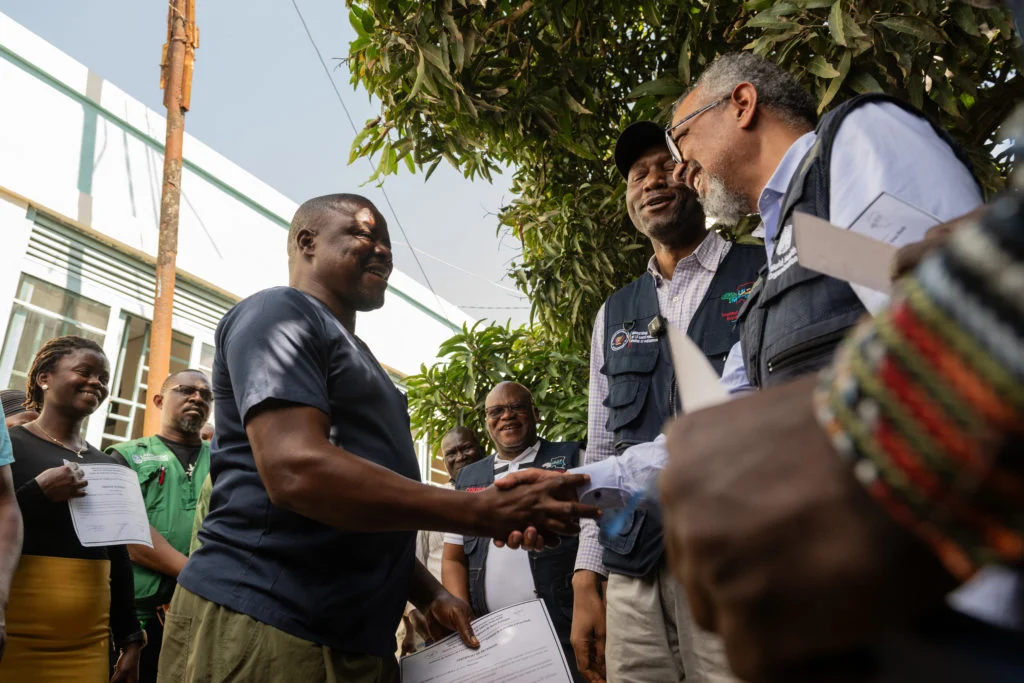
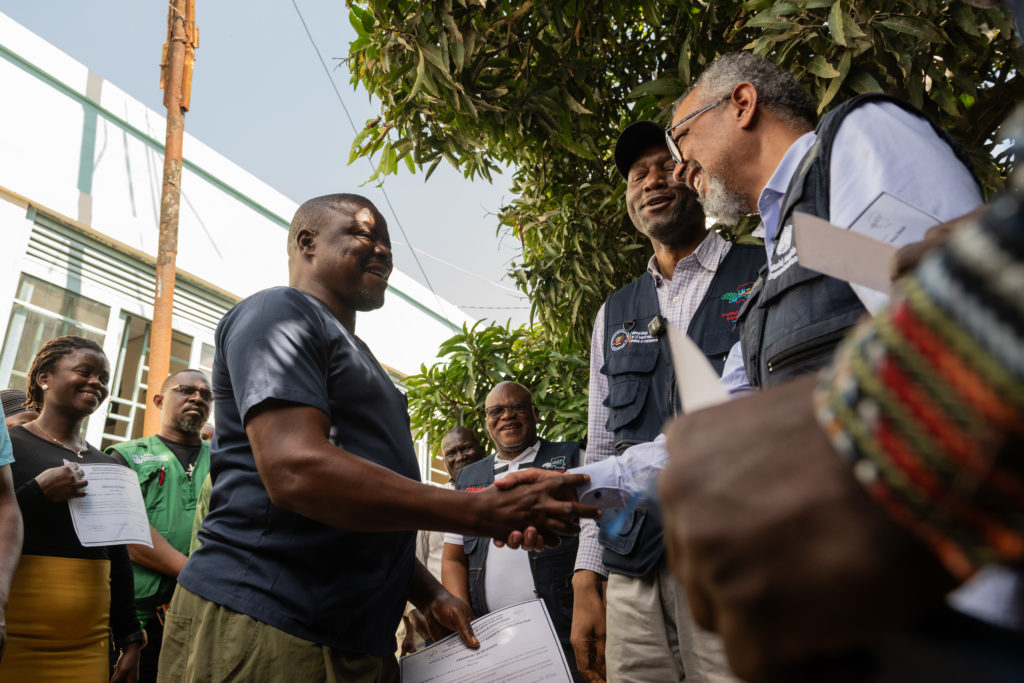
For those who survive, the emotional toll is as heavy as the physical. Baraka Bulambulu, a nurse who survived the virus, described the experience of receiving a negative test result as an "indescribable joy." His recovery, along with those of four other colleagues honored by the WHO, serves as a crucial data point for medical researchers. It proves that despite the lack of a specific "magic bullet" drug, recovery is possible through the provision of supportive care, intravenous fluids, and close monitoring in specialized facilities.
Official Responses: A Multilateral Effort
The response to the outbreak has been a complex coordination between the Congolese Ministry of Health, the WHO, and international research consortiums.
The Vaccine Push
The $62 million funding package from CEPI is the most significant development in the medical response to date. By backing three separate vaccine candidates—developed by the International AIDS Vaccine Initiative, Moderna, and the University of Oxford—the global community is effectively "hedging its bets" to find a viable preventative measure for the Bundibugyo strain.
WHO Engagement
Dr. Tedros Adhanom Ghebreyesus, during his visit to Bunia, emphasized that the human element of the response is just as vital as the medical one. "Your courage gives hope and your living story [proves] that this outbreak can be stopped," he told survivors. The WHO’s strategy involves not only treating the sick but also rebuilding trust in communities where skepticism of health workers has historically been high.
Implications: The Shadow of Conflict
Perhaps the most significant hurdle to ending the outbreak is the persistent insecurity in eastern DRC. The region is a landscape of overlapping conflicts. The Allied Democratic Forces (ADF), a militant group with ties to the Islamic State, continues to launch lethal raids. Just this past Saturday, a massacre in Beni, North Kivu, resulted in 16 deaths, further destabilizing an area already reeling from the virus.
Furthermore, the presence of the M23 rebel group in South Kivu, controlling key cities like Goma and Bukavu, creates "no-go zones" for medical teams. When health workers are perceived as either an extension of the government or a threat to traditional burial practices, they face hostility, which in turn hinders contact tracing and containment.
The Socio-Economic Impact
The economic implications are dire. Border closures, such as the one implemented by Uganda, disrupt trade routes and exacerbate food insecurity in an area that is already highly vulnerable. The redirection of funds to fight the outbreak means that other critical health services—such as malaria prevention, maternal health, and childhood vaccinations—are being neglected.
The Path Forward
Dr. Dieudonne Mwamba Kazadi, director-general of the DRC’s National Institute of Public Health, remains cautiously optimistic. He notes that the survival of health workers provides a powerful message to the public: "It is a strong message that it is possible to recover from Ebola when seeking care early in a dedicated health facility."
However, success will ultimately depend on three factors:
- Security: A cessation of hostilities by armed groups to allow medical corridors to remain open.
- Community Trust: A more culturally sensitive approach to public health messaging that respects local burial customs while emphasizing the necessity of isolation.
- Innovation: The rapid transition of experimental vaccines from the laboratory to the field.
As the international community watches, the people of the Ituri, North Kivu, and South Kivu provinces remain on the front lines. The victory of a few nurses over a deadly pathogen provides a glimmer of hope, but the broader struggle to contain the Bundibugyo virus serves as a stark reminder of how fragile global health security remains in the face of conflict and biological uncertainty.
The battle is far from won, but for now, the recovery of those like Bulambulu and Étienne offers the most effective tool yet in the fight against fear: proof that the virus can be defeated.