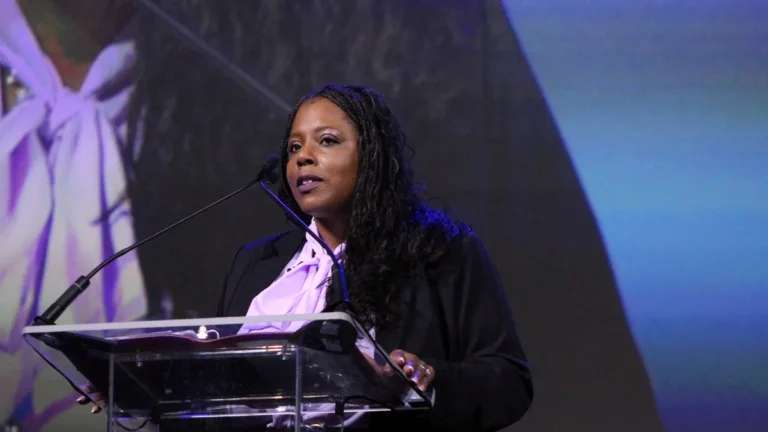












As the digital health landscape hurtles toward an era defined by artificial intelligence and automated clinical documentation, a sobering reality is beginning to emerge. Professor Kathrin Cresswell, a leading voice in digital innovation in health and care at the University of Edinburgh, warns that the industry is rapidly approaching a "trough of disillusionment."
Ahead of her keynote appearance at the Digital Health Summer Schools 2026, Professor Cresswell has issued a stark call for the healthcare sector to move away from the "techno-optimism" that currently dominates policy and procurement. Her argument is simple but radical: we must abandon the narrow focus on short-term productivity and embrace "agile" evaluation methods that reflect the complex, messy reality of clinical environments.
The Reality Check: Why Ambient Scribes Are Already Falling Short
The current fascination with ambient scribes—AI-powered tools designed to listen to consultations and automatically generate clinical notes—serves as a cautionary tale. While these technologies were marketed as the "silver bullet" for the NHS’s chronic documentation burden, Professor Cresswell notes that they are already leaving many clinicians underwhelmed.
"We’re just about to tip the hype and head down into the trough of disillusionment," Cresswell explains. The issue, she argues, is not necessarily the quality of the technology, but the "heightened expectations" placed upon it. When administrators and clinicians are promised a revolution in efficiency, anything less than total automation is perceived as a failure.
This disillusionment is symptomatic of a wider systemic failure: the belief that digital tools can solve fundamental structural issues without requiring deep, often painful, organizational change.
Chronology of a Crisis: The Shift in Digital Evaluation
To understand why current evaluations are failing, one must look at how the research landscape has lagged behind the blistering pace of technological deployment.
The Old World of Research
Historically, the "gold standard" for evaluating medical interventions has been the Randomised Controlled Trial (RCT). In traditional medicine—such as testing a new drug—RCTs are essential. However, Professor Cresswell argues that this model is fundamentally ill-suited for the "fast-moving, ever-changing" world of digital health.
The Rise of Digital Complexity
In the last decade, the NHS has moved toward large-scale, integrated digital systems, such as electronic health records (EHRs) and national AI initiatives. Unlike a pill, which has a constant chemical formula, digital systems are "living" interventions. They are updated, patched, and modified in real-time.
"If you change everything in the middle of a study," Cresswell notes, "you cannot pin down the active ingredients of the intervention." Consequently, by the time a traditional academic study is published, the technology being evaluated has often evolved beyond recognition, rendering the findings obsolete.
Supporting Data: Why "Time Saved" is a Misleading Metric
A recurring theme in Professor Cresswell’s critique is the over-reliance on "productivity" as the primary metric of success. Since her landmark op-ed on this subject a year ago, she has seen little progress in how the NHS measures the value of its digital investments.
The Productivity Paradox
The assumption is often that if a technology saves a clinician ten minutes per patient, those ten minutes will automatically translate into more patients seen. This, according to Cresswell, is a fundamental misunderstanding of clinical work:
- The Transition Gap: When new, complex systems are introduced, productivity almost invariably dips. It takes time for staff to learn new workflows, and it takes time for the system to settle.
- The "Work-Around" Effect: Digital tools may save time on one specific task, but they often create "hidden work" elsewhere—such as checking data accuracy, managing alerts, or dealing with system interoperability issues.
- The Human Variable: If time is successfully saved, what happens to it? "Should we push people to see more patients? People have burnout already," says Cresswell. "Should they just have a longer lunch break? Or spend more time with their family to be happier generally at work?"
The Quintuple Aim
Cresswell proposes that we move toward a more holistic framework for evaluation—the "Quintuple Aim" of healthcare:
- Quality of care.
- Safety of patients.
- Efficiency of systems.
- Workforce sustainability.
- Wellbeing and Equity.
By only measuring efficiency, the NHS risks sacrificing the other four pillars.
Official Responses and Systemic Barriers
As the lead researcher on the evaluation of the NHS AI Lab, Professor Cresswell has had a front-row seat to the tensions between government ambition and frontline reality. The report, published in April 2025, highlighted significant barriers to adoption, most notably the lack of infrastructure and the competing needs of different stakeholders.
The Political vs. The Practical
The UK’s ambition to become a global "AI superpower" often creates a pressure to prioritize "shiny" new tech over the "boring" foundations of digital healthcare.
"Funding prioritizes early-stage research," Cresswell notes. "There’s limited focus on the solid foundations and infrastructures on which AI sits and needs to function."
This creates a friction point. Organizational leaders often want data that is easier to analyze—which requires clinicians to enter more structured data. Clinicians, however, are already facing severe burnout and are being asked to act as data-entry clerks for the sake of institutional reporting. This, she argues, is where the "system needs" must be negotiated more transparently.
Implications: A New Path for Digital Health
So, how does the NHS pivot? If RCTs are too slow and current productivity metrics are flawed, what comes next?
Embracing Agile Evaluation
Professor Cresswell advocates for "agile evaluation methods." This involves:
- Getting a "good enough" answer at the right time: Accepting a trade-off between the absolute precision of a long-term study and the immediate utility of a rapid, iterative insight.
- Focusing on Emergent Benefits: Acknowledging that the most important impact of a technology might be something entirely unanticipated—such as better team communication or improved patient confidence—rather than just the time it saves.
- Closer Collaboration: Bringing the academic community and the frontline clinicians into a tighter feedback loop.
The Question of De-skilling
One of the most pressing questions in the era of AI is whether clinicians will become "de-skilled" by their reliance on algorithms. Cresswell takes a pragmatic, if slightly provocative, view: "Of course we’ve become de-skilled in some areas. Maybe that’s okay. We only have limited processing capacity; if we have tools, we should use them."
However, she adds a crucial caveat: the "human in the loop" is non-negotiable. Machines lack consciousness and the capacity to understand the lived human experience. The goal of digital transformation should not be to replace the clinician, but to offload the "machine-like" tasks so that the clinician can focus on the "human-like" tasks—empathy, complex judgment, and moral decision-making.
Conclusion: The Road to Summer Schools 2026
As healthcare leaders gather at the Digital Health Summer Schools 2026 in Nottingham, the conversation is expected to shift away from the "gadgetry" that has dominated recent years.
Instead, the focus is turning toward the "real stuff": infrastructure, national strategy, and the orchestration of complex systems. Topics such as the rollout of ambient scribes, the integration of federated data platforms, and the creation of single patient records will take center stage.
For Professor Cresswell, the mission is clear: the digital ecosystem must stop treating technology as an end in itself. If the NHS is to truly benefit from the digital revolution, it must prioritize the wellbeing of its workforce and the long-term resilience of its infrastructure over the fleeting excitement of the latest AI hype.
"We need to focus on the skills that make us human," she concludes. "The machines can handle the data—but it is the people who must lead the care."
Professor Kathrin Cresswell will be a featured speaker at the Digital Health Summer Schools 2026, held on 16-17 July at the University of Nottingham. The event remains the premier venue for digital health leaders to exchange the lessons learned from the frontlines of the NHS.