




Published: June 14, 2026
An archival feature revisiting the foundational principles of yoga as presented in the September-October 1985 issue of Yoga Journal.
In the vast lexicon of yoga asanas, few postures carry the gravity and transformative potential of Halasana, or Plough Pose. While modern yoga often prioritizes dynamic movement and cardiovascular intensity, the wisdom of the mid-1980s reminds us that the true "art of yoga" resides in stillness, introspection, and the meticulous alignment of the spine. As a cornerstone of the Hatha tradition, Halasana remains a vital practice for those seeking to bridge the gap between physical endurance and mental equanimity.
Main Facts: Understanding the Architecture of the Plough
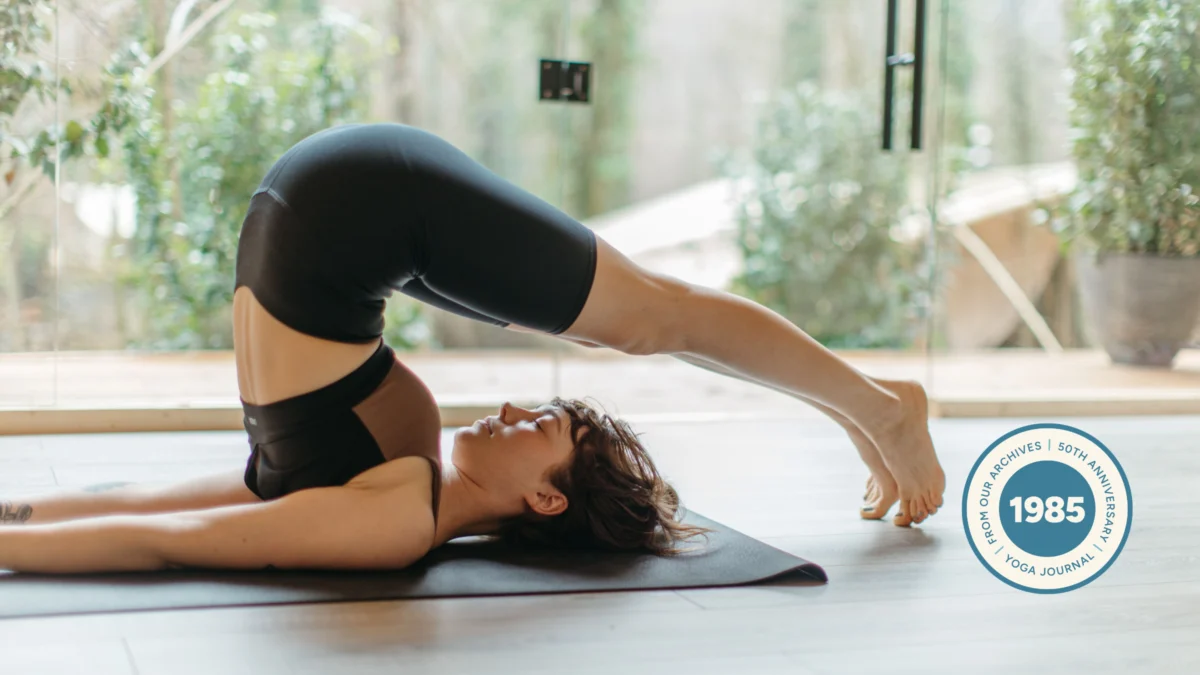
Halasana is fundamentally a posture of inversion and extension. Often described as a continuation of Sarvangasana (Shoulderstand), the pose requires the practitioner to extend the legs over the head while supine, creating a deep, systematic stretch along the entire posterior vertebral column.
From a physiological perspective, the pose targets the fascia, ligaments, and muscle groups running from the cervical spine down to the sacrum. It is a comprehensive stretch that addresses the hamstrings—the posterior chain of the thighs—while simultaneously providing a therapeutic opening for the shoulder joints. As noted by the legendary B. K. S. Iyengar, the extreme extension and external rotation of the shoulders required in the full expression of the pose help alleviate chronic stiffness, provided the practitioner adheres to proper form.
Chronology: From Ancient Roots to the 1985 Archive
The inclusion of Halasana in the Yoga Journal archives serves as a vital historical bridge. Since 1975, the publication has documented the evolution of yoga in the West, and the 1985 feature on Plough Pose stands as a hallmark of the "Iyengar era," emphasizing technical precision and the use of props to ensure safety.
- 1975–1980s: The formative years of yoga journalism in the U.S. focused on distilling complex Sanskrit texts into actionable, safe instructions for Western students.
- September-October 1985: Yoga Journal releases its definitive guide on Halasana, highlighting it as an essential follow-up to Shoulderstand.
- 2026: Re-examining this archival text, we see that while the language of fitness has changed, the anatomical requirements of the human spine remain constant. The 1985 advice to use blankets for cervical support is as relevant today as it was four decades ago.
Supporting Data: The Anatomy of a Safe Practice
The primary concern regarding Halasana involves the cervical spine. Without the proper use of folded blankets, the neck is subjected to significant flexion, which can flatten the natural curvature of the spine and place immense pressure on delicate vertebrae.
The Role of Prop-Assisted Alignment
Safety in Halasana is not merely about "doing the pose"; it is about creating an environment where the body can surrender.
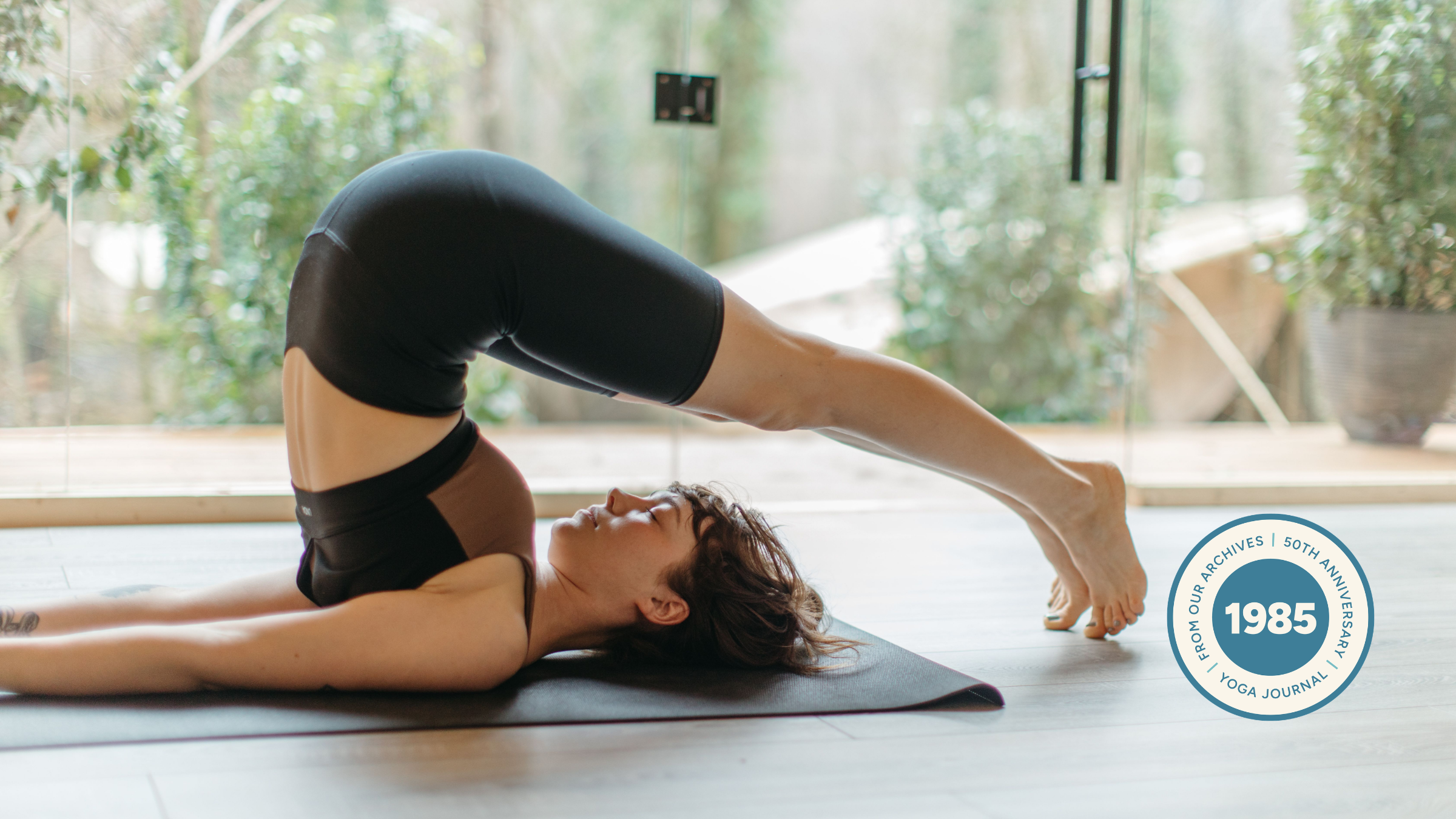
- Blanket Elevation: Practitioners are urged to use firm, evenly folded blankets to lift the shoulders. This elevation ensures the head remains at a level that prevents excessive strain on the neck. The goal is to create a sensation where the head could turn side-to-side, even if it remains steady in the pose.
- Chair and Wall Support: For students with tight hamstrings or limited spinal mobility, the use of a chair or wall support is not a "crutch"—it is a sophisticated tool for spinal integrity. By resting the feet on a bench or against a wall, the practitioner prevents the spine from collapsing, thereby maintaining the structural benefits of the inversion without risking injury.
Official Perspectives: The Philosophy of the Inversion
Beyond the mechanical benefits, the "negative" effect of Halasana—the cooling, inward-turning, and soothing influence on the nervous system—is its most profound offering. In the context of yoga philosophy, "negative" refers to a shift from the sympathetic (fight-or-flight) to the parasympathetic (rest-and-digest) state.
The Introspective Shift
Halasana is an introspective tool. When the head is positioned lower than the pelvis, the body’s energy shifts. The eyes must remain steady; a wandering gaze often leads to tension in the forehead, which cascades down into the neck and shoulders.
The 1985 perspective emphasizes that the fruit of the asana is the quiet mind. When the practitioner balances the "outer form" (the physical alignment of the legs, spine, and shoulders) with the "subjective feeling" (the internal stillness), the pose moves beyond exercise. It becomes an expression of wholeness, where the practitioner feels liberated from the relentless clock of past and future.
Implications: Integrating Halasana into Modern Routines
How should the contemporary student approach this classic pose? The implications for a balanced practice are clear:
- Sequence Integrity: Halasana should never be treated as an isolated event. It is the natural successor to Sarvangasana. Attempting the pose with momentum or without prior warming is a common error that invites injury.
- The "Slow-Entry" Protocol: Students should transition into Shoulderstand, preferably via a Bridge position to protect the neck, and only move into the Plough when the body is sufficiently prepared.
- The "No-Collapse" Rule: The most critical marker of a successful Halasana is the length of the spine. If the back rounds or the neck feels pinched, the pose has lost its integrity. Using support under the feet is the recommended corrective action.
- The Exit Strategy: Leaving the pose is as significant as entering it. Shifting the pelvis back into the hands, utilizing the elbows as levers, and returning to Shoulderstand before lowering the body ensures that the transition is smooth and controlled.
Conclusion: The Art of Effortless Effort
As we revisit the 1985 guidelines, the central message is one of patience. The student who rushes to touch their toes to the floor often sacrifices the very spinal alignment that makes the pose beneficial. By focusing on the breath, keeping the legs active, and utilizing props to respect the limitations of the body, the practitioner eventually reaches a state where effort becomes effortless.
Following the practice, the body requires a period of neutral integration. Lying quietly for several breaths, followed by a seated forward bend like Paschimottanasana, helps to stabilize the energy shifts induced by the inversion.
In the final analysis, Halasana is more than a stretch; it is a lesson in presence. Whether practiced as part of a rigorous series or as a solitary expression of yoga’s wholeness, the Plough remains a timeless invitation to turn inward, quiet the mind, and experience the stillness that exists within the moment.
Quick Reference Guide for Practitioners
- Preparation: Ensure you have firm, evenly folded blankets.
- The Entry: Always come from a stable Sarvangasana (Shoulderstand).
- The Focus: Keep the legs active and the spine long.
- The Duration: Begin with 30 seconds and gradually progress toward five minutes as your comfort level improves.
- The Transition: Always move with an exhalation, shifting weight back into the hands to protect the neck upon exiting.
- Post-Pose: Always counter the intensity of the inversion with a gentle, seated forward fold to ground the energy.