In a landmark moment for American nutrition policy, the American Journal of Public Health (AJPH) has unveiled a comprehensive series of research papers centered on the contentious yet critical issue of ultraprocessed foods (UPFs). The release of these studies coincides with the launch of FedUP!, a new advocacy initiative dedicated to translating scientific findings into systemic policies that curb the consumption of these products. This coordinated effort marks a significant escalation in the battle to align public health outcomes with the realities of the modern, highly engineered food environment.
The 2025–2030 Dietary Guidelines: A Turning Point
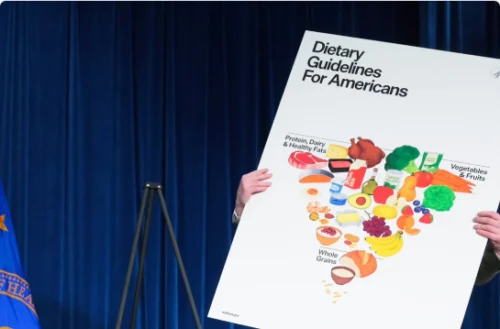
The catalyst for this renewed academic and political fervor is the January 7, 2026, release of the 2025–2030 Dietary Guidelines for Americans by the U.S. Departments of Health and Human Services (HHS) and Agriculture (USDA). For the first time in the history of these guidelines—which date back to 1980—the federal government has explicitly advised a "dramatic reduction" in highly processed foods.
While the term "ultraprocessed" remains absent from the final text—replaced by the euphemism "highly processed"—the intent is unmistakable. The guidelines explicitly target products "laden with refined carbohydrates, added sugars, excess sodium, unhealthy fats, and chemical additives." This shift represents a dramatic reversal of the Biden administration’s previous stance, where the Dietary Guidelines Advisory Committee (DGAC) declined to issue such a warning, citing a perceived lack of consensus and "ambiguity" in the definition of ultraprocessing.
Chronology of the Debate: From Obscurity to Policy
To understand the significance of the current guidelines, one must examine the evolution of the "Nova" classification system. Developed to categorize foods based on the extent and purpose of industrial processing, the Nova system divides products into four groups:
- Nova 1: Unprocessed or minimally processed foods.
- Nova 2: Processed culinary ingredients.
- Nova 3: Processed foods (canned goods, cheeses).
- Nova 4: Ultraprocessed foods (formulations of ingredients derived from foods, often containing additives like colorants, stabilizers, and emulsifiers).
For years, the food industry and certain segments of the nutrition community have argued that "ultraprocessed" is a nebulous term that demonizes products based on manufacturing methods rather than nutrient content. They have championed a reductionist view, focusing solely on individual nutrients like sugar, salt, or fat.
However, the 2026 guidelines reflect a changing tide. The commissioned scientific foundation report underpinning these guidelines frequently cited studies documenting the negative health effects associated with Nova 4 foods. The report acknowledged the resistance to the term "ultraprocessed"—citing concerns that it might misclassify certain nutrient-dense foods—yet the evidence for the harm caused by highly processed diets became too voluminous to ignore.
The Evidence: Why "Highly Processed" Matters
The debate over whether to label these products as "ultraprocessed" often masks a deeper scientific reality: the way food is engineered matters as much as the nutrients it contains.
One of the most pivotal pieces of evidence, which the previous DGAC committee famously excluded from its deliberations due to rigid study-length requirements, was a landmark randomized controlled trial conducted in a metabolic ward. In this setting, participants were fed either a minimally processed diet or a nutritionally comparable ultraprocessed diet. The results were startling: those on the ultraprocessed diet consumed an average of 500 calories more per day than those on the minimally processed diet, despite the meals being matched for sugar, salt, fat, and fiber.
This study suggests that ultraprocessed foods are inherently hyper-palatable, bypassing the body’s natural satiety signals. When coupled with the more than 100 observational studies that consistently link high consumption of these products to increased risks of chronic disease and premature mortality, the case for regulation becomes compelling. The Trump administration’s research review, perhaps surprisingly, concluded that the evidence provides a "strong rationale for immediate action at the individual, population, institutional, and policy levels."
Official Responses and the Politics of "Personal Responsibility"
Despite the inclusion of the "highly processed" recommendation, the 2026 guidelines are not without significant controversy. Public health experts, including Dr. Marion Nestle, have pointed to a clear ideological shift in how the government frames dietary health.
The fact sheets accompanying the new guidelines place a heavy emphasis on "personal responsibility," effectively framing previous government guidance as deceptive. By leaning into this narrative, the current administration has distanced itself from the social determinants of health—such as food deserts, poverty, and income inequality—that prevent millions of Americans from making "healthy" choices.
Furthermore, critics argue that the guidelines are heavily influenced by the meat and dairy industries. The 2026 iteration recommends a doubling of protein intake, encourages the consumption of full-fat dairy and animal fats, and lacks a robust emphasis on plant-based nutrition. Investigative scrutiny has revealed that several of the writers behind the research reviews held financial ties to meat and dairy trade groups, raising serious questions about the potential for corporate capture.
Implications for Future Policy
The inclusion of "highly processed" as a category in federal guidelines is a necessary, albeit incomplete, step. As Dr. Nestle and other contributors to the AJPH series argue, education alone is insufficient to combat an industry designed to maximize profit through the creation of addictive, low-cost, long-lasting products.
The "FedUP!" initiative aims to move the needle beyond the current federal focus on individual choice. Their policy agenda includes:
- Fiscal Interventions: Implementation of taxes on ultraprocessed products and subsidies for fresh, whole foods.
- Marketing Regulations: Restricting the advertising of ultraprocessed foods, particularly to children.
- Institutional Procurement: Changing what is served in schools, hospitals, and government facilities to prioritize minimally processed foods.
- Product Labeling: Clearer front-of-package warnings that go beyond simple "low-fat" or "low-sugar" claims.
The food industry, predictably, continues to fight these measures. Their primary strategy is to maintain a focus on individual nutrients, which allows them to reformulate products to meet specific thresholds while keeping the "ultraprocessed" status quo intact. By keeping the focus on sugar and sodium content, they can frame "healthier" ultraprocessed items—like certain plant-based meats or "fortified" snacks—as benign, thereby avoiding the broader systemic critique that their business model itself is fundamentally at odds with public health.
A Global Perspective: Looking to Brazil
The American struggle with ultraprocessed foods is being played out on a global stage, but the U.S. remains an outlier in its approach. In 2015, Brazil introduced dietary guidelines that were fundamentally different. Instead of focusing solely on the individual or on nutrient lists, Brazil’s guidelines emphasized the sustainability of the food system and the cultural value of natural foods.
The contrast is stark: the U.S. model treats the individual as an autonomous consumer who needs "better information," while the Brazilian model views the consumer as part of a food system that must be restructured to support health, environmental stewardship, and social equity.
Conclusion: The Long Road Ahead
The acknowledgment in the 2025–2030 Dietary Guidelines that "highly processed" foods are a public health menace is a major victory for the movement. However, it is only the opening act. The real test will be whether the momentum generated by the AJPH series and the "FedUP!" campaign can overcome the immense lobbying power of the food industry.
As researchers and policymakers continue to map the links between ultraprocessed diets and the rising rates of chronic illness, the focus must shift from the narrow corridor of "what should I eat?" to the broader, more challenging questions of "what should we produce?" and "how should we regulate?" The health of the American public depends on whether the government can finally prioritize human biology over corporate profitability. The science is clear—now, the politics must follow.