18 June, 2026
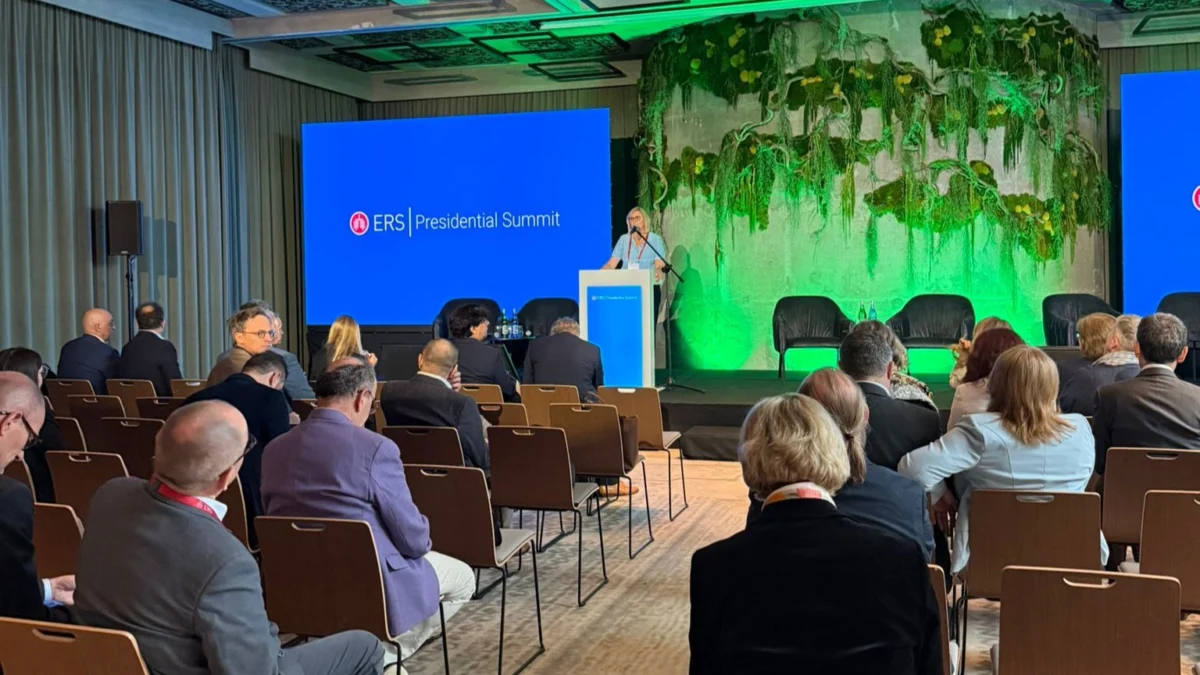
In the heart of Warsaw, Poland, a critical assembly of the world’s leading respiratory experts, policymakers, and patient advocates concluded this week, setting a bold new agenda for the future of global lung health. The European Respiratory Society (ERS) Presidential Summit 2026, titled "New frontiers of respiratory health: the present and future of early detection," served as a high-level forum to address the escalating burden of respiratory diseases through the lens of proactive, early-stage intervention.
Led by current ERS President Prof. Joanna Chorostowska-Wynimko, the two-day event (16–17 June) acted as a crucible for collaboration, bridging the gap between clinical innovation and public health policy. As respiratory conditions continue to rank among the leading causes of morbidity and mortality worldwide, the Summit’s focus on early detection—moving from reactive treatment to preemptive identification—marks a paradigm shift in how healthcare systems approach the lungs.
The Strategic Importance of Early Intervention: Main Facts
The primary objective of the Warsaw Summit was to synchronize global efforts in the early detection of lung cancer, chronic obstructive pulmonary disease (COPD), and other respiratory conditions.
Early detection is no longer merely a clinical recommendation; it is an economic and humanitarian imperative. With the rise of air pollution and the aging global population, the strain on healthcare systems is unprecedented. The Summit highlighted that early diagnosis offers the best chance for curative treatment, significantly reduces long-term costs, and improves patient quality of life. By bringing together diverse stakeholders, the ERS aimed to standardize protocols that have historically been fragmented across different European nations.
Chronology of the Summit: A Two-Day Roadmap for Innovation
Day One: Screening, Protocols, and Collaborative Policy
The Summit opened with a focus on the most pressing challenges in lung cancer screening. Prof. Torsten Blum set the tone by examining the implementation of low-dose CT (LDCT) scans. The discourse was heavily influenced by the successes of SOLACE, an EU4Health project that has served as a blueprint for implementing screening programs across the European Union.
Key takeaways from the opening sessions included:
- The SOLACE Model: A framework for regional and national pilot programs that demonstrate the viability of large-scale screening.
- Global Recognition: The historic acknowledgement of lung cancer screening by the International Agency for Research on Cancer (IARC), a World Health Organization agency, provided a newfound legitimacy that will likely accelerate funding and adoption.
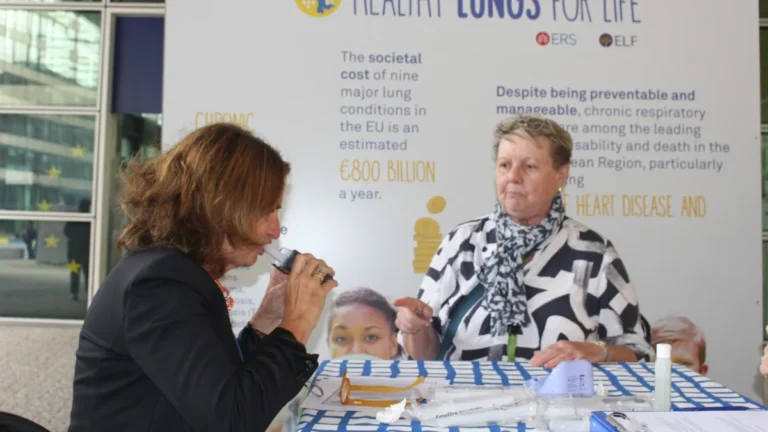
Following this, Prof. Ildiko Horvath, ERS Secretary General, shifted the focus to general respiratory health checks. She emphasized the "respiratory-cardiovascular nexus," noting that the lungs and the heart must be viewed as an interconnected system. The session identified spirometry—a test measuring lung function—as a vital, underutilized "window of opportunity" to detect disease before symptoms become debilitating.
Day Two: The Digital and Biological Horizon
The second day ventured into the transformative potential of emerging technologies. Prof. Przemyslaw Biecek of the Warsaw University of Technology opened with an in-depth exploration of artificial intelligence (AI).
The discussions centered on "Sybil," a deep-learning model capable of predicting lung cancer risk from a single low-dose chest CT scan. However, the takeaway was not a technological utopia, but a grounded assessment of human-AI collaboration. The panel concluded that AI must serve to augment, not replace, clinical expertise, and that "infrastructure for trust" is just as important as the code itself.
The final session, chaired by ERS President-Elect Dr. Marc Miravitlles, looked toward the horizon of biotechnology. The panel evaluated the proposed EU Biotech Act, analyzing how new molecular therapies and advanced diagnostics could reshape the landscape of respiratory disease management, effectively turning chronic conditions into manageable, or even curable, states.
Supporting Data and The Technological Imperative
The discourse at the Summit was underpinned by data highlighting the urgency of these interventions.
AI: The "Augmented Expertise" Model
The session on AI brought forward three crucial lessons that will define medical research for the next decade:
- Synergy over Substitution: Clinicians must remain the ultimate decision-makers. AI serves as a powerful diagnostic tool that processes data at speeds impossible for the human brain, but it lacks the contextual nuance required for patient care.
- Trust Infrastructure: For AI to be successfully integrated into hospitals, it requires rigorous validation and transparency. Without trust from both patients and doctors, the most sophisticated model remains academic.
- Human-in-the-Loop: The future of respiratory care is "augmented expertise." AI provides the raw data analysis, but human medical practitioners provide the empathy and strategic clinical planning required to treat the patient, not just the scan.
The Biotech Potential
Dr. Miravitlles presented a compelling case for the EU Life Sciences Strategy. By utilizing biotechnology to identify genetic markers and biological predispositions for respiratory disease, healthcare systems can move toward "precision pulmonology." This means moving away from a "one-size-fits-all" approach to medications and interventions, instead tailoring treatments based on the unique biological profile of the patient.
Official Responses and Stakeholder Perspectives
The Summit served as a rare intersection of clinical science and governmental policy. By inviting representatives from the European Commission and national health ministries, the ERS ensured that the scientific breakthroughs discussed were not siloed.
Prof. Joanna Chorostowska-Wynimko noted that the success of these programs relies on "trans-border cooperation." She emphasized that an early detection protocol that works in Poland must be adaptable to the needs of Greece, Germany, or any other member state. Patient advocates present at the Summit stressed the need for "patient-centric screening," demanding that the process be as accessible and non-intimidating as possible to ensure high participation rates.
Implications: The Launch of ‘Healthy Lungs for Life’
The practical implications of the Summit were immediately solidified with the launch of the Healthy Lungs for Life campaign in Poland. This initiative is designed to bridge the gap between high-level policy and grassroots awareness.
Over the next two years, this campaign will roll out across nine European countries, focusing on two main pillars:
- Clean Air Awareness: Educating the public on the correlation between air quality and respiratory function.
- Proactive Screening: Encouraging the general public to seek health checks long before they experience symptoms.
The campaign acknowledges that while technology like Sybil and new biotech drugs are essential, the most effective tool in early detection remains an informed and empowered public that knows when to consult a specialist.
Conclusion: A New Era for Respiratory Health
The ERS Presidential Summit 2026 has successfully mapped out the next frontier. It has moved the conversation beyond the limitations of current diagnostic capabilities and into a future defined by AI-driven risk assessment, biotechnology-led therapeutics, and unified European health policy.
As the delegates return to their respective nations, they carry with them a clear mandate: to transform the early detection of respiratory disease from an aspiration into a standard of care. The "new frontiers" described in Warsaw are not merely theoretical; through the implementation of international protocols and the strengthening of clinical-AI partnerships, the path to a healthier, more resilient respiratory future is being paved today.
By prioritizing the "window of opportunity" offered by early intervention, the ERS is ensuring that the burden of respiratory illness is met with the full force of modern science, policy, and human dedication.