As we cross the threshold of 55, the physiological landscape of the body begins to shift. Muscle mass, if left unchallenged, naturally begins to decline—a process known as sarcopenia. However, this is not an inevitable decline; it is a signal that our approach to fitness must evolve. The goal is no longer merely to "exercise" for the sake of burning calories, but to train for structural integrity, metabolic health, and functional longevity.
For those looking to reclaim firmer muscle tone and vitality, the solution does not lie in spending hours in a commercial gym navigating complex machines. Instead, the answer lies in high-yield, compound movements that respect the body’s recovery needs while maximizing hormonal and muscular response.
The Science of Strength: Why Compound Movements Rule
Building muscle tone after 55 requires a strategic approach to resistance training. Research indicates that the most effective way to stimulate muscle protein synthesis is through "repeatable strength"—exercises that engage multiple joints and large muscle groups simultaneously.
By focusing on movement patterns—the hinge, the lunge, the pull, and the brace—you create a comprehensive stimulus that impacts the legs, hips, back, arms, and core in a single session. This efficiency is critical. It allows you to send a clear, potent signal to your body to preserve and build muscle without the cortisol spike or physical exhaustion associated with overly long, fragmented workouts.
Chronology of the 20-Minute Routine
This routine is designed as a daily "strength check-in." For beginners, performing this circuit three days a week is an ideal starting point, gradually increasing to five days as your recovery capacity improves.
1. The Kettlebell Deadlift: The Foundation of Power
The deadlift is the king of functional movements. It trains the posterior chain—the glutes, hamstrings, and lower back—which are essential for posture and daily mobility.
- Execution: Place the kettlebell between your feet. With a slight bend in your knees, hinge at the hips, keeping your back flat and chest up. Grip the handle firmly, engage your lats, and drive through your heels to stand tall.
- Why it works: It mimics the natural act of picking objects off the floor, reinforcing the movement patterns that protect your spine and hips as you age.
- Protocol: 3 sets of 8–12 repetitions. Rest 60 seconds between sets.
2. The Goblet Forward Lunge: Stability and Balance
As we age, unilateral (single-leg) training becomes vital. The goblet forward lunge forces the body to stabilize while moving, preventing muscle imbalances that often lead to falls or joint pain.
- Execution: Hold a single weight (kettlebell or dumbbell) at chest height. Step forward, lowering your back knee toward the ground while keeping your torso perfectly vertical. Push through the front heel to return to the starting position.
- Why it works: The chest-loaded position forces your core to work overtime to maintain balance, while the lunge itself builds quad and glute strength.
- Protocol: 3 sets of 8–10 reps per leg. Rest 45–60 seconds between sets.
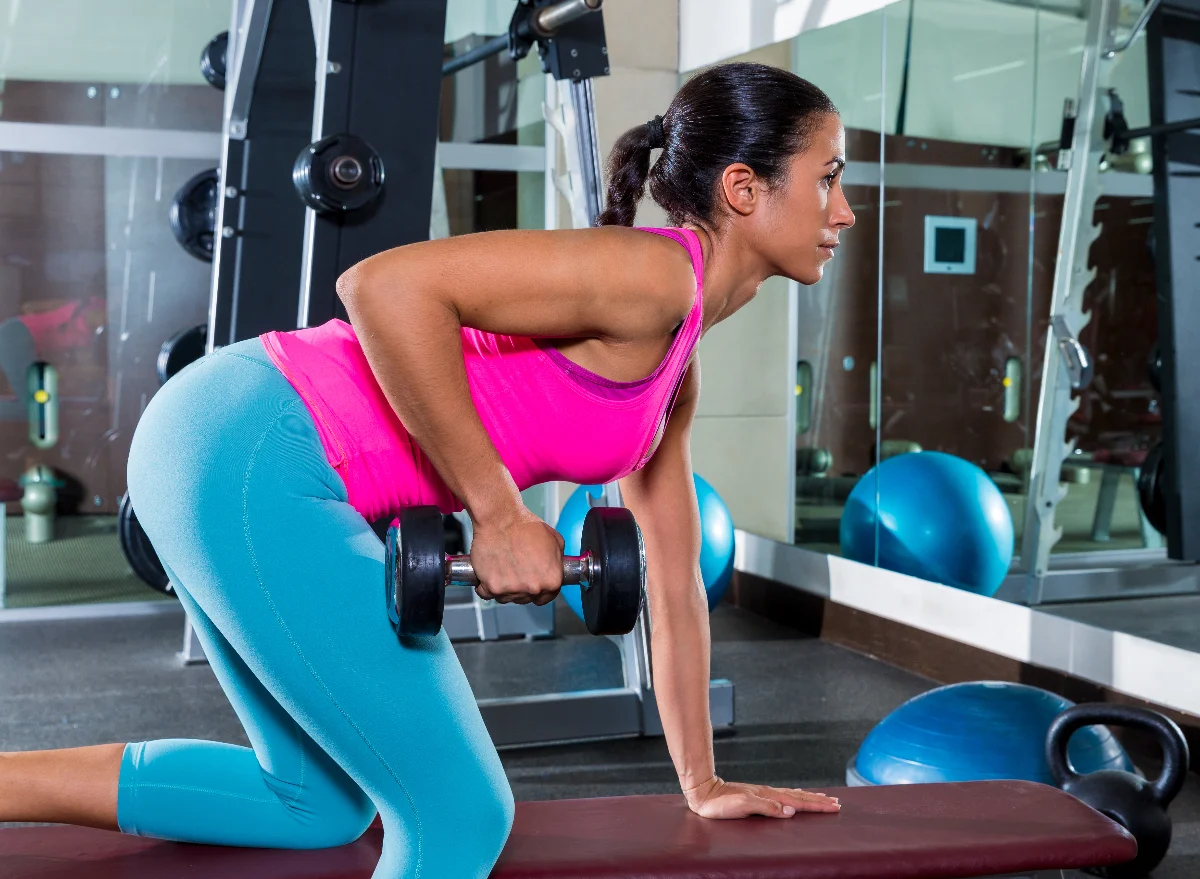
3. The Single-Arm Dumbbell Row: Defining the Back
Upper body tone, particularly in the arms and back, is a primary goal for many. The single-arm row is superior to machine-based rows because it requires you to stabilize your torso while working your lats and biceps.
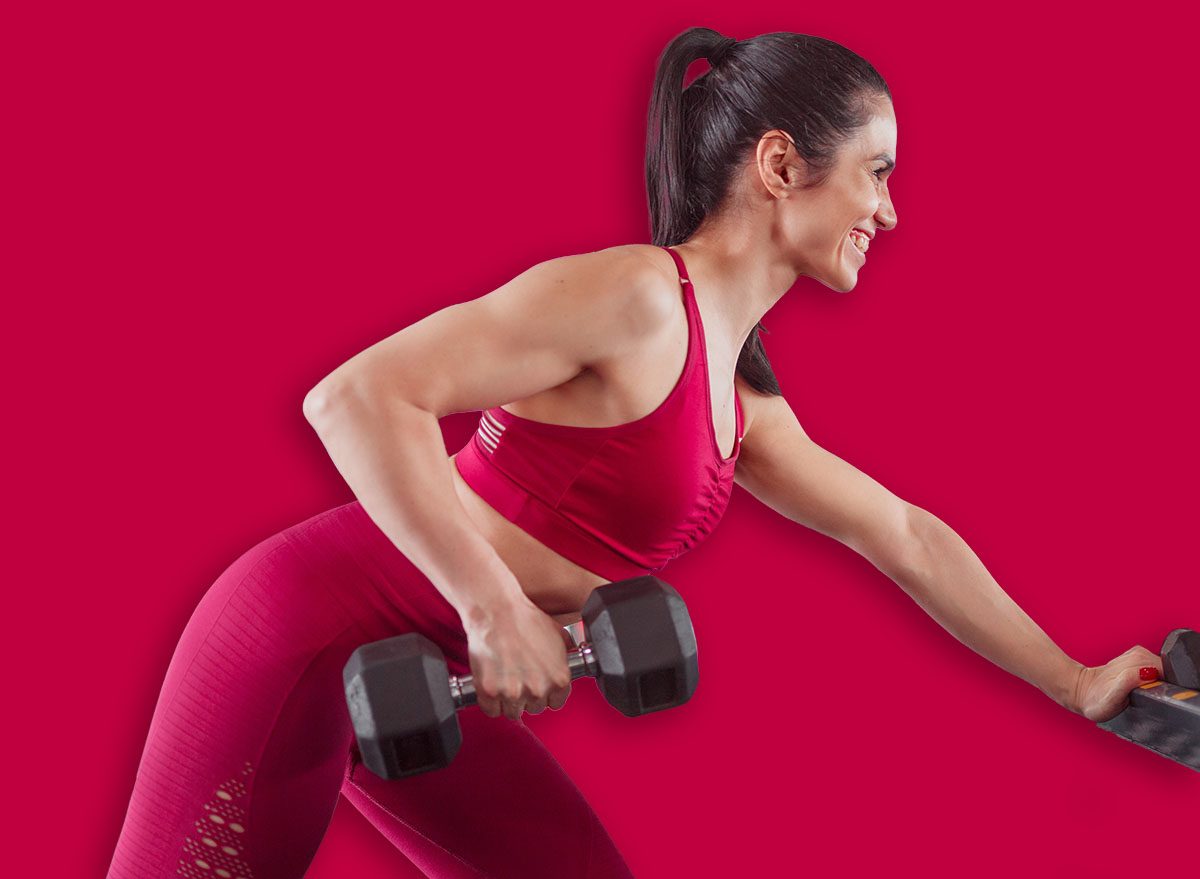
- Execution: Support your weight with one hand on a bench or sturdy chair. With the other hand, pull the dumbbell toward your hip, keeping your elbow tucked close to your body. Squeeze the shoulder blade at the top of the movement.
- Why it works: It addresses the "rounded shoulder" posture that often develops after years of desk work or sedentary habits.
- Protocol: 3 sets of 8–12 reps per arm. Rest 45–60 seconds between sets.
4. Planks with Shoulder Taps: The Anti-Rotation Core
A strong core is the anchor of the body. Adding a shoulder tap to a standard plank introduces a dynamic element that forces the abdominal muscles to resist rotation.
- Execution: Start in a high plank (push-up) position. With feet wider than hip-width for stability, tap your left shoulder with your right hand, then switch.
- Why it works: It builds "bracing" strength, which is the ability of your core to protect your spine during everyday physical tasks.
- Protocol: 3 sets of 8–12 taps per side. Rest 30–45 seconds between sets.
Supporting Data: Why "Controlled Tension" Matters
Recent studies published in journals such as Physiological Reports highlight that it is not just the weight on the bar, but the controlled tension applied to the muscle that triggers hypertrophy (growth) in older adults.
For the individual over 55, "clean reps" are more important than "heavy reps." By slowing down the eccentric (lowering) phase of these four exercises, you increase the time under tension, which stimulates muscle fibers more effectively and reduces the risk of joint injury. This is a crucial distinction: you are not trying to ego-lift; you are trying to cultivate muscle density.
Official Perspectives: The Coaching Philosophy
Professional trainers emphasize that the transition to post-55 fitness is a shift in mindset. "It’s about longevity, not just aesthetics," says a leading strength coach. "When you train these four patterns—hinge, lunge, pull, and brace—you are essentially ‘future-proofing’ your body. You are training your nervous system to be reactive, your muscles to be contractile, and your joints to be resilient."
The consensus among health professionals is that resistance training is the most potent anti-aging intervention available. It impacts bone density, glucose metabolism, and cognitive health, in addition to the visible muscle tone that most people seek.
Implications for Daily Living
The beauty of this 20-minute routine is that the results extend far beyond the mirror. By focusing on these four pillars of movement, you are directly improving your capacity to perform daily tasks:
- The Hinge makes lifting groceries or luggage safer.
- The Lunge improves your gait and confidence when walking on uneven terrain.
- The Pull helps maintain the shoulder mobility needed to reach into high cabinets or lift objects over your head.
- The Brace keeps your midsection firm and your posture upright, projecting confidence and reducing back pain.
Conclusion: Consistency is the Only Metric
Regaining muscle tone after 55 is not about a sudden, radical transformation. It is about the quiet, consistent application of effort. Your body is highly adaptable, even in your 60s, 70s, and beyond, provided you give it the correct stimulus.
By dedicating just 20 minutes a day to these movements, you are making an investment that pays dividends in mobility, metabolic health, and physical capability. Remember: keep the movements smooth, focus on the quality of every contraction, and respect your body’s need for rest. You aren’t just building muscle; you are building a stronger, more capable version of yourself for the years ahead.