










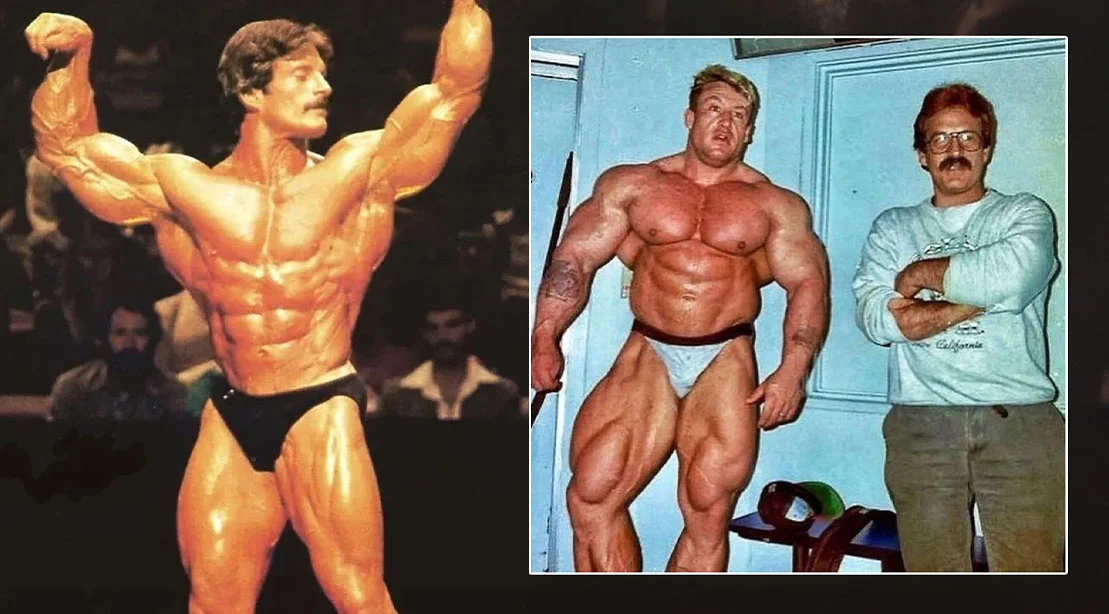
June 10, 2026 — In the iron-clad history of professional bodybuilding, few figures have cast a shadow as long or as intellectually provocative as Mike Mentzer. Today marks the 25th anniversary of his passing, a somber milestone that serves not just as a remembrance of a titan, but as a reaffirmation of a philosophy that fundamentally altered the landscape of human physical development.
To honor the man who revolutionized the sport, six-time Mr. Olympia Dorian Yates took to social media to reflect on a mentorship and friendship that birthed one of the most successful training methodologies in history. As the fitness world pauses to commemorate Mentzer’s contribution, the enduring resonance of his "Heavy Duty" philosophy remains a testament to his status as the sport’s ultimate contrarian.
The Philosophy of Intensity: A Retrospective on Mike Mentzer
Michael John Mentzer (1951–2001) was far more than a decorated athlete; he was a revolutionary. While many of his contemporaries were trapped in the dogma of the 1970s "more is better" training culture—spending hours in the gym performing endless sets and reps—Mentzer was a student of logic.
Inspired by the teachings of Nautilus founder Arthur Jones, Mentzer questioned the status quo. He posited that if the human body has a limited capacity for recovery, then the most efficient way to stimulate growth is through brief, infrequent, and intensely focused bouts of exercise. This was the birth of High-Intensity Training (HIT), later popularized as "Heavy Duty."
His competitive credentials provided the ultimate validation for his radical ideas. In 1978, Mentzer achieved the impossible, earning a perfect score of 300 at the Mr. Universe contest. He repeated this feat in 1979 at the Mr. Olympia (heavyweight class), proving that his intellectual approach to iron was not merely theoretical—it was, quite literally, the gold standard.
A Chronology of a Revolution
To understand the weight of Mentzer’s influence, one must look at the timeline of his impact on the sport:
- 1971: A young Mentzer competes in his first major bodybuilding event, sparking a career that would challenge the industry’s conventional wisdom.
- 1978: Mentzer secures a historic perfect score of 300 at the Mr. Universe, putting the establishment on notice that his "Heavy Duty" methods are superior.
- 1979: He dominates the heavyweight division at the Mr. Olympia, cementing his status as one of the greatest bodybuilders to ever step on stage.
- 1980: Following a controversial finish at the Mr. Olympia, Mentzer retires from professional competition to focus on coaching and writing, effectively transitioning from athlete to philosopher-mentor.
- 1990s: Mentzer’s writings reach a young, hungry bodybuilder from the UK named Dorian Yates. The intersection of these two minds would go on to define the decade of bodybuilding.
- 2001: Mike Mentzer passes away, leaving behind a legacy that continues to be rediscovered by new generations of athletes.
- 2026: Twenty-five years after his death, his influence remains a dominant force in online fitness discourse and high-level athletic training.
Dorian Yates: The Student Becomes the Master
For Dorian Yates, the "Shadow" who dominated the 1990s with six consecutive Sandow trophies, Mentzer was the catalyst for his own evolution. In a touching tribute shared on Instagram, Yates spoke candidly about his first encounter with the man behind the method.
"I’d seen Mike’s training stuff long before I ever met him, and I was impressed," Yates reflected. "He was an interesting person and was incredibly intelligent. With Mike, it goes beyond his physique, although his physique was incredible—especially with that muscle thickness, those big forearms, and calves. In the end, it turned out that we shared those traits."
Yates noted that while the physique was what drew people in, it was the intellectual rigor that kept them. "What Mentzer did was ask the question: ‘Am I training in a certain way due to habit and the pressures of conformity, or am I doing everything to ascertain the best ways of approaching bodybuilding to get maximum results?’"
This specific line of questioning led to the development of Yates’s own signature style, "Blood & Guts," a methodology characterized by extreme intensity and minimal volume. Yates admitted that his training sessions with Mentzer were the most "focused and brutal" of his entire career, a testament to the uncompromising nature of Mentzer’s philosophy.
Beyond the Iron: Mental Health and the Human Condition
While the bodybuilding community often focuses on the external results—the hypertrophy, the vascularity, the trophy count—Yates took this anniversary as an opportunity to address the human side of his mentor.
Mentzer’s life was not without struggle. He faced well-documented challenges with mental health, which, as Yates noted, were far less understood during Mentzer’s time than they are in today’s more enlightened discourse.
"In all my meetings with him, he came across as a very intelligent and kind man," Yates wrote. "I do want to say that Mike did suffer from mental health issues, which back then were probably not so well-recognized or taught about as they are now. I think it’s important to mention this, and to recognize men’s mental health."
This admission serves as a crucial reminder that even those who appear to possess superhuman discipline and physical strength are subject to the complexities of the human psyche. By speaking out, Yates has helped to destigmatize the struggles Mentzer faced, humanizing a man who has often been reduced to a caricature of "The Mr. Heavy Duty."
The Implications: Why Mentzer’s Methods Persist
The question remains: Why is Mike Mentzer still relevant in 2026?
The answer lies in the democratization of information. Before the internet, Mentzer’s teachings were hidden in magazines and expensive private courses. Today, his principles are being analyzed by millions of fitness enthusiasts on TikTok, Instagram, and YouTube. The "Heavy Duty" method—which prioritizes mechanical tension and progressive overload over the "volume-at-all-costs" mentality—is increasingly supported by modern sports science.
As physical culture shifts back toward efficiency, Mentzer’s warnings against "overtraining" have become the new gospel. Athletes today are looking for ways to maximize results while minimizing wear and tear on the body, a hallmark of Mentzer’s original design.
"He probably didn’t know just how much he was influencing people worldwide," Yates added. "I’m seeing more and more pictures and videos of Mr. Heavy Duty online, which is great to see."
A Final Tribute to the Rebel
Mike Mentzer was more than a bodybuilder; he was a rebel who challenged the establishment, forced the industry to think for itself, and left a blueprint that allowed others to build their own legacies. His influence on Dorian Yates was not just about how to lift weights, but how to think about the body as a complex system requiring intelligence, logic, and unwavering focus.
As we reach the 25-year mark since his passing, the bodybuilding world isn’t just looking back at a legendary physique; it is looking at a methodology that has stood the test of time. For those looking to understand the intersection of philosophy and iron, the teachings of Mike Mentzer remain the essential starting point.
His mustache may have been a relic of the era, but his mind remains light-years ahead of his time. As Dorian Yates continues to advocate for the principles he learned from his friend, one thing is clear: the Heavy Duty legacy is not just surviving—it is thriving.
To learn more about the life and times of Mike Mentzer, visit the MentzerHit Instagram channel.
To follow Dorian Yates and his ongoing fitness journey, click here.