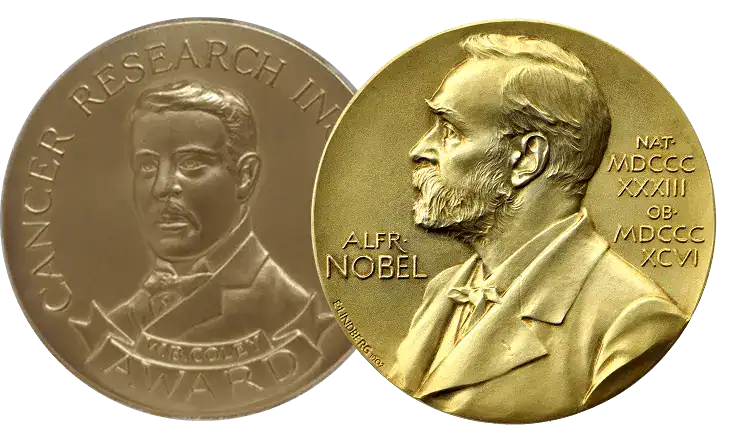









At the 2026 American Association for Cancer Research (AACR) Annual Meeting, the scientific community gathered to celebrate a career defined by relentless curiosity and foundational discovery. The Cancer Research Institute (CRI) and the AACR bestowed the prestigious AACR-CRI Lloyd J. Old Award in Cancer Immunology upon Kenneth M. Murphy, MD, PhD, a titan in the field whose work has fundamentally rewritten our understanding of the immune system’s architecture.
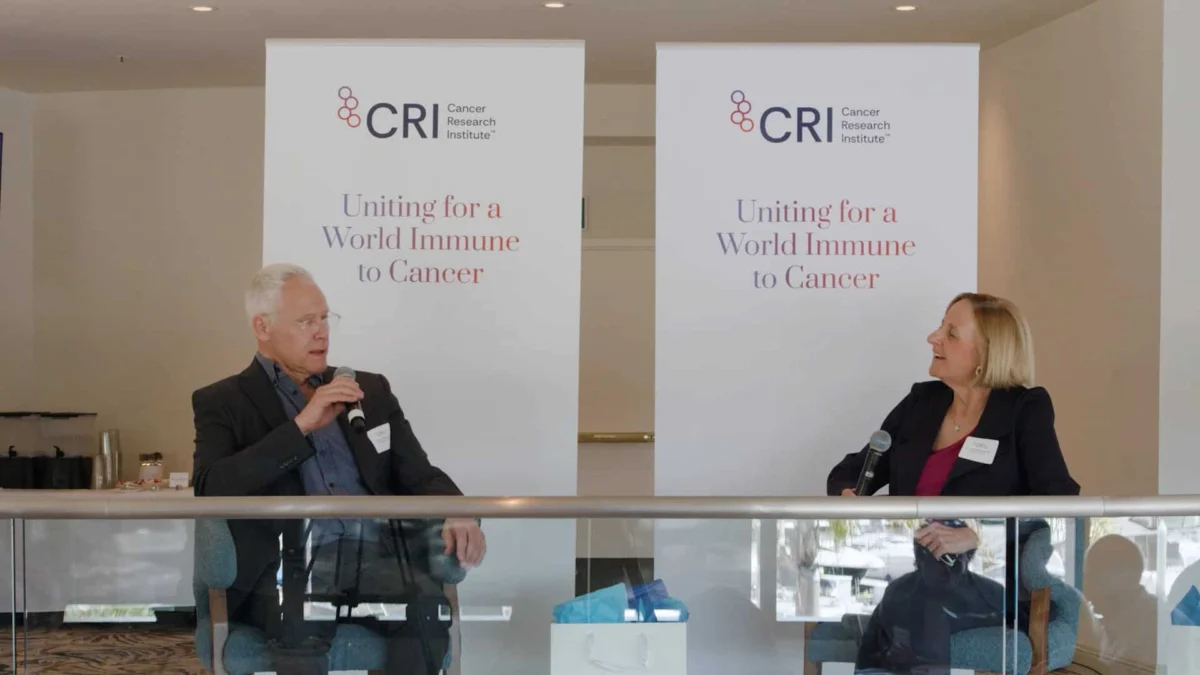
The award ceremony served as more than a recognition of past accolades; it acted as a catalyst for a profound dialogue on the future of immunotherapy. In a departure from traditional lecture formats, the CRI facilitated a "fireside chat" between Dr. Murphy and the 2025 recipient, Dr. Crystal Mackall. Their exchange provided a candid, intellectual exploration of the nonlinear path of scientific discovery, the limitations of current technology, and the enduring necessity of basic biology in the age of artificial intelligence.
The Architect of Immune Orchestration: Main Facts and Significance
Dr. Kenneth M. Murphy’s career has been centered on a single, complex question: How does the immune system differentiate between threats and decide which defensive strategy to employ? For decades, his laboratory has meticulously decoded the role of dendritic cells (DCs), the "sentinels" of the immune system.
His most significant contribution lies in the identification and functional characterization of the cDC1 subset of dendritic cells. Dr. Murphy’s research demonstrated that these cells are uniquely equipped to prime CD8+ T cells—the "killer" cells responsible for hunting and destroying tumor cells. This discovery was a watershed moment in oncology. It provided the biological explanation for why certain immunotherapies, such as immune checkpoint inhibitors, succeed in some patients but fail in others. Without the "permission" and activation signals provided by cDC1s, the adaptive immune system remains dormant, leaving tumors unchecked.
A Chronology of Discovery: From Basic Science to Clinical Application
To understand the weight of Dr. Murphy’s contribution, one must look at the evolution of immunology over the last thirty years.
- The Early Years (1990s): Dr. Murphy began his investigation into T-helper cell differentiation. His work helped establish the paradigm of Th1 and Th2 cell subsets, providing a framework for understanding how the body balances inflammatory versus allergic responses.
- The DC Paradigm Shift (2000s): Moving beyond T cells, Murphy pivoted toward the "upstream" regulators: dendritic cells. His lab began mapping the transcriptional regulation of these cells, identifying the specific molecular "switches" (such as the transcription factor IRF8) that determine DC lineage and function.
- Defining the cDC1 Subset (2010s): Murphy’s identification of the cDC1 subset as the primary cross-presenting cells for anti-tumor immunity effectively "mapped the territory" for the next generation of cancer vaccines.
- Translational Integration (2020s–Present): Today, Dr. Murphy’s foundational insights are being utilized to engineer more potent vaccines. By understanding that cDC1s are the essential gatekeepers, researchers are now designing delivery platforms that specifically target these cells to amplify the anti-tumor response.
Supporting Data: The Biological Imperative of Dendritic Cells
The conversation between Dr. Murphy and Dr. Mackall underscored a critical scientific consensus: we have perhaps over-indexed on T-cell exhaustion while under-indexing on the priming phase.
Data presented during the award lecture highlighted that the success of modern mRNA and cDNA cancer vaccine platforms is inextricably linked to the recruitment and activation of cDC1s. When these cells are absent or inhibited by the tumor microenvironment, even the most sophisticated vaccine antigen is effectively "invisible" to the immune system.
Dr. Murphy’s research suggests that the durability of an immune response—a key hurdle in long-term cancer remission—is determined at the moment of initial activation. He noted that the transition between stem-like T cells (which provide long-term memory) and short-lived effector cells (which provide immediate destruction) is heavily influenced by the cytokine environment created by properly functioning dendritic cells. Without this initial "instruction," the immune system fails to build the memory necessary to prevent cancer recurrence.
Official Responses and Expert Dialogue
The fireside chat with Dr. Crystal Mackall offered a rare, unfiltered look at the challenges facing high-level research. Both scientists agreed that while the field has seen incredible successes, there is a danger in assuming we have "solved" the immune system.
"We’re still asking the same question that we started off with," Dr. Murphy remarked. His reflection was a poignant reminder that in science, the most profound answers often lead to even more complex questions.
Dr. Mackall, a pioneer in CAR-T cell therapy, echoed this sentiment, emphasizing that the current research environment is becoming increasingly difficult for the next generation. "We are drowning in data, but often starving for insight," she noted. The duo discussed the "funding paradox"—the pressure to promise near-term clinical breakthroughs often discourages the kind of high-risk, curiosity-driven basic research that ultimately leads to the next generation of Nobel-worthy discoveries.
The Role of AI in Scientific Discovery
A significant portion of the discussion was dedicated to the burgeoning role of artificial intelligence in oncology. Both experts expressed a tempered, pragmatic view.
Dr. Murphy acknowledged that AI is an "extraordinary tool" for pattern recognition in high-dimensional datasets—such as single-cell RNA sequencing or proteomics. It can identify correlations that the human eye would miss in a lifetime of study. However, he cautioned against treating AI as a "black box" solution.
"AI can manage the data, but it cannot perform the science," Dr. Murphy stated. "It cannot decide what question is worth asking, nor can it provide the biological intuition required to interpret why a result matters in the context of human physiology."
Dr. Mackall added that the true skill for young investigators today is "synthesis." With the sheer volume of papers and data points being produced, the ability to act as an "intellectual curator"—distilling noise into meaningful biological pathways—has become a more valuable skill than ever before.
Implications for the Future of Oncology
The implications of Dr. Murphy’s life work, and the discussions held at the 2026 AACR meeting, are twofold:
- The "Back-to-Basics" Mandate: The industry is signaling a shift. After a decade of chasing the "next big" therapeutic molecule, there is a renewed interest in the basic biology of immune initiation. We are realizing that to fix the engine of the immune system, we must understand every cog in the gear.
- Vaccine Evolution: The next wave of cancer vaccines will likely move away from "one-size-fits-all" antigens toward precision-engineered platforms that target dendritic cells. By harnessing the body’s natural "teacher" (the DC), we may be able to induce more durable, potent, and specific anti-tumor immunity.
As the meeting concluded, the overarching message remained one of humble persistence. Breakthroughs in cancer immunotherapy are not the product of linear planning or rigid, algorithmic discovery. They are the result of decades of "following the biology."
For the next generation of researchers, Dr. Murphy’s career serves as a blueprint. It is a reminder that the most significant advances do not necessarily come from the most expensive technology or the fastest computation. They come from the scientist who is willing to stay with a question long enough to understand its true nature—one step, one observation, and one immune cell at a time.
The path forward is, as Dr. Murphy suggested, "a sequence of incremental steps." And while the complexity of cancer remains daunting, the foundational work laid by recipients of the Lloyd J. Old Award ensures that we are no longer wandering in the dark. We are, at last, beginning to see the mechanisms of the immune system clearly.