




By Industry Editorial Staff
On April 9, 2026, the New York Genome Center served as the epicenter for one of the most candid dialogues in modern medicine. Lumanity’s Cancer Progress 2026 meeting, a tradition spanning nearly four decades, pivoted away from the celebratory tone often associated with biotech conferences. Instead, it embraced a rigorous, often uncomfortable "pressure-testing" of the current oncology research paradigm.
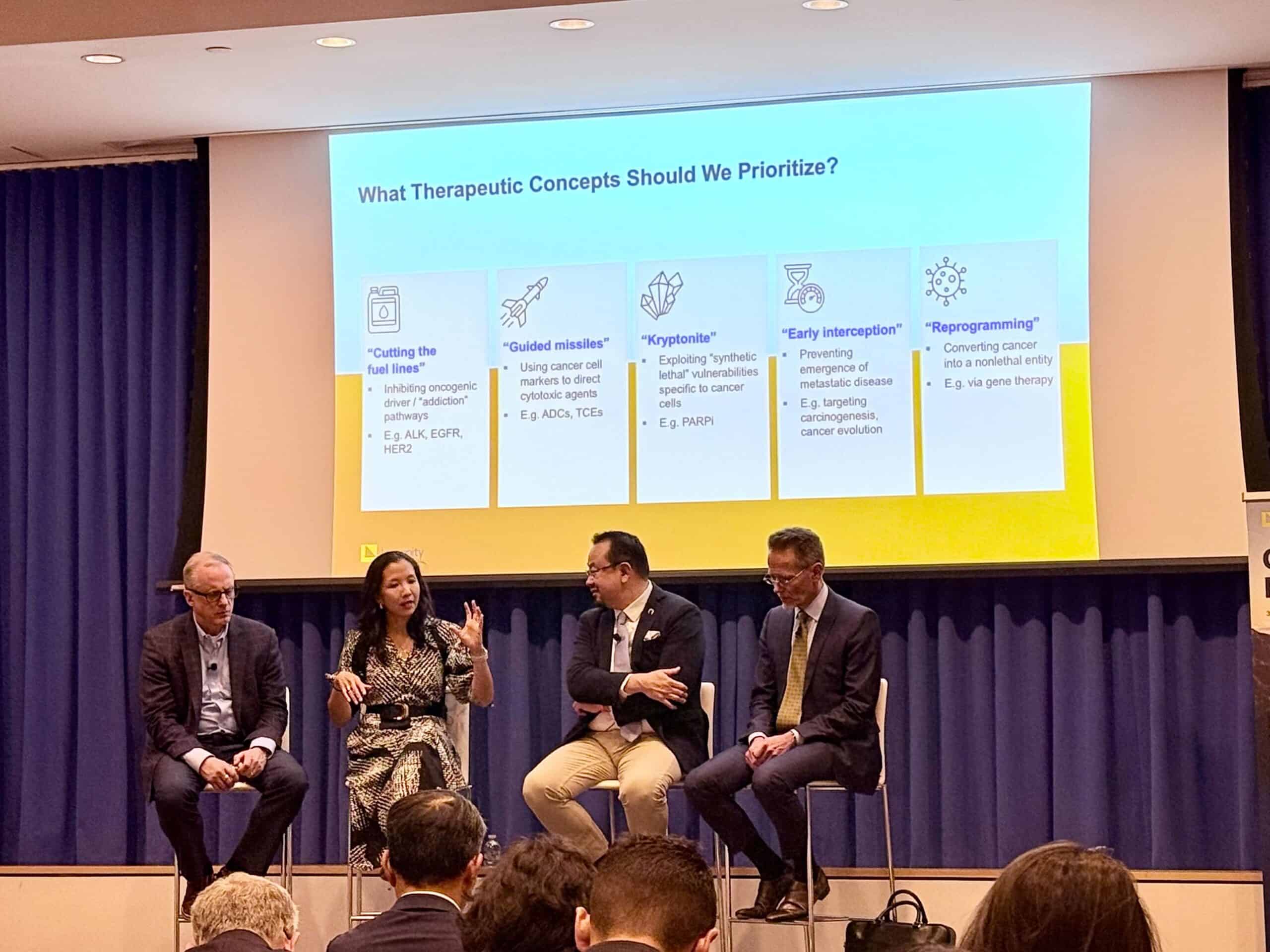
As the industry faces mounting pressure from patent cliffs, shifting global competition, and the limitations of traditional trial models, the event’s final panel—“Beyond Next-Gen: How Should We Engineer Future Breakthroughs?”—served as a rallying cry for a fundamental shift in how we approach the war on cancer.
The Main Facts: The End of Productive Chaos
The central thesis of the day was as provocative as it was necessary: the “spaghetti against the wall” approach—characterized by high-volume experimentation, rapid-fire combination testing, and iterative trial-and-error—has reached its natural limit.
For years, the immuno-oncology boom was fueled by this "productive chaos." Researchers, bolstered by the success of early checkpoint inhibitors, often prioritized speed and volume over deep mechanistic understanding. If a therapy showed promise, the instinct was to combine it with another, then another, across as many tumor types as possible.
However, the consensus among the expert panel was clear: the field is now producing more trials than insights. The "pantry-dumping" approach—where researchers throw all available therapeutic ingredients into the mix—has resulted in bloated pipelines, obscured signals, and a failure to address the underlying biological complexities of cancer.
Chronology of the Shift: From Discovery to Discipline
To understand why the industry is at this inflection point, one must look at the evolution of oncology research over the last thirty years.
- 1989–2010 (The Foundation): The era of establishing basic principles in molecular biology. The industry learned how to identify specific targets, though clinical outcomes remained limited.
- 2011–2020 (The Immuno-Oncology Gold Rush): The rise of checkpoint inhibitors proved that the immune system could be harnessed. This success invited a period of "aggressive empiricism," where the sheer volume of combinations became the industry standard.
- 2021–2025 (The Data Bottleneck): As the number of trials exploded, the industry encountered a "knowledge gap." We had more data than ever, but less clarity on why certain patients responded and others did not.
- 2026 and Beyond (The Era of Intentionality): As discussed at Cancer Progress 2026, the focus is shifting from "how much can we test" to "how much can we understand."
Supporting Data and the Biological Knowledge Gap
The primary challenge identified by the panel is the mismatch between the complexity of the disease and the uniformity of the current research playbook.
Dr. Alicia Zhou, Chief Executive Officer of the Cancer Research Institute (CRI), emphasized that "failure" in oncology is currently a catch-all term that obscures critical distinctions. A drug may fail because it hit the wrong target, because the tumor lacked a biomarker, or because the cancer evolved to escape the immune response. When these distinct biological failures are treated as a single outcome, the industry loses the ability to pivot intelligently.
The Complexity of Immunotherapy
Unlike traditional cytotoxic chemotherapy, which aims to kill cells directly, immunotherapy requires initiating a complex dialogue between the immune system and the tumor microenvironment.
- The Communication Breakdown: Researchers are effectively trying to "start a conversation" between two distinct, highly adaptive systems.
- The Diagnostic Void: When an immunotherapy trial fails, the current infrastructure rarely provides the granularity to determine if the drug failed to reach the immune system, if the immune system failed to activate, or if the tumor successfully suppressed the response.
The panel argued that we have systematically underinvested in the "connective tissue" of these biological interactions, opting instead to launch more trials with different combinations. This strategy is economically and scientifically unsustainable.
AI: A Tool, Not a Panacea
A significant portion of the day was dedicated to the role of artificial intelligence. While AI is frequently touted as the solution to drug discovery, Dr. Zhou provided a sobering reality check.
The Hallucination Risk
"I believe generative AI is going to hit a wall," Dr. Zhou noted. "It cannot predict things that we cannot actually validate biologically in the physical world."
The panel cautioned that allowing AI to operate without a rigorous, biology-first framework risks generating "hallucinations"—predictions that look statistically sound but lack biological reality. The danger lies in researchers treating AI as a "black box" that can replace the need for deep, mechanistic investigation.
The CRI Discovery Engine Approach
To bridge this gap, the CRI is focusing on the CRI Discovery Engine. This initiative moves away from chasing every molecular detail and instead aims to map the "contours of the immune system." By providing AI models with high-quality, biologically grounded data, researchers hope to use AI as a tool for navigation rather than a substitute for inquiry. The goal is to identify where the immune system holds, where it breaks, and where intervention is truly possible.
Official Responses and Strategic Implications
The implications of these discussions are profound for biotech and pharmaceutical leadership. The panel suggested several structural shifts:
- Rethinking Trial Design: Moving toward synthetic control arms and adaptive trials that allow for mid-course corrections based on mechanistic data rather than waiting for years of clinical endpoint data.
- Quality Over Volume: Investors and pharma companies are being urged to pivot from "pipeline breadth" (the number of assets) to "depth of insight" (the strength of the biological rationale).
- Regulatory Evolution: There is an growing call for regulators to collaborate on frameworks that reward "de-risking" early-stage research through better biomarker integration, rather than just incentivizing the number of drugs that make it to Phase III.
The Economic Reality
The panel highlighted a widening chasm between the cost of development and the nature of the diseases being targeted. We are increasingly targeting smaller, more specific patient populations with billion-dollar development pathways. This math does not work long-term. As Dr. Zhou and her peers noted, this is not just a scientific problem—it is a structural, economic one.
Conclusion: The Horizon of Disruption
The Cancer Progress 2026 meeting concluded on a note of urgency. The disruption of the current oncology research model is no longer a theoretical risk—it is an inevitability.
With blockbuster drugs approaching patent cliffs and global competition rising, the industry is entering a "post-spaghetti" phase. The future of oncology will be defined by those who can successfully integrate computational power with deep, physical-world biological validation.
As the panel emphasized, the industry is no longer in a position where it lacks ideas. It has more data than it can process and more candidates than it can reasonably test. The next wave of breakthroughs will not come from "throwing more at the wall." Instead, they will come from an intentional, disciplined, and technologically assisted effort to finally make sense of the vast, fragmented landscape of knowledge we have already accumulated.
For those in the sector, the mandate is clear: the timer has started. The ability to distinguish between biological signal and experimental noise will be the primary determinant of who succeeds in the next decade of cancer research.