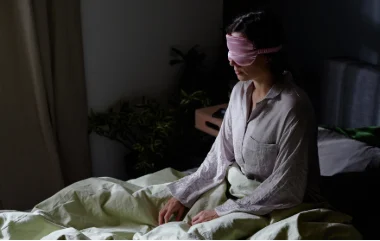









For over a decade, the relationship between clinical sleep medicine and the booming consumer wearable industry has been defined by a tense, often skeptical, tug-of-war. Sleep specialists, trained in the rigorous, high-fidelity environment of the in-lab polysomnography (PSG) suite, have long looked askance at the colorful, simplified sleep scores generated by wrist-worn gadgets. Concerns over "orthosomnia"—the unhealthy preoccupation with achieving perfect sleep data—and the lack of diagnostic-grade precision have kept these worlds largely siloed.
However, a landmark partnership announced in May 2026 between industry titan ResMed and smart-ring pioneer Oura signals a fundamental shift in strategy. The industry is moving past the binary question of whether wearables are "accurate enough" to replace a lab study, and toward a far more pragmatic inquiry: Can these devices act as an effective, high-volume funnel to guide undiagnosed patients into the sleep clinic?
The Shift in Strategy: From Accuracy to Access
The core of the issue is the massive, persistent burden of undiagnosed obstructive sleep apnea (OSA) in the United States. While primary care physicians are the frontline of diagnosis, they are constrained by time—often spending fewer than ten minutes annually with a patient—and the reliance on subjective patient reporting.
The collaboration between ResMed and Oura intends to bridge this gap. By integrating Oura’s nighttime breathing disturbance metrics with ResMed’s clinical education resources and independent virtual sleep care pathways, the companies are creating a "longitudinal funnel." Instead of waiting for a patient to spontaneously mention fatigue during a routine check-up, the system proactively alerts users when their long-term data indicates a pattern consistent with respiratory distress.
This represents a pivot from "wellness-only" tracking to "wellness-integrated" clinical triage. It acknowledges that while a wearable may not provide a definitive diagnosis, it can provide the "nudge" necessary to move a patient from passive observation to active medical consultation.
Chronology: A Multi-Year Evolution
The road to this partnership was not instantaneous. It is the result of years of data accumulation and shifting consumer behavior:
- 2022–2024: Wearable manufacturers, including Oura, began investing heavily in sleep-stage accuracy. Studies, such as a 2024 analysis in Sensors, demonstrated that the Oura Ring Gen3 matched PSG results in sleep staging with >95% sensitivity, outperforming many wrist-based competitors.
- Early 2025: ResMed, recognizing the potential of non-clinical data, began analyzing massive datasets from hundreds of thousands of users. They sought to establish "global benchmarks" for sleep health that transcended the sterile environment of the lab.
- May 2026: The official announcement of the ResMed-Oura partnership. The companies unveiled a system where Oura users showing high breathing disturbance indices receive an in-app "tile." This serves as a gateway to educational materials and connections to virtual sleep clinics like Ognomy, Arima, and Gem Health.
- Post-Launch: The current phase involves measuring the efficacy of this "digital referral" model, specifically tracking how many users move from a "breathing disturbance alert" to a professional diagnostic consultation.
Supporting Data: Why Trends Matter More Than Snapshots
A frequent criticism of wearables is their failure to mirror the precision of a single-night PSG. Dr. Carlos Nunez, Chief Medical Officer at ResMed, argues that this criticism misses the forest for the trees.
"We are relying on the questions patients can answer in a few minutes of a physical exam," Nunez notes. "Now, they are showing up with months of wearable data. Even if that data isn’t ‘diagnostic-grade’ by FDA standards, the trends matter because they influence the long-term health of our patients."
Recent ResMed research provides compelling evidence for this longitudinal approach:
- Global Benchmarking: An analysis of 312,000 CPAP users helped establish normative data for sleep duration and physiological efficiency, providing a baseline that was previously unavailable.
- The Efficiency Metric: A study of 117,000 OSA patients found that higher sleep efficiency is intrinsically linked to physical activity and lower resting heart rates. This demonstrates that wearables can track meaningful physiological markers that correlate with disease progression or recovery.
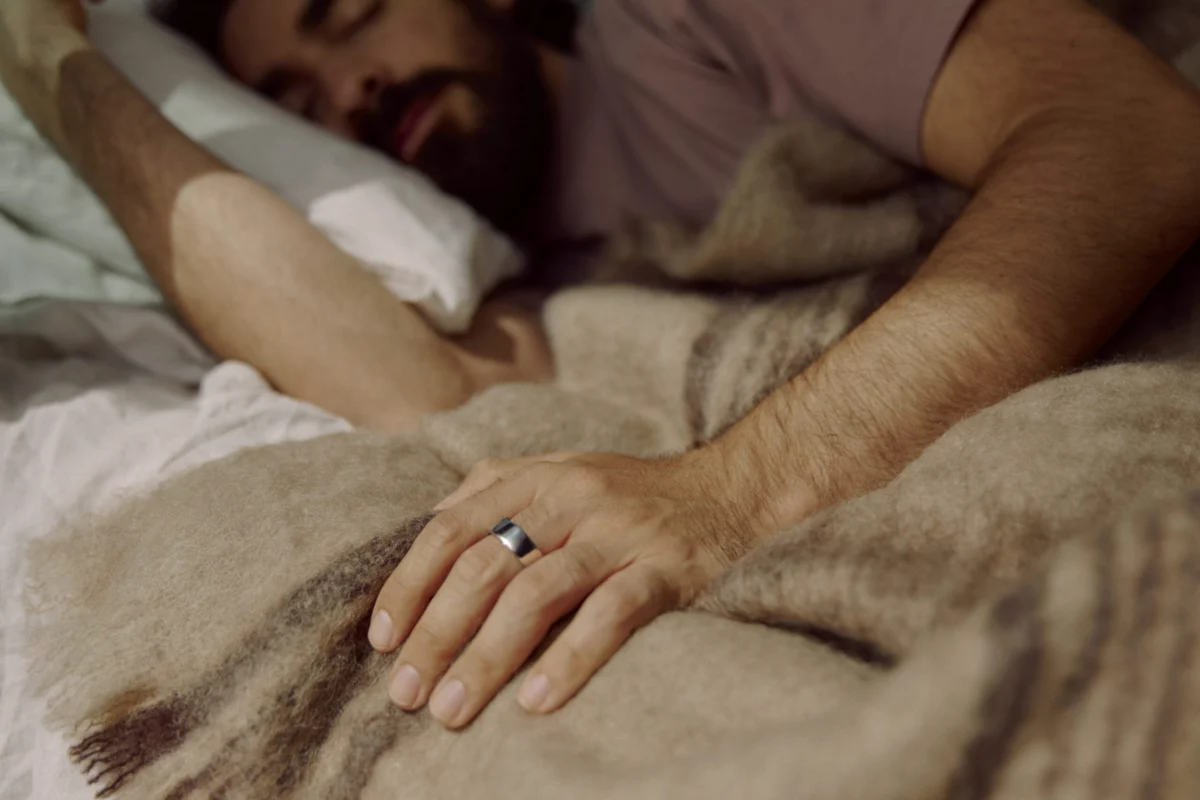
- The Ring Advantage: Unlike smartwatches, which users often charge or remove at night, the form factor of the Oura ring ensures higher consistency in data collection, providing a more reliable "long-term health ledger."
Official Perspectives: Navigating the ‘General Wellness’ Space
Both ResMed and Oura are careful to manage expectations regarding regulatory status. Neither company is attempting to bypass the FDA or reinvent the diagnostic process.
"We are not making any explicit diagnosis in this situation," says Dr. Ricky Bloomfield, Chief Medical Officer at Oura. "We want to keep our metrics firmly in the general wellness category. However, we have anecdotal evidence that when users see their own breathing disturbance data, it provides the ‘aha’ moment that finally motivates them to seek professional help."
ResMed, for its part, is not looking to monopolize the clinical side of the equation. By partnering with independent telehealth providers, they are aiming to strengthen the existing ecosystem rather than replace it.
"ResMed is not trying to build our own version of a sleep clinic," Dr. Nunez emphasizes. "We are trying to raise awareness. We are pointing people toward the ecosystem that is already there. For physicians who are still wary of this tech, my challenge is simple: Buy a wearable. Try it out. Your patients believe in this; you need to understand what they are looking at."
Implications for the Future of Sleep Medicine
The implications of this partnership for the healthcare industry are profound.
1. The Democratization of Early Detection
By placing the ability to track breathing disturbances into the hands of millions, the barrier to entry for sleep care is significantly lowered. The "first word" in a patient’s health journey is moving from the doctor’s office to the bedside.
2. Longitudinal Monitoring of Therapy
One of the most significant gaps in sleep medicine has been long-term follow-up. While adherence is often tracked for the first 90 days to satisfy insurance reimbursement, long-term outcomes are rarely monitored. This partnership opens the door for a future where a patient can see how their therapy—be it CPAP or an alternative—is actually impacting their daily physiology and sleep quality over years, not just months.
3. A New Role for the Sleep Specialist
The role of the sleep specialist may shift from "detective"—trying to uncover a problem from a limited patient history—to "consultant" and "interpreter." Physicians will need to become proficient at reading the longitudinal trends provided by their patients, using these as a starting point for more nuanced clinical conversations.
4. Regulatory Evolution
While Oura currently stays in the "general wellness" lane, both companies acknowledge that the line between wellness and clinical diagnostics is blurring. If the current model proves successful at driving legitimate, diagnosable patients into clinics, it is likely that future iterations will pursue more formal regulatory clearances, potentially integrating these tools directly into Electronic Health Records (EHR).
Conclusion: The First Word, Not the Last
The ResMed-Oura partnership is an admission that the traditional diagnostic funnel for sleep apnea is broken. By leveraging consumer technology to fill the gaps in patient awareness, the industry is betting on a future of "connected health."
Consumer wearables are not, and may never be, the final word in diagnosing a sleep disorder. They cannot replicate the clinical authority of a PSG or the expertise of a sleep technologist. However, they are increasingly becoming the first word. By turning passive sleep data into a roadmap for clinical care, ResMed and Oura are not just selling devices—they are building a bridge between the bedroom and the clinic, ensuring that when patients finally reach a specialist, they are informed, motivated, and ready to take action on their health.