





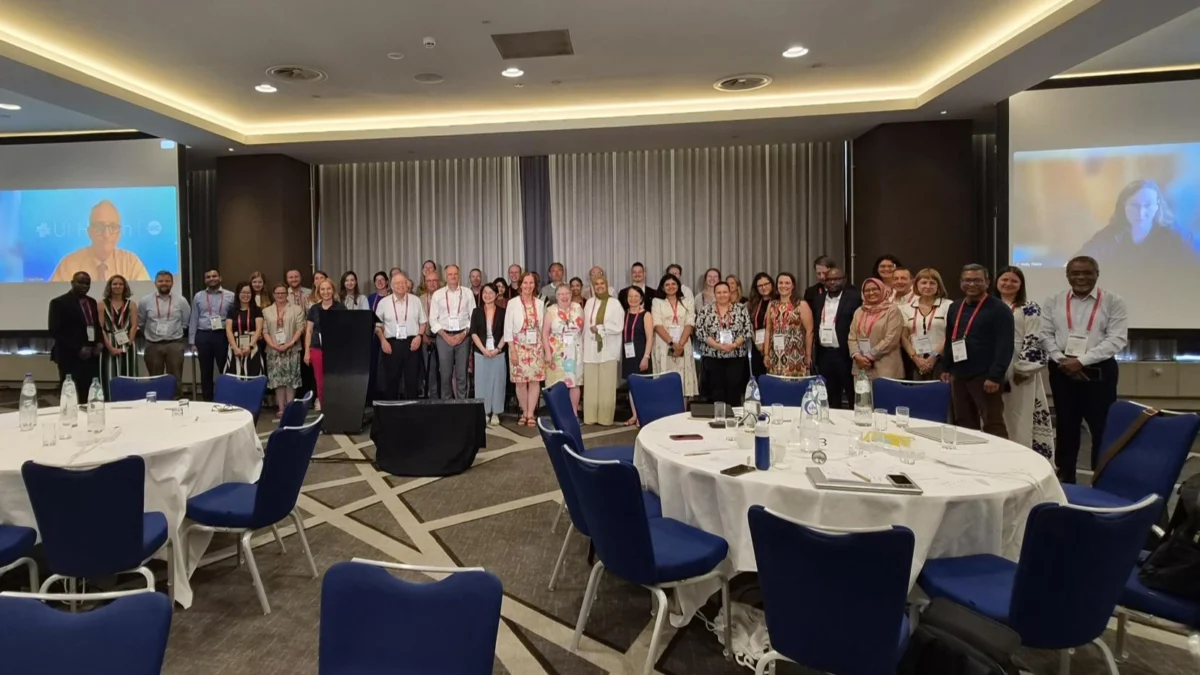
The landscape of global public health is at a critical juncture. While medical science has made unprecedented leaps in understanding the pathophysiology of lung disease, a persistent, dangerous gap remains between the laboratory bench and the bedside. At a recent high-level conference, the European Respiratory Society (ERS) and the European Lung Foundation (ELF) convened to address this "implementation gap," showcasing a suite of flagship initiatives designed to turn theoretical knowledge into tangible, life-saving clinical practice.
The “Cinderella Disease”: Confronting a Global Crisis
The conference opened with a stark, sobering assessment from José Luis Castro, the WHO Director-General’s Special Envoy for Chronic Respiratory Diseases. In a keynote address that set the tone for the entire event, Castro framed the issue with unflinching honesty.
"Respiratory diseases remain the Cinderella disease of global health: common, costly, devastating, and too often left in the shadows," Castro remarked. He underscored the profound human element of these conditions, noting that "respiratory disease does not just attack the lungs. It attacks people’s dignity. It drives them into social isolation."
For years, chronic respiratory conditions—ranging from COPD and asthma to lung cancer—have been sidelined in the hierarchy of health priorities. While acknowledging that there has been a recent surge in political recognition, Castro issued a challenge to the delegates: "Recognition without implementation changes nothing." This mantra became the thematic backbone of the conference, shifting the focus from simply identifying problems to the grueling, necessary work of institutionalizing solutions.
The Arsenal of Change: Flagship Implementation Projects
The core of the conference focused on specific, multi-national projects that are currently reshaping the European respiratory health landscape. These initiatives serve as blueprints for how research can be scaled from isolated studies into systemic policy.
1. JARED: Coordinated European Action
Professor Ildikó Horváth presented the Joint Action on REspiratory Diseases (JARED). The project is an ambitious effort to harmonize respiratory care across the European Union. By fostering collaboration between member states, JARED aims to eliminate the "postcode lottery" of healthcare, ensuring that a patient in one country receives the same standard of care as a patient in another.
2. LungHealth4Life (LH4L): Prevention as a Foundation
Cláudia Sofia de Almeida Vicente Ferreira highlighted the LungHealth4Life (LH4L) project, which pivots the conversation toward early intervention. By focusing on lung health in schools, LH4L is attempting to build a culture of respiratory awareness from childhood, with successful pilot programs in Portugal serving as the template for potential continent-wide expansion.
3. FRESHAIR4Life (FA4L) and JA-SAFE: The Environmental Battle
Rianne van der Kleij introduced FRESHAIR4Life (FA4L), which addresses the environmental determinants of lung health. The project emphasizes that medical treatment is ineffective if patients are constantly exposed to polluted environments. Complementing this, Constantine Vardavas presented JA-SAFE (Joint Action on Health Promotion and Disease Prevention including Smoke and Aerosol Free Environments). This initiative is a critical policy instrument designed to push the EU toward a truly "tobacco-free generation" by implementing rigorous smoke- and aerosol-free legislation.
4. SOLACE: Equitable Cancer Screening
Rounding out the presentations, Professor Martina Koziar Vašáková discussed Strengthening the screening of Lung Cancer in Europe (SOLACE). Lung cancer remains a leading cause of cancer mortality, and SOLACE is tackling the inherent inequities in screening access. The project provides a framework for member states to implement systematic, population-level screening, ensuring that high-risk individuals—regardless of their socioeconomic status—can access early diagnosis.
The Philosophy of Equity: A Seat at the Table
A defining moment of the conference was the panel discussion on equity. The consensus among experts was clear: top-down policy, while necessary, is destined to fail if it lacks the "buy-in" of the communities it serves.
Kjeld Hansen, former Chair of the European Lung Foundation, provided a compelling argument for patient-centered policy design. He argued that healthcare policies cannot be conceived in a vacuum by ivory-tower experts. Instead, he championed a model of "participatory policy-making."
"Lasting change happens when all stakeholders feel a sense of ownership," Hansen explained. "Patients, healthcare professionals, researchers, policymakers, and communities all need opportunities to contribute, influence decisions, and see that their voices make a difference."
This philosophy mirrors the ELF’s core principle: meaningful patient involvement is not just a moral imperative; it is a clinical necessity. When patients are involved from the design phase, adherence to new treatment pathways and public health initiatives increases significantly.
Chronology of Progress: From Evidence to Practice
The progression of these projects follows a distinct, iterative model that delegates explored throughout the two-day event:
- Identification: Research identifies a gap in care or a specific health burden.
- Collaborative Design: Experts, including patient advocates, draft an implementation strategy.
- Pilot Testing: Smaller, localized versions of the project (such as the school-based work in Portugal) are stress-tested.
- Scaling and Integration: Data from pilots is used to lobby for broader, policy-driven implementation across member states.
- Routine Practice: The final goal, where the intervention becomes a standard, funded component of the national healthcare system.
The Data Gap: Why Implementation Research Matters
While many clinical trials focus on the efficacy of a drug, implementation research focuses on the efficacy of the delivery system. The data shared at the conference suggested that even the most effective medications fail if the distribution networks, physician training, or patient education are suboptimal.
The projects presented showed that by integrating social science with medical data, countries can optimize their limited healthcare budgets. For example, JA-SAFE’s work on tobacco control provides a classic case of cost-benefit analysis: the initial investment in smoke-free infrastructure is dwarfed by the long-term savings in reduced hospitalizations for respiratory complications.
Official Responses and Strategic Implications
The overarching takeaway from the conference was that the "knowledge" phase of respiratory medicine is largely complete—we know what causes these diseases and we know how to treat them. The current era must be defined by "impact."
José Luis Castro’s closing remarks served as a call to arms for the European respiratory community: "Policy declarations create possibilities. Implementation creates impact."
The implications of this shift are profound:
- For Policymakers: The focus must shift from writing guidelines to funding the infrastructure required to put them into action.
- For Healthcare Professionals: There is a renewed need for interdisciplinary cooperation, bridging the gap between hospital-based specialists and primary care providers.
- For Patients: There is a move toward empowerment, where the patient is no longer a passive recipient of care but an active participant in the design of the healthcare system.
Conclusion: Looking Toward the Future
The conference concluded with a unified commitment to move forward with a "research-to-reality" agenda. The success of projects like SOLACE, JARED, and FA4L proves that when Europe acts in concert, the burden of respiratory disease can be mitigated.
However, the road ahead remains complex. The challenge for the coming decade is to sustain this momentum, ensuring that the findings of current projects are not merely published in journals but are permanently embedded in the healthcare systems of every European nation. As the delegates departed, the consensus was clear: the era of simply "studying" respiratory disease is over. The era of implementation has begun, and with it, the hope for a future where clean air and accessible, equitable care are the standards, not the exceptions.