






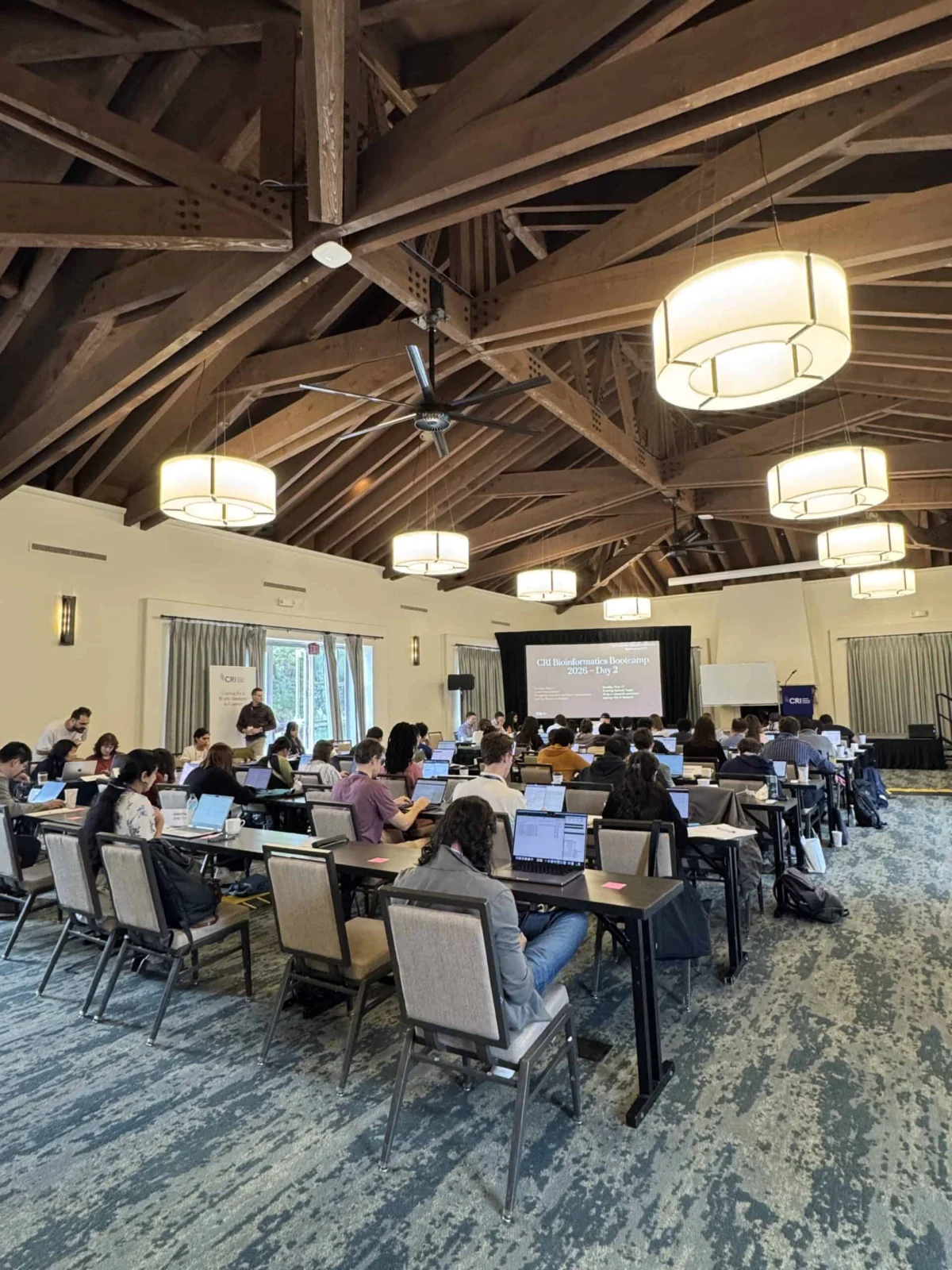
In an era where the boundary between the "wet lab" and the "dry lab" is rapidly dissolving, the ability to synthesize complex biological data has become as vital as the experiment itself. From May 16 to 22, 2026, the Cancer Research Institute (CRI) hosted its third annual Bioinformatics Bootcamp at the serene La Cantera Resort in San Antonio, Texas. The intensive week-long immersion brought together more than 50 early-career scientists and fellows, providing them with the advanced computational toolkit required to navigate the high-stakes, data-intensive landscape of modern cancer immunotherapy.
The Convergence of Biology and Data Science
Modern cancer research is no longer defined solely by test tubes and petri dishes. Today, it is a data-driven enterprise, generating massive, high-dimensional datasets that require sophisticated computational mastery to interpret. The CRI Bioinformatics Bootcamp was established to address this widening skills gap, serving as a bridge for researchers who possess profound biological intuition but lack the formal training to parse the resulting "big data."
The curriculum is designed to be both rigorous and accessible. By focusing on essential methodologies—such as next-generation sequencing (NGS), single-cell technologies, and advanced computational workflows—the program empowers participants to move beyond raw data generation and into the realm of meaningful biological discovery.
Chronology of an Intensive Week: May 16–22, 2026
The week in San Antonio was meticulously structured to balance high-level instruction with practical, individualized application.
- Days 1–2: Foundations and Frameworks: The initial phase of the bootcamp focused on establishing a common language for participants. Faculty members emphasized the shift from basic coding fundamentals—the focus of the inaugural bootcamp three years prior—to the complex, multimodal analysis required by today’s research standards.
- Days 3–4: Hands-on Application: Participants transitioned into working directly with their own experimental datasets. Under the guidance of five bioinformatics experts and five specialized teaching assistants, attendees applied Python coding and data visualization techniques to their unique research problems.
- Days 5–6: Specialized Modules and Roundtables: New for 2026, the mid-week sessions introduced intimate, 18-person roundtables. These focused on the "soft" but critical skills of science: grant planning for bioinformatics, computational career pathways, and the necessity of coding reproducibility.
- Day 7: Future Integration: The final day was dedicated to long-term strategy, discussing how to integrate these new computational habits into the participants’ daily lab workflows, ensuring the skills acquired in Texas would yield results long after they returned home.
Supporting Data and Technical Scope
The program’s success is anchored by a faculty team that has evolved alongside the curriculum. Four of the five primary faculty members have been involved since the program’s inception, ensuring a longitudinal improvement in teaching efficacy. This consistency allows the curriculum to adapt to the "rapid pace of technology," as faculty member Dr. Katie Campbell noted.
The technical scope of the bootcamp included:
- Multimodal Data Analysis: Handling large, heterogeneous datasets that combine genomic, transcriptomic, and proteomic information.
- Advanced Python and AI Applications: Evening workshops were introduced this year to explore the role of Artificial Intelligence in accelerating research workflows.
- Reproducibility Standards: A critical component of the curriculum involved training researchers to document their code, ensuring that scientific discoveries are transparent, verifiable, and replicable.
Perspectives from the Frontline: Official Responses
The bootcamp is not merely a lecture series; it is a collaborative ecosystem. The teaching assistants and faculty emphasize that the goal is not to replace biological intuition with automation, but to augment it.
"The Bootcamp is important because it’s bridging the gap across two fields of the wet lab and the dry lab," explained Christie Chang, a teaching assistant at the event. "As technologies evolve, we are generating large datasets, and we need computational tools to understand more complex pictures and make more complex discoveries."
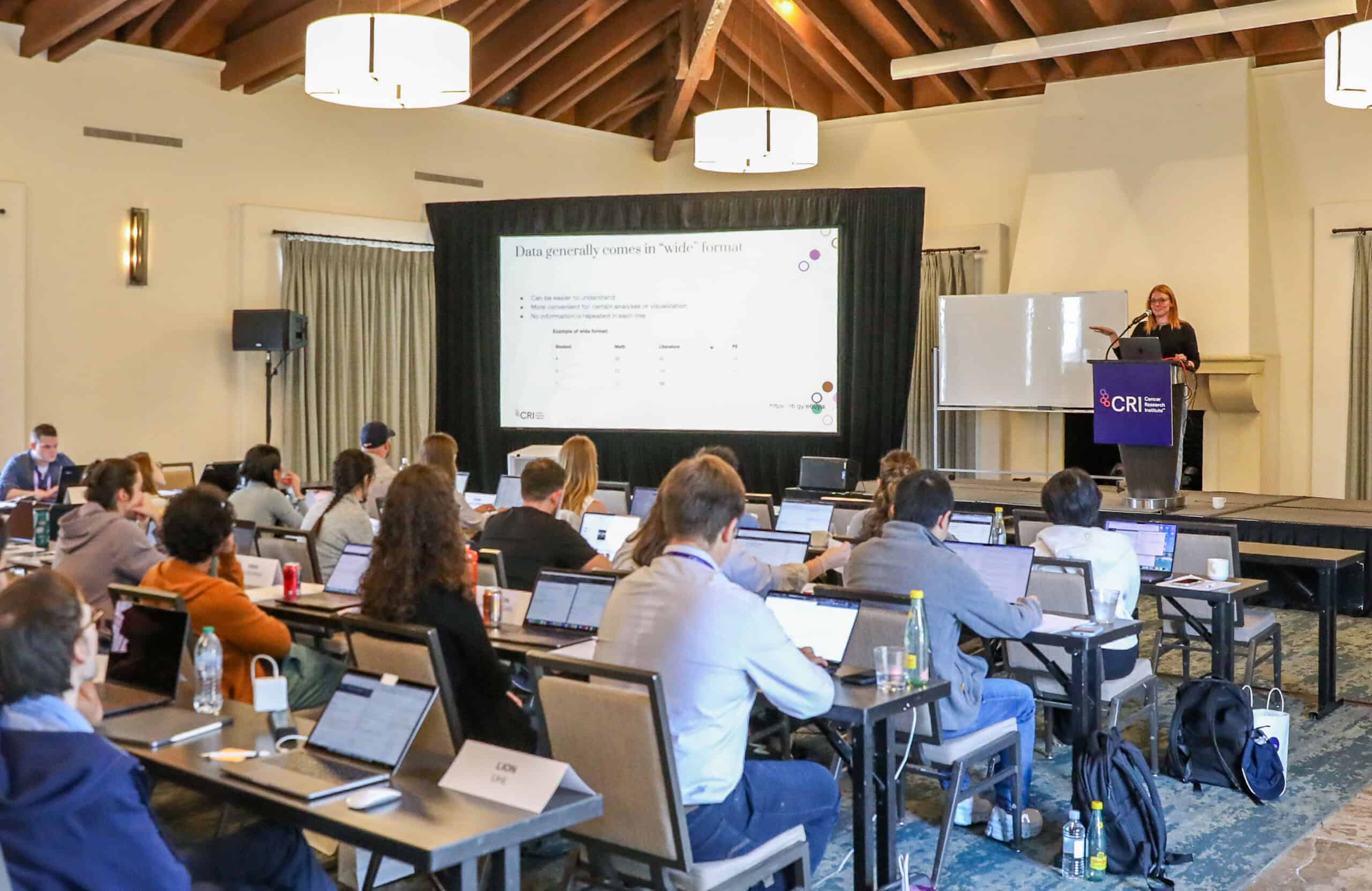
Dr. Katie Campbell, a faculty member, highlighted the delicate balance the program maintains: "We have to think about how we accelerate not just the discovery but the analysis, without taking away the necessary thought processes that have to be intrinsic to the fellows as they take on this research."
This sentiment was echoed by attendee Dr. Jia Yu (Jennifer) Ye, a CRI Immunoinformatics Postdoctoral Fellow, who highlighted the value of structured learning over fragmented self-study: "It’s such an amazing opportunity offered by CRI to learn all of the informatics skills systematically, rather than just chatting with an AI engine."
Implications for the Future of Immunotherapy
The implications of this bootcamp extend far beyond the walls of the La Cantera Resort. As cancer immunotherapy moves toward personalized, patient-specific treatments, the ability to rapidly analyze patient data will dictate the speed at which new therapies reach the clinic.
Democratizing Computational Literacy
By demystifying bioinformatics, CRI is effectively democratizing access to high-level analysis. Many participants entered the program with limited computational backgrounds; they left with the ability to perform analyses that previously required expensive outside consultants or specialized data scientists. This shift in literacy allows individual labs to become more self-reliant, agile, and innovative.
Fostering a Network of Innovation
One of the most significant, yet intangible, benefits of the program is the network it creates. By bringing together over 50 scientists from diverse backgrounds, the CRI has created a community of peers who can rely on one another as they face the inevitable hurdles of computational research. Dr. Tara Muijlwijk, a CRI Dr. Keith Landesman Memorial Fellow, captured the spirit of this networking: "It’s super important to zoom out from your own research… to think about what I am doing, why I am doing this, and to connect with other people."
Accelerating Discovery
The ultimate goal of the bootcamp is to shorten the duration between the initial hypothesis and the actionable clinical breakthrough. When a researcher understands the architecture of their data, they can ask better questions. By equipping the next generation of leaders with both the "wet lab" expertise and the "dry lab" proficiency, the Cancer Research Institute is ensuring that the pace of discovery keeps up with the rapid evolution of cancer itself.
Conclusion: An Investment in the Next Generation
The 2026 CRI Bioinformatics Bootcamp stands as a testament to the idea that modern scientific advancement requires a hybrid approach. It is not enough to simply be an expert in cellular biology or an expert in computer science; the future of oncology lies in the fusion of the two.
As the industry moves toward an era defined by "big data" and personalized medicine, the skills fostered in San Antonio—curiosity, collaboration, and computational confidence—will prove to be the most valuable assets in the fight against cancer. By investing in these fellows today, the CRI is not just providing training; it is shaping the trajectory of cancer immunotherapy for years to come. The participants who left Texas in May 2026 are now armed with the tools to push the boundaries of what is possible, ensuring that the next generation of breakthroughs is not only discovered but understood, analyzed, and implemented with the precision that modern medicine demands.