










It started with a seemingly innocuous remark from my friend Anna. A sharp-witted attorney known for her ability to dismantle complex legal arguments, Anna is, by any objective measure, a high-performing critical thinker. Yet, as we discussed her long-standing goal of losing 15 pounds, she revealed a strategy that defied her usual analytical rigor.
“I just bought a new BPA-free Tupperware set,” she said, radiating the quiet confidence of someone who believes they have cracked a complex code.
When I probed her reasoning, she cited the impact of microplastics on endocrine function and weight gain. While the science of endocrine disruptors is a valid field of study, the context was glaring: Anna was simultaneously struggling with gym consistency, relying heavily on processed takeout, and sacrificing hours of restorative sleep to “doom-scroll” on her phone. When I gently suggested that re-establishing a consistent workout routine or prepping simple homemade meals might yield more immediate results, her response was swift: “I’ve tried that a thousand times. If it were that simple, it would have worked already.”
Anna’s reaction is a classic example of what experts call the “niche magic bullet” fallacy—a phenomenon where we bypass the unsexy, fundamental work of health in favor of high-effort, low-impact optimizations.
The Anatomy of Avoidance: Why We Deflect
We have all been there. We spend hours researching the “optimal” pre-workout supplement instead of spending 30 minutes exercising. We wait for a surge of motivation or a “less busy” season that never arrives.
Psychologically, these behaviors are a form of displacement. Buying new gear or obsessively researching the latest biohacking trend feels like progress. It provides a dopamine hit of productivity without the discomfort of actual change. We are incredibly clever at constructing narratives that justify avoiding the basic, difficult actions required to transform our physical and mental health.
The Foundation: What Actually Works
The scientific consensus on health remains remarkably consistent and, frankly, boring. According to the foundational pillars of wellness, the following five behaviors are the bedrock of longevity and body composition:
- Consistent Movement: Engaging in 30 minutes of moderate-to-vigorous activity daily, blending aerobic exercise with resistance training.
- Whole-Food Nutrition: Ensuring roughly 80 percent of your caloric intake comes from minimally processed sources.
- Protein Sufficiency: Consuming enough protein (roughly 1.2 to 2.2 grams per kilogram of body weight) to support muscle retention and satiety.
- Sleep Hygiene: Prioritizing seven to eight hours of quality sleep, supported by consistent wake times and evening wind-down routines.
- Substance Moderation: Limiting alcohol, tobacco, and unnecessary stimulants.
Despite the simplicity of these tenets, the data is sobering. A study published in the American Journal of Health Promotion found that only about six percent of the U.S. adult population adheres to all five of these basic health behaviors. This means that 94 percent of Americans are failing to execute the fundamental requirements for optimal health, yet many of them continue to search for "secret" solutions to explain their lack of progress.
Ambivalence: The Uncomfortable Truth
If you feel a sense of push-and-pull when considering a lifestyle change, you are not failing—you are simply experiencing ambivalence.
Ambivalence is the natural human response to the tension between two desires: wanting the result (e.g., losing weight) while simultaneously wanting to maintain the comfort of current habits (e.g., eating treats without constraint). Resistance, too, is a normal part of the process. It is often a sign that the goal genuinely matters to you. Rather than viewing this friction as a lack of willpower, we should view it as a signal that we are engaging with a high-stakes, meaningful transition.
Barrier #1: The Myth of Ambition Overload
The most common trap is "ambition overload." We decide that starting Monday, we will work out for an hour daily, overhaul our entire pantry, and sleep eight hours—despite currently having no exercise habit and a habit of staying up past midnight.
We rely on the "planning fallacy," a cognitive bias that leads us to believe our future selves will have more time, energy, and motivation than our current selves. We build an elaborate, idealistic plan that ignores the reality of our busy, chaotic lives. When we inevitably fail to maintain this unsustainable pace, we internalize it as a character flaw, creating a narrative that we are "bad at consistency."
Barrier #2: The Appeal of the "Industry Secret"
Many of us hold a subconscious belief that if simple habits like eating vegetables and sleeping worked, everyone would be fit. Because we see a society struggling with obesity and fatigue, we conclude that the "simple stuff" must be ineffective.

This drives us toward the "cutting edge"—the newest supplement, the most complex macro-tracking app, or the most restrictive diet. These tools feel more interesting, and they offer the alluring promise of a "new us." However, most of these strategies are either unsustainable, inaccessible, or unproven. They consume our time and financial resources while distracting us from the boring, effective, and free habits that actually move the needle.
Barrier #3: The Perfectionist Trap
Finally, there is the lie that health requires perfection. We often think that unless we are waking up at 5:00 a.m. for meditation and eating only organic, farm-to-table meals, we aren’t "doing it right."
Perfection is an illusion. Even the healthiest humans deal with stress, illness, and bad days. The irony is that to build a sustainable, "best" self, you must accommodate your "worst" self. You must build a system that allows for the days when you would rather watch reality TV than go to the gym. If your plan doesn’t account for the reality of "pie season," a busy work week, or a sick child, it isn’t a plan—it’s a set-up for failure.
Four Steps to Sustainable Action
To move from stagnant frustration to effective action, consider these four evidence-based strategies:
1. Explore the "Why" Before the "How"
Before jumping into a new routine, conduct a "5 Whys" exercise. Ask yourself why you want to lose weight, then ask why that reason matters, and repeat until you reach the core value driving your motivation. Understanding the deeper consequence of inaction creates a more durable commitment than surface-level aesthetic goals.
2. Prioritize the Most Effective Actions
You can do anything, but you cannot do everything at once. Choose one domain—nutrition, movement, or sleep—and select one specific skill. If your goal is better nutrition, don’t try to eliminate all sugar. Instead, focus on a single practice: "I will add one serving of vegetables to my dinner."
3. Establish a "Floor" and a "Ceiling"
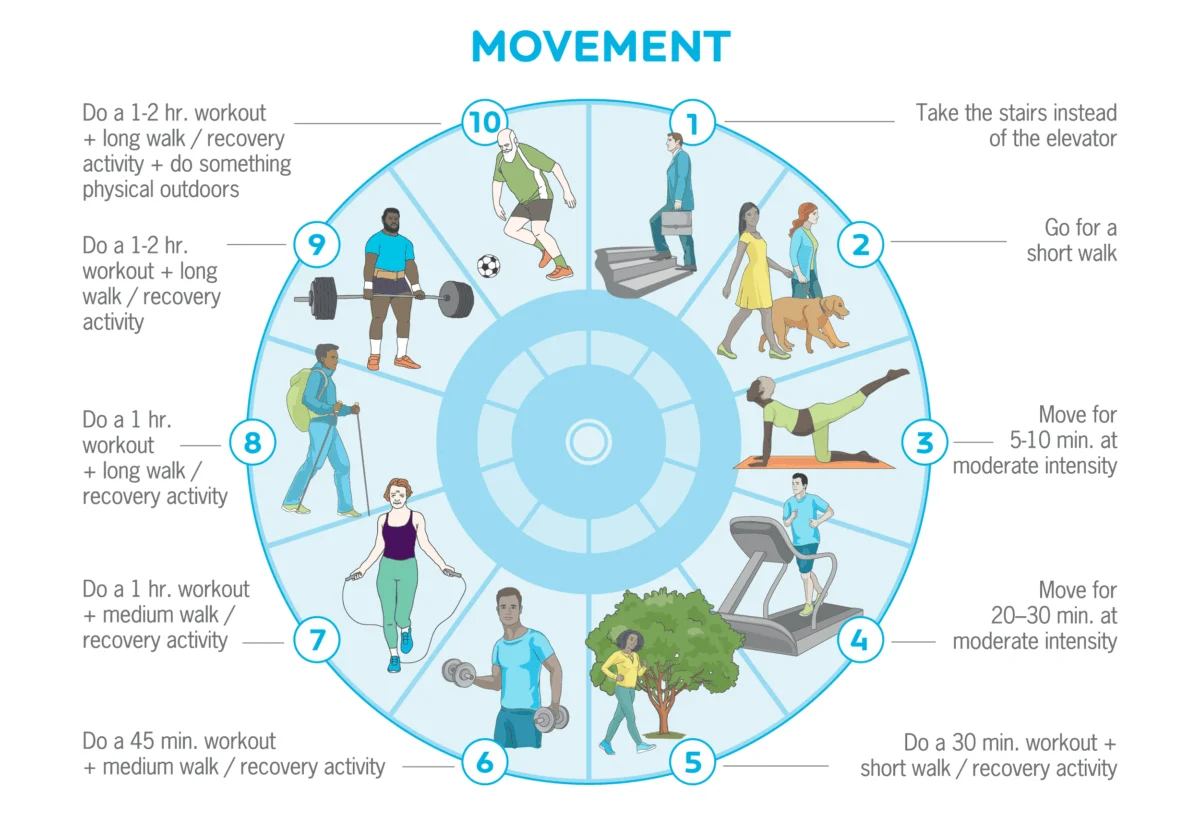
Stop viewing habits as an "on/off" switch. Instead, think of them as a dial. Define your "floor"—the absolute minimum you will do on your worst day (e.g., a five-minute walk)—and your "ceiling"—the maximum you do on your best day.
By setting a floor, you ensure that even when life is chaotic, you are still maintaining the habit. Doing the bare minimum is not failure; it is maintenance. It keeps the neural pathway alive and prevents the "all-or-nothing" crash that leads to quitting.
4. Create an Ecosystem for Success
Behavioral science consistently shows that our environment is the primary predictor of our habits. According to a study in Nature Reviews Psychology, access is the most significant influencer of behavior.
If you want to eat better, make healthy food the most accessible option in your kitchen. If you want to exercise, set your gym clothes out the night before. Build an ecosystem that makes the desired behavior the path of least resistance.
Embrace the "C+" Effort
If you are a perfectionist, the idea of aiming for a "C+" might be painful. But in the context of long-term health, a consistent C+ effort will always outperform an A+ effort that lasts only two weeks before ending in total burnout.
Health is not a destination you reach by being perfect; it is a continuous, messy, and beautiful process. By letting go of the need for an "optimal" plan and embracing the power of consistent, "good enough" action, you stop fighting against your nature and start working with it. In the long run, showing up consistently—even when you’re just turning the dial to level one—is the only way to build a life that is truly, durably healthy.