The American landscape is undergoing a silent, technological transformation. Across thousands of miles of suburban streets, rural highways, and urban intersections, a growing network of automated license plate readers (ALPRs) is quietly cataloging the movements of millions of citizens. According to data aggregated by the open-source project DeFlock, more than 117,000 of these devices are now active across the United States. By converting the mundane act of driving into a searchable digital history, these devices have ignited a fierce national debate, pitting the promise of modern public safety against the fundamental right to privacy in an era of mass surveillance.
The Mechanics of Perpetual Monitoring
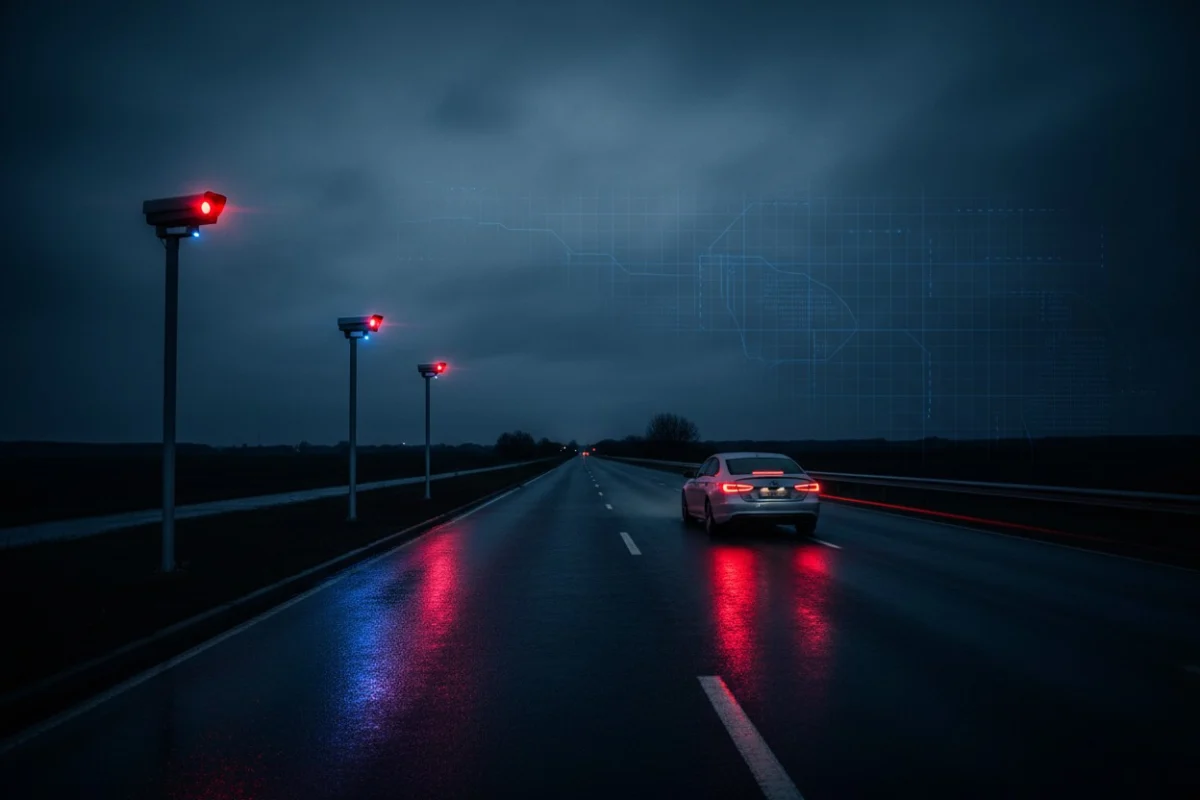
At the heart of this expansion is a sophisticated technological infrastructure designed for total visibility. ALPRs are not mere cameras; they are high-speed, image-processing sensors capable of capturing every vehicle that enters their field of view. Regardless of whether a driver is suspected of a crime, these devices photograph the vehicle and extract data including the license plate number, make, model, color, and specific "fingerprint" features like bumper stickers or aftermarket modifications.
This information is paired with precise GPS coordinates and time-stamped logs, creating a searchable, historical record of a vehicle’s movements. Critics, such as Willow Tohi writing for NaturalNews.com, argue that this creates a permanent, digital shadow for every American driver—a "fingerprint" that can be exploited for purposes far beyond the scope of local traffic enforcement.
The market is currently dominated by a single entity: Flock Safety. Of the 117,000 cameras documented by DeFlock, approximately 97,000—or 83 percent—are manufactured by the company. While Flock Safety maintains that its devices are "not mass surveillance tools" and are designed to capture only point-in-time images rather than provide real-time GPS tracking, privacy advocates remain unconvinced. The concern, as articulated by experts like John W. Whitehead in Battlefield America: The War on the American People, is that the sheer scale of the network allows federal agencies, such as the Department of Homeland Security, to access vast repositories of location data with minimal oversight and no warrant requirements.
A Chronology of Surveillance and Resistance
The rise of ALPRs has been marked by a rapid, often opaque, deployment followed by a wave of public and municipal pushback.
- Pre-2024: The Department of Homeland Security distributes over $50 million in grants to local law enforcement agencies to accelerate the adoption of ALPR systems, effectively subsidizing the construction of a private-public surveillance hybrid.
- Early 2024: Pilot programs, such as the one in Denver, begin to report significant statistics regarding arrests and stolen vehicle recoveries, providing a "safety" narrative that justifies further investment.
- February 2026: Public frustration manifests in direct action; reports emerge of citizens dismantling or vandalizing cameras, signaling a breakdown in the social contract between law enforcement and the communities they monitor.
- May 2026: The City of Troy, New York, establishes a regulatory framework for ALPRs, requiring case-by-case data sharing and annual audits, setting a template for cities looking to constrain, rather than ban, the technology.
- June 2026: The American Civil Liberties Union (ACLU) reports that more than 55 communities have terminated their contracts with Flock Safety in the previous 12 months, citing egregious violations and unauthorized data access.
- July 2026: High-profile controversies, including the discovery of thousands of unauthorized immigration-related searches in Dayton, Ohio, lead to the "black-bagging" of cameras and the total termination of contracts in multiple jurisdictions.
Supporting Data: The Geography of the Network
The DeFlock database, while acknowledged as an incomplete "crowdsourced" effort, provides the most comprehensive snapshot available of the camera network’s footprint. The distribution of these devices is heavily skewed toward high-population states, though rural penetration is increasing.
- California: The state leads the nation with over 16,000 documented readers, reflecting both its massive geographic area and a high density of municipal law enforcement partnerships.
- Florida: Following closely with 7,169 cameras, Florida has become a testing ground for integrated, statewide license plate monitoring.
- Georgia: With 7,046 readers, Georgia represents a significant stronghold for the industry, often utilizing the devices for inter-jurisdictional crime prevention.
- Illinois: With 5,822 readers, Illinois showcases the rapid adoption of the technology in suburban and urban corridors.
Beyond the raw numbers, the ecosystem is fragmented, featuring devices from at least 85 different brands. However, the dominance of Flock Safety suggests a trend toward standardized hardware and software platforms that could potentially allow for the future linking of these disparate systems into a unified national database.
Official Responses: Safety vs. Liberty
Law enforcement agencies remain the most vocal proponents of the technology. The justification is almost exclusively rooted in efficiency. In Denver, officials reported that between early 2024 and mid-2026, their deployment led to 352 arrests, the recovery of 250 stolen vehicles, and the seizure of 39 firearms. Proponents argue that in an era of limited staffing, these "force multipliers" provide the only effective way to track suspects in violent crimes, including murder and sexual assault.
Garrett Langley, CEO of Flock Safety, consistently frames the company’s mission within the context of community values. "Public safety does not need to come at the expense of community values," Langley has stated, emphasizing the company’s commitment to accountability and transparency.
However, this rhetoric has struggled to contain the rising tide of skepticism. When incidents arise—such as the unauthorized installation of cameras in Cambridge, Massachusetts, or the improper use of data for immigration enforcement in Dayton—the company’s brand of "transparency" is tested. Critics argue that these are not "bad apples" but structural flaws: when a private company holds the keys to the database, the potential for mission creep—where the technology is used for purposes far beyond those originally presented to the public—becomes inevitable.
The Implications of a "Slave State"
The implications of this technology reach into the core of American constitutional law. At issue is the Fourth Amendment’s protection against unreasonable search and seizure. By creating a searchable, permanent record of an individual’s travel, the government and its corporate partners are effectively performing a continuous search of a citizen’s life without ever having to justify it to a judge.
The political polarization surrounding this issue is stark. Figures like Tucker Carlson have characterized the infrastructure as a "slave state" in the making, framing the loss of privacy as a foundational loss of freedom. Conversely, municipal leaders who support the cameras view them as an essential tool for maintaining order in a time of rising public anxiety.
The trend toward "activist resistance"—ranging from legal challenges and FOIA requests to the physical destruction of equipment—suggests that the legitimacy of the ALPR network is fracturing. As municipalities like Los Angeles negotiate terms for data ownership and security, it is clear that the status quo is unsustainable.
Looking Toward the Future
The debate over ALPRs is no longer just about the cameras themselves; it is about the power dynamic between the state, private corporations, and the individual. As long as law enforcement agencies rely on private, proprietary databases with limited public oversight, the tension will continue to escalate.
Legal scholars and civil liberties groups are currently drafting new frameworks to challenge the expansion of these systems. The "8 Ways To Take Down Flock Without A Sawzall" guide circulating online is perhaps the most visible indicator that the public is moving from passive observation to active engagement. Whether through legislative reform, judicial intervention, or continued community-led resistance, the era of "unseen" monitoring is coming to a close. The future of the American streetscape will be determined by whether the public decides that the price of safety—the total mapping of their daily lives—is a price they are willing to pay.