










Published: July 22, 2026 | Source: Yoga Journal Archives (Originally published May-June 1983)
In the landscape of modern yoga, few postures bridge the divide between physical conditioning and meditative surrender as effectively as Ustrasana, or Camel Pose. As we revisit the archives of Yoga Journal, we find that the insights shared in 1983 remain as relevant to the contemporary practitioner as they were four decades ago. Camel Pose serves as a masterclass in spinal integrity, demanding a sophisticated synergy between the strength of the lower body and the vulnerability of an open heart.
Main Facts: The Biomechanics of the Camel
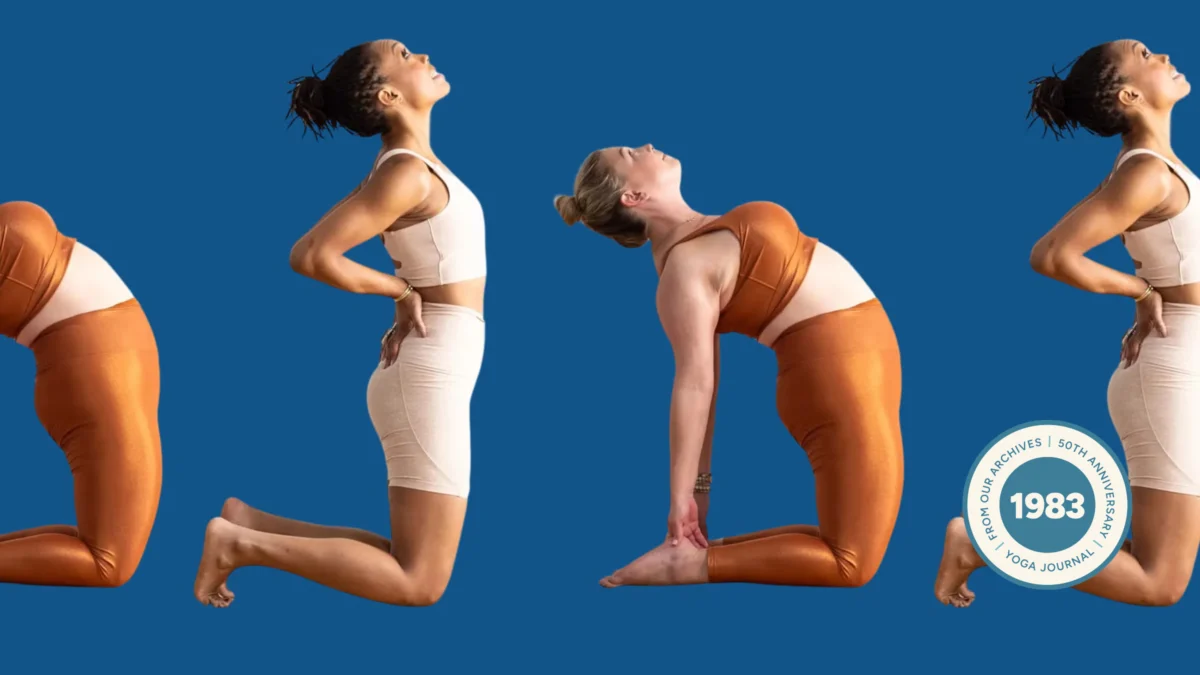
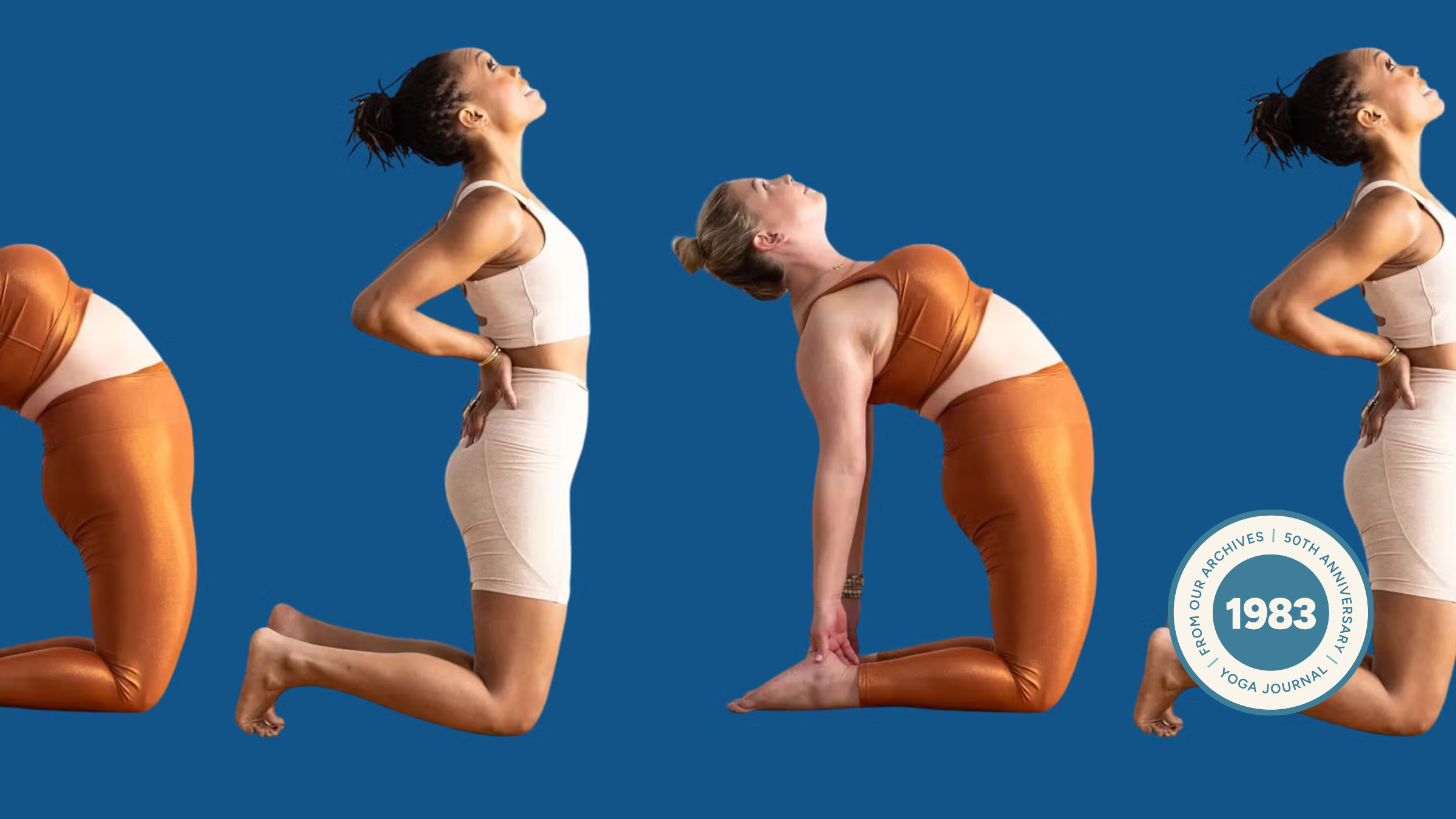
At its core, Camel Pose is a deep backbend that requires the practitioner to stand on their knees, reach back, and grasp the heels while arching the torso. However, to perform the asana with therapeutic precision, one must look past the external aesthetics and focus on the internal mechanics.
The pose functions as a paradox: it requires immense strength in the legs and buttocks to provide a foundation, yet it demands "softness" in the spine to achieve a deep, even arc. The primary challenge for most students is the lumbar (lower) spine, a region inherently prone to instability during backward extensions. By tightening the gluteal muscles, the practitioner stabilizes the sacroiliac joints—the critical junction where the pelvis meets the spine. This engagement creates a protective "base" that prevents the lower back from collapsing into a hinge-like movement, which is the most common cause of strain in backbending.
A Chronological Perspective: The Evolution of Ustrasana
The inclusion of Ustrasana in standard sequences has evolved alongside the western understanding of spinal health. In the early 1980s, the emphasis was heavily placed on "balanced effort"—a concept that has since become a cornerstone of alignment-based yoga.
- Pre-1970s: Backbending was often approached through brute force or high-intensity gymnastics-style maneuvers, often leading to common complaints of lumbar compression.
- The 1983 Paradigm: The Yoga Journal archive highlights a shift toward a more nuanced approach. The focus moved from "how deep can I go?" to "how can I maintain the normal curve of the lumbar spine while stretching the anterior (front) body?"
- Present Day (2026): Modern instructors now emphasize the integration of breath-centered movement and the use of props (blocks, bolsters, and wall support) to ensure that students of all mobility levels can access the benefits of the pose without risking injury.
Supporting Data: Why We Need the Backbend
Our daily lives are defined by a repetitive forward trajectory. Whether it is sitting at a desk, driving a vehicle, or hunched over a smartphone, the modern human spends the vast majority of their waking hours in a state of spinal flexion. This constant forward bending creates a chronic imbalance in the paraspinal muscles—the small muscles running parallel to the spine that are responsible for maintaining an upright, healthy posture.
Clinical observation suggests that forward bending provides only temporary relief for lumbar tightness. True spinal health requires the counter-balance of extension. Camel Pose addresses this by:
- Stretching the Anterior Chain: Opening the hip flexors and the front of the thighs, which are chronically shortened by sitting.
- Strengthening the Paraspinals: Engaging the muscles that support the vertebral column, encouraging long-term structural alignment.
- Encouraging Thoracic Mobility: By focusing on lifting the sternum, the student is forced to mobilize the upper back (thoracic spine), which is often rigid in the sedentary individual.
The Psychological Implications: The Harmony of Effort and Surrender
Beyond the physical, Ustrasana serves as a mirror for the practitioner’s mental state. The pose asks for "balanced effort." If the student exerts too much force, the body becomes rigid; the spine "grips," preventing the very opening the pose is meant to cultivate. Conversely, if the student exerts too little effort, the spine collapses into the vulnerable lumbar region, lacking the integrity required for a stable, healthy arch.
This physical struggle is an exact metaphor for the meditative mind. When one tries to force the mind into stillness, the very effort of "trying" agitates the consciousness. If one abandons discipline entirely, the mind wanders into chaos. The "elusive balance" found in Camel Pose—the harmonization of muscular engagement with soft, rhythmic breathing—is the essence of yoga. When a student learns to breathe softly into the intensity of the backbend, they begin to transcend the physical posture, moving toward a state of equanimity that permeates their breath, their mind, and eventually, their daily life.
Expert Guidance: Teacher’s Notes on Structural Integrity
For yoga instructors, the challenge of teaching Camel Pose lies in identifying where a student’s body is "holding" tension. Many students struggle with the pose because they are tight in the quadriceps and hip flexors. When these muscles are short, the pelvis cannot tilt backward; consequently, the body compensates by bending aggressively at the lower back.
Tips for Instructors:
- Preparation is Key: Before entering Ustrasana, sequence poses that prioritize the opening of the front of the thighs. Reclining Hero Pose (Supta Virasana) and the lunging variations found in Sun Salutations are essential precursors.
- Pelvic Awareness: Remind students to keep the pelvis moving forward. If the coccyx (tailbone) lifts, the lumbar spine is being compromised.
- The Wall Method: Using a wall for support allows beginners to feel the sensation of an extended spine without the fear of falling back. By sliding the arms up the wall, the student can lengthen the torso before ever reaching for the heels.
Practicing Safely: A Step-by-Step Guide
To incorporate this pose safely, follow this structured approach:
- Preparation: Stand on your knees, preferably on a cushioned surface to protect the kneecaps. If you are a beginner, practice facing a wall to assist with balance.
- The Extension: Stretch your arms up the wall, creating as much length in your spine as possible. Keep the buttocks firm—this is your anchor.
- The Arch: As you exhale, begin to move your pelvis forward. Do not hinge at the waist. Instead, lift your sternum toward the ceiling, creating an even curve throughout the entire length of the spine.
- The Reach: If comfortable, reach your hands toward your heels. If the heels are too far, curl your toes under to elevate the heels, thereby shortening the distance.
- The Breath: Maintain a soft, steady breath. If you find yourself holding your breath, your diaphragm is likely hardening, which will inhibit your ability to deepen the backbend.
- The Exit: Come up slowly on an inhalation, ensuring you do not twist the spine as you rise. Take a moment in a neutral position (such as Child’s Pose) to allow the spine to neutralize.
Conclusion: The Profound Simplicity
Camel Pose is more than a physical exercise; it is an exploration of the human capacity for openness. It teaches us that true strength is not found in rigidity, but in the ability to hold a strong foundation while allowing the heart and the spirit to remain soft. By balancing the demands of the physical body with the discipline of the breath, the practitioner begins to understand the "profound simplicity" of yoga—a practice where the physical, the mental, and the spiritual finally align in the graceful arc of the spine.
As we look back at the teachings from 1983, it is clear that the path to a deeper practice has not changed. It remains a journey of listening to the body, honoring its limitations, and breathing into the vast potential that exists within the balanced effort of every pose.