










As the countdown to the 2026 Mr. Olympia enters its final 58 days, the bodybuilding community has descended into its perennial frenzy of speculation. For the average enthusiast, the question is simple: "Who will win?" However, for those deeply entrenched in the sport, such a query is not only premature but arguably irrelevant. With two months of grueling prep still ahead, current progress photos are often misleading, and predicting a winner based on current social media trends is little more than a popularity contest.
True analysis requires looking past the superficial "hype" and examining the structural evolution of the sport. We are witnessing a pivotal moment in professional bodybuilding—a potential paradigm shift that could fundamentally alter the criteria for the sport’s most coveted title.
The Architecture of Evolution: From Wedge to X-Frame
To understand where bodybuilding is going, one must look at where it has been. In the mid-1970s, British Leyland introduced the Triumph TR7, a sharply angled, wedge-shaped sports coupe. Marketing it as "The Shape of Things to Come," the company tapped into a broader automotive design trend that saw legendary vehicles like the Lamborghini Countach, the Lotus Esprit, and the Lancia Stratos embrace aggressive, geometric lines.
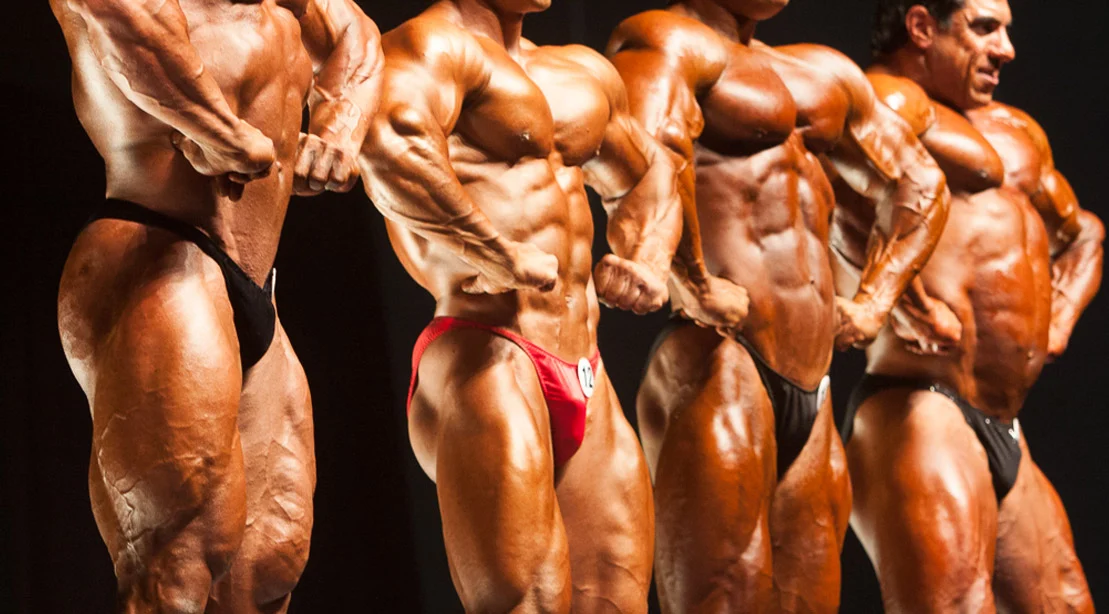
In a strange twist of irony, this "wedge" philosophy eventually migrated from the automotive world to the IFBB Pro League stage. For several years, the Olympia stage has been dominated by what can best be described as the "Wedge Physique." These are shorter, hyper-dense, blocky athletes who prioritize sheer, overwhelming thickness and conditioning over traditional aesthetic flow.
While these athletes have undeniably pushed the boundaries of human muscularity, they have done so at the expense of the "X-Frame"—the classic silhouette characterized by wide clavicles, a narrow waist, sweeping quads, and a dramatic, flowing taper. The X-Frame is the historical blueprint of the Mr. Olympia, the larger-than-life superhero aesthetic that first popularized the sport. As the stage became crowded with "wedge" athletes, the sport risked losing its visual appeal, replacing elegance with a brute-force impact that some critics argue lacks the artistic grace of bodybuilding’s golden era.
The 2026 Olympia: A Tale of Two Standards
The upcoming 2026 Olympia is poised to be a landmark event because, for the second consecutive year, we are seeing a distinct clash between these two design philosophies. The top five, likely comprised of several former Mr. Olympia winners and recent Arnold Classic champions, will force the judges to make a definitive statement about the future of the sport.
The Rise of the X-Men: Dauda and Jacked
The recent emergence of Samson Dauda and Andrew Jacked has effectively reset the standard for the modern professional. Both men represent a return to the classic X-Frame. They are tall, possess naturally broad shoulder-to-waist ratios, and display a visual balance that is difficult to ignore.
When Andrew Jacked or Samson Dauda stands on stage, they evoke the imagery of a classic superhero. They are not merely "dense"—they are structured in a way that is visually pleasing to the human eye. By challenging the shorter, blockier "wedge" champions, they have forced the judging panel to engage in a difficult debate: Should the title go to the man who carries the most mass, or the man who carries the best frame?
The Wedge Contingent: Choopan and Lunsford
Defending this territory are veterans like Hadi Choopan and Derek Lunsford. Both men have mastered the wedge aesthetic. They are arguably the most conditioned athletes in the history of the sport, possessing a level of muscle density that borders on the impossible. Their battle, which has defined the last few years of Olympia competition, is one of "apples to apples"—two similar frames fighting for the throne.
However, as the competition intensifies, the reliance on the wedge aesthetic may become a liability. If the judges decide that the "X-Frame" is the superior look for the sport’s ambassador, the reigning wedge-era kings will find themselves fighting an uphill battle against the superior silhouettes of the taller, more elegant competitors.
The Wild Card: Nick Walker and the Chaos Factor
No analysis of the 2026 Olympia is complete without discussing "The Mutant," Nick Walker. Walker occupies a unique space in this debate; he is neither a pure wedge nor a pure X-Frame. He is the fulcrum upon which the entire competition turns.
Walker’s physique is a masterclass in anatomy. If he arrives at the Olympia looking like a walking medical chart, he forces the judges to abandon aesthetic preference in favor of pure, raw conditioning. In a scenario where the "Aesthetic" camp (Jacked and Dauda) and the "Wedge" camp (Choopan and Lunsford) are neck-and-neck, a perfectly conditioned Walker could act as a spoiler, effectively creating the chaos needed to disrupt the status quo.
However, this relies on a "perfect" showing. If the aesthetic giants—specifically Andrew Jacked—arrive at 100% capacity, the conversation changes entirely. If conditioning is equalized, the structural advantage of the X-Frame will almost certainly dictate the outcome.
Implications for the Future of Bodybuilding
The outcome of the 2026 Olympia will likely signal the start of a new era. If the judges reward the X-Frame, we can expect a shift in how athletes train, pose, and diet. It would mark a departure from the "density at all costs" mentality that has plagued the lower weight classes and the middle-tier of the open division.
Furthermore, this shift has significant commercial implications. The sport’s growth depends on its ability to appeal to the mainstream, and the X-Frame is historically more "marketable." The superhero aesthetic captures the imagination of the public in a way that a blocky, ultra-dense physique rarely does. By returning to the X-Frame, the IFBB would be re-aligning itself with the very ideals that allowed bodybuilding to become a cultural phenomenon.
Conclusion: The Final Verdict
While it is far too early to name a winner, we can confidently name the trend. The "Wedge Era" has had a long and successful run, pushing the limits of human size and conditioning. But sports, much like the automotive industry, are cyclical. Just as the angular, geometric cars of the 70s eventually gave way to more aerodynamic, flowing designs, bodybuilding appears to be moving back toward the classic, artistic ideals of the X-Frame.
If Andrew Jacked or Samson Dauda hits the stage with peak conditioning, they represent the future. They are the "X-Men" of the modern era, and they bring with them the promise of a return to the sport’s golden aesthetic. The question for the judges is no longer just about who is the biggest, but about who is the best representative of the sport’s future. In the war between the wedge and the X-frame, the latter is primed for a comeback.