








In the complex architecture of human biology, certain proteins have long been pigeonholed into specific, singular roles. For decades, TRF2 (Telomeric Repeat-binding Factor 2) was defined by a single, critical duty: acting as a molecular sentry at the very tips of our chromosomes. By shielding telomeres—the protective DNA caps that prevent chromosomal degradation—TRF2 was understood to be the primary guardian against genomic instability.
However, a groundbreaking study from the Perelman School of Medicine at the University of Pennsylvania has shattered this narrow classification. Researchers have discovered that TRF2 performs an unexpected, multifaceted role as a master regulator within muscle stem cells. By orchestrating the genetic instructions required for tissue repair and maintenance, TRF2 ensures that our muscles remain functional throughout our lifespan. This discovery not only provides a potential roadmap for treating debilitating conditions like Duchenne muscular dystrophy (DMD) but also offers a tantalizing new lens through which to view cancer biology.
The Chronology of Discovery: From Telomere Guard to Genomic Architect
The journey to this discovery began with a fundamental question: How do muscle stem cells—the specialized population responsible for regenerating skeletal muscle—maintain their identity while transitioning between dormant, active, and self-renewing states?
For years, the scientific consensus held that TRF2 operated exclusively at the telomeric ends of chromosomes. The research team, led by Dr. Foteini Mourkioti, an associate professor of Orthopedic Surgery at Penn Medicine, decided to investigate whether TRF2’s influence extended beyond these protective caps.
Phase 1: Observing the Dynamic Rhythm
The researchers first monitored TRF2 levels in muscle stem cells during the natural cycle of injury and recovery. They observed a highly coordinated, rhythmic fluctuation in protein expression. As muscle stem cells shifted from a dormant state to an active, regenerative state, the levels of TRF2 rose and fell in precise alignment with the cells’ functional requirements. This suggested that the protein was not merely a passive guardian, but an active participant in the cell’s internal machinery.
Phase 2: The Knockout Experiment
To isolate the function of the protein, the team employed a "knockout" model in laboratory mice, removing TRF2 from muscle stem cells entirely. The initial results were deceptive; the mice appeared healthy, and their muscle tissue showed no immediate signs of degradation. However, a longitudinal study revealed a silent crisis: the population of muscle stem cells was rapidly depleting. Unlike in other tissues, where the loss of a telomere-associated protein typically triggers cell death (apoptosis), these stem cells remained alive but underwent a profound identity crisis.
Phase 3: Unmasking the Genomic Mechanism
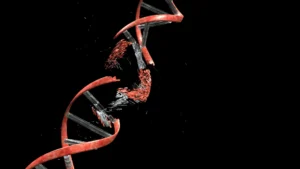
The final stage of the investigation revealed that TRF2 does not merely sit at the ends of chromosomes. Instead, it physically binds to regulatory regions scattered across the entire genome. These regions often contain secondary DNA structures known as G-quadruplexes. By interacting with these structures, TRF2 acts as a switch, turning on or off the genes necessary to keep a muscle stem cell in its "stem" state. When this switch is removed, the cells lose their regenerative potential, and the tissue they should be repairing instead fills with fat and scar tissue—a process known as fibro-adipogenic degeneration.
Supporting Data: The Impact on Muscular Dystrophy
The clinical implications of these findings were tested using a mouse model of Duchenne muscular dystrophy (DMD). DMD is a devastating genetic disorder characterized by progressive muscle degeneration and weakness.
When the researchers depleted TRF2 in the muscle stem cells of these dystrophic mice, the disease trajectory changed significantly. The degradation of muscle tissue accelerated at a rate far exceeding that of control groups. The mice exhibited more severe physical weakness, poorer regenerative capacity, and a significantly shortened lifespan.
This data provided the "smoking gun" that TRF2 is not just a facilitator of healthy repair, but a critical buffer against the progression of muscular disease. By maintaining the identity of muscle stem cells, TRF2 essentially acts as a gatekeeper that prevents the rapid decline of muscle integrity, even in an already compromised genetic environment.
Official Perspectives: Redefining Protein Function
Dr. Foteini Mourkioti, the senior author of the study, emphasized the gravity of these findings during a recent press briefing. "For years, TRF2 has been viewed as a protein whose primary job is protecting the ends of chromosomes from damage or corruption," Mourkioti stated. "But rather than simply protecting DNA, TRF2 seems to be key to regenerating muscle throughout life."
The team’s findings, published in the journal Science Advances, represent a paradigm shift in molecular biology. According to the researchers, the loss of cellular identity is just as dangerous as cellular death. "This completely changes how we think about TRF2’s role in these cells," Mourkioti noted. "The loss of identity has severe implications for whether recovery from injury is even possible."
By moving beyond the traditional view of TRF2 as a simple "telomere cap," the Penn Medicine team has opened a new sub-field of study focusing on how regulatory proteins control cell identity via secondary DNA structures like G-quadruplexes.
The Cancer Connection: A Biological Puzzle
Perhaps the most intriguing aspect of the research is the potential link to oncology. The scientific community has long been puzzled by an evolutionary contradiction: skeletal muscle has a profound ability to regenerate and multiply, yet muscle-derived cancers (sarcomas) are relatively rare.
The team’s discovery of how TRF2 utilizes G-quadruplexes to preserve stem cell identity might hold the key to this mystery. G-quadruplexes are known to be hotbeds of genetic activity and are currently being explored as targets for new cancer therapies. Because muscle stem cells use TRF2 to "lock" their regenerative identity, this mechanism might serve as a built-in safety switch that prevents the runaway, chaotic division characteristic of cancer cells.
If researchers can determine how muscle stem cells harness TRF2 differently than other cells, they may be able to develop therapeutic strategies that stimulate tissue repair in patients with muscle-wasting diseases without inadvertently triggering the uncontrolled cell division that leads to cancer.
Implications for Future Medicine
The implications of this research are far-reaching and set the stage for a new generation of regenerative medicine.
1. Targeted Therapies for DMD
Current treatments for Duchenne muscular dystrophy primarily focus on managing symptoms. Understanding that TRF2 levels dictate the efficacy of muscle stem cell function could lead to pharmacological interventions aimed at stabilizing or boosting TRF2 activity, potentially slowing the progression of the disease in humans.
2. Enhancing Natural Repair
Beyond dystrophy, these findings could have massive applications for sports medicine and trauma surgery. By finding ways to modulate the "rhythm" of TRF2 expression in muscle stem cells, clinicians might one day be able to accelerate recovery times for severe muscle injuries, ensuring that damaged tissue is replaced by functional muscle fibers rather than useless scar tissue.
3. Precision Oncology
The focus on G-quadruplexes as a medium for TRF2 activity provides a new target for drug discovery. As pharmaceutical companies look for ways to inhibit cancerous growth, the specific interaction between TRF2 and these secondary DNA structures could provide a blueprint for drugs that are highly specific to certain cell types, minimizing side effects.
A New Chapter in Genomic Research
The study concludes that our understanding of the genome is still in its infancy. What was once considered "junk DNA" or simple structural components (like telomeres and G-quadruplexes) are increasingly proving to be the high-level command centers of cellular life. As the Penn Medicine team continues their work, they hope that this unusual application of TRF2 will serve as a lighthouse, guiding future research into the intricate, life-sustaining mechanisms that remain hidden within our cells.
This research was supported by prestigious grants from the National Institutes of Health and the National Institute of Arthritis and Musculoskeletal and Skin Diseases (R01 DK123356, R01s CA174904, GM101149, and FDN-143330).