








In the ongoing battle against cardiovascular disease—the leading cause of mortality worldwide—modern medicine has long relied on the "statin era." While these drugs have saved millions of lives by inhibiting the enzymes responsible for cholesterol synthesis, the search for next-generation therapies remains relentless. Now, researchers at the University of Texas Southwestern Medical Center have identified a previously unrecognized biological "control dial" that could fundamentally shift how clinicians approach both heart disease and metabolic liver disorders.
In a study published in the American Heart Association journal Circulation, a team of scientists has identified a protein called HELZ2 as a master regulator of cholesterol-carrying particles. By modulating the genetic instructions that govern protein synthesis in the liver, HELZ2 dictates how much harmful fat enters the bloodstream. This discovery offers a transformative perspective: rather than cleaning up cholesterol after it enters the blood, scientists may soon be able to prevent its assembly at the source.
The Biological Mechanism: An Early Intervention
To understand the significance of the discovery, one must look at the "assembly line" of lipoproteins. The body requires particles known as apolipoproteins to transport fats and cholesterol through the circulatory system. Among these, apolipoprotein B (apoB) is the critical structural component. If the liver produces too much apoB, the result is an excess of LDL (low-density lipoprotein) cholesterol, which inevitably leads to the arterial plaque buildup characteristic of atherosclerosis.
Traditional treatments, such as statins, largely focus on the tail end of this process—inhibiting the enzymes that build cholesterol. However, the UT Southwestern team found that HELZ2 acts much earlier, functioning as a gatekeeper of genetic information.
"Most previous research focused on what happens to apoB after it’s already made," explained Dr. Yiao Jiang, a postdoctoral researcher in the Zhang Lab and co-author of the study. "What surprised us is that HELZ2 acts much earlier, by controlling how long the apoB ‘message’ survives before the protein is even produced."
Specifically, HELZ2 influences the stability of messenger RNA (mRNA). Messenger RNA acts as the blueprint for protein synthesis; by shortening the lifespan of APOB mRNA, HELZ2 ensures that fewer instructions reach the cellular machinery responsible for building cholesterol-carrying particles. When HELZ2 activity is increased, the APOB message degrades prematurely, effectively throttling the production of these harmful fats before they can ever enter the bloodstream.
Chronology of the Discovery: From Genetic Screens to Breakthrough
The journey to this discovery began within the sophisticated research infrastructure of the Center for the Genetics of Host Defense at UT Southwestern. The team utilized a large-scale genetic screening system pioneered by Nobel laureate Dr. Bruce Beutler, who serves as the Director of the Center.
Phase 1: Identifying the Anomaly
The research did not begin with a targeted search for cholesterol regulators. Instead, it started with a phenotypic observation in mice. Scientists noticed an unusual pattern of fat accumulation within the livers of certain mouse populations. Utilizing Dr. Beutler’s high-throughput genetic screening technology, the team performed a systematic analysis to isolate the specific genetic mutations responsible for this metabolic quirk.
Phase 2: Isolating HELZ2
Through the screening process, the researchers identified a "gain-of-function" mutation. In these specific mice, the HELZ2 protein was hyperactive. When the team analyzed the molecular environment of these subjects, they observed a direct correlation: high HELZ2 activity led to decreased stability of APOB mRNA. This confirmed that the protein was not just an incidental bystander but a functional governor of the APOB gene.
Phase 3: Validating the "Dial" Effect
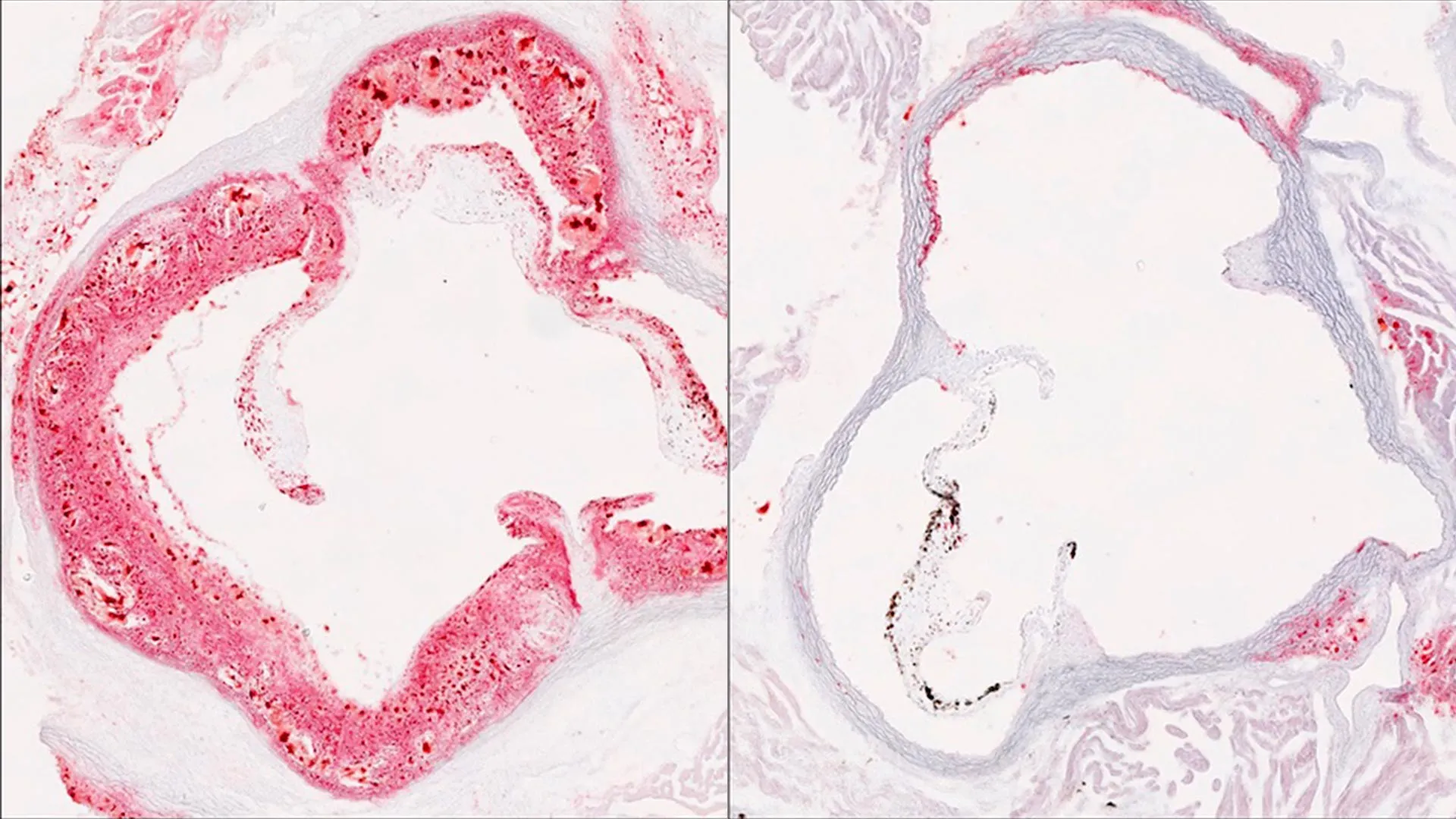
Once the mechanism was identified, the researchers conducted a series of comparative studies. Mice with the HELZ2 mutation demonstrated significantly lower levels of LDL cholesterol and triglycerides in their blood. More importantly, these mice showed a distinct resistance to atherosclerosis. However, the study also revealed a trade-off: while the blood was cleared of harmful lipids, the mice exhibited increased fat accumulation in their livers, a condition analogous to non-alcoholic fatty liver disease (NAFLD).
Supporting Data: The Delicate Balance
The discovery of HELZ2 introduces the concept of a "metabolic rheostat." The data suggests that the liver exists in a state of constant tension between circulating cholesterol and stored fat.
The findings indicate that HELZ2 activity is not inherently "good" or "bad" in a binary sense; rather, it is a regulator of distribution. Turning the "dial" up via HELZ2 activity lowers blood cholesterol but creates a hepatic burden (fatty liver). Conversely, suppressing HELZ2 activity might clear the liver but risks dumping an excess of lipids into the bloodstream.
This inverse relationship provides a roadmap for future pharmaceutical development. If researchers can develop a method to titrate HELZ2 activity—perhaps through small-molecule inhibitors or targeted RNA-based therapies—they could potentially find a "Goldilocks zone" where both blood cholesterol and liver fat are kept within healthy, homeostatic ranges.
Official Perspectives: Shifting the Paradigm
Senior author Dr. Zhao Zhang, an Assistant Professor in the Center for the Genetics of Host Defense and Internal Medicine, emphasizes that this discovery is a fundamental shift in the conceptualization of cardiovascular health.
"These particles are a major driver of plaque buildup in the arteries," Dr. Zhang stated. "What we found is that HELZ2 acts as a powerful control point for how many cholesterol-carrying particles ultimately enter the bloodstream. The idea that we can control apoB at the RNA level represents a major shift in how we think about cholesterol regulation. It gives us a new molecular lever—and potentially a new set of tools—for tackling these conditions."
The inclusion of Dr. Bruce Beutler, a 2011 Nobel laureate, adds significant weight to the study’s methodology. The rigor of the genetic screening platform ensures that the HELZ2 pathway is not merely a localized phenomenon but a conserved biological process that could be targeted in humans.
Clinical Implications: Beyond the Statin Era
The implications for future therapy are profound. Statins have been the gold standard for decades, but they are not a panacea. A significant portion of the population suffers from "statin intolerance" or fails to reach target cholesterol levels despite maximum-dose therapy. Furthermore, statins do little to address the metabolic complexities of the liver that often accompany dyslipidemia.
Potential for Targeted Therapy
By targeting the mRNA stage of apoB production, researchers could theoretically develop a therapy that acts with greater precision than traditional statins.
- Precision Medicine: Drugs could be designed to modulate HELZ2 activity based on a patient’s specific genetic profile.
- Combination Therapies: HELZ2-modulating agents could be used in conjunction with statins, allowing for lower doses of each and potentially reducing side effects.
- Dual-Condition Management: The dual nature of the HELZ2 dial offers a unique opportunity to address the "hidden" epidemic of fatty liver disease, which currently lacks robust pharmaceutical treatment options.
Future Research Directions
The path from a mouse model to a clinical therapeutic is long and rigorous. The next phases of research will likely involve:
- Safety Profiling: Understanding the long-term systemic effects of manipulating HELZ2 in humans.
- Delivery Systems: Developing mechanisms to deliver therapeutic agents specifically to the liver without affecting other organ systems.
- Clinical Trials: Determining whether the "dial" identified in mice functions with the same sensitivity and efficacy in human patients.
Conclusion
The identification of HELZ2 as a regulator of APOB mRNA stability is a landmark moment in metabolic research. By peering into the "pre-production" phase of cholesterol synthesis, the researchers at UT Southwestern have provided the medical community with a new target that may one day serve as the cornerstone of cardiovascular and metabolic care.
While the discovery highlights the complex biological trade-off between liver fat and blood cholesterol, it also provides the necessary intelligence to navigate that complexity. As the scientific community moves toward more personalized, genetically informed interventions, HELZ2 stands out as a promising, if delicate, lever for rebalancing the human body’s most critical metabolic pathways.
This research was supported by grants from the National Institute of Diabetes and Digestive and Kidney Diseases of the National Institutes of Health (R00DK115766 and R01DK130959).