BUNIA, Democratic Republic of Congo — In a race to curb what health officials are calling the fastest-moving Ebola outbreak in recorded history, the Democratic Republic of Congo (DRC) is set to receive 70,000 doses of the Ervebo vaccine. The shipment, coordinated by the World Health Organization (WHO) and a coalition of international partners, marks a pivotal moment in an epidemiological crisis that has already claimed more than 2,400 lives.
As of late August 2026, the outbreak has infected 5,208 individuals across six provinces in the eastern reaches of the country. With a staggering case fatality rate of 47.5%—rising to as high as 70% in hotspots like North Kivu—the urgency of the medical intervention cannot be overstated.
The Challenge of a Rare Strain
The current crisis presents a unique medical dilemma. While the Ervebo vaccine is a proven, licensed tool against the Zaire ebolavirus, it has not been officially licensed for use against the Bundibugyo ebolavirus, the specific strain driving the current surge.
Because of this, the rollout is being treated as both a clinical trial and an emergency response. Of the 70,000 doses arriving in-country, 20,000 have been earmarked for a Phase 3 clinical trial designed to measure the efficacy of the vaccine against the Bundibugyo strain. The remaining 50,000 doses are designated for frontline health workers, laboratory staff, and burial teams—the individuals most exposed to the virus as they work to contain the transmission chains.
"While it is not yet definitive whether Ervebo will provide full protection against this specific strain, early laboratory and animal data suggest it may provide some cross-protection," a WHO spokesperson noted in a briefing. "In a situation where no licensed vaccines exist for this specific virus, this is a vital, evidence-based step toward saving lives."
Chronology of the Crisis
The emergence of this outbreak has been characterized by silent, rapid transmission that caught regional surveillance systems off-guard.
- February 2026: Epidemiological modeling and retrospective contact tracing suggest the virus began circulating in the mining town of Mongbwalu.
- May 15, 2026: Authorities officially declare the outbreak after a cluster of unexplained deaths and infections is confirmed.
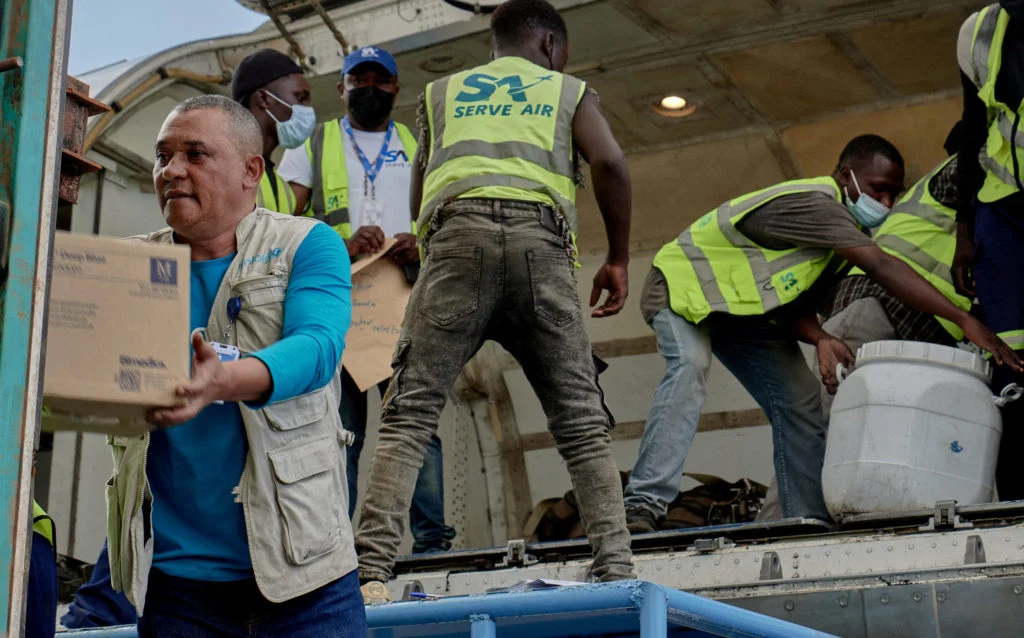
- May 19, 2026: International aid agencies, including UNICEF, begin mass arrivals of medical supplies at Bunia National Airport to establish isolation and treatment centers.
- August 20, 2026: The International Coordinating Group on Vaccine Provision approves the immediate release of 70,000 doses of Ervebo following a formal request from the Congolese government.
The delay between the initial seeding of the virus in February and the May declaration provided the pathogen with a critical head start. By the time the alarm was raised, the virus had already migrated through mining corridors and trading hubs, making it significantly more difficult to track than previous outbreaks.
Data Analysis: A Record-Breaking Spread
The scale of this outbreak has eclipsed previous regional crises. Health analysts have compared the velocity of the spread to the catastrophic 2014–2016 West Africa outbreak, which remains the deadliest in history with over 11,000 deaths.
Current data indicates that this outbreak is spreading approximately three times faster than the West African crisis. Several factors contribute to this acceleration:
- Geographic Mobility: The outbreak is concentrated in highly mobile populations, particularly in mining regions where workers travel between remote sites and dense urban centers.
- Lack of Specific Therapeutics: Unlike the Zaire strain, for which several treatments were developed during the 2018-2020 Kivu outbreak, the Bundibugyo strain has historically lacked dedicated antiviral protocols.
- Surveillance Gaps: Most new cases are being identified outside of existing contact-tracing lists, indicating that "silent transmission" is occurring in communities that remain beyond the reach of health authorities.
The fatality rate in North Kivu is particularly alarming. While the national average sits at 47.5%, the 70% mortality rate in specific, harder-to-reach provinces underscores the breakdown of local healthcare infrastructure. When patients cannot access quality care within the first 48 hours of symptom onset, the odds of survival plummet.
Official Responses and Global Solidarity
The international community has responded with a sense of urgent duty. WHO Director-General Dr. Tedros Adhanom Ghebreyesus characterized the vaccine allocation as a "testament to global solidarity in action."
"We are not merely sending supplies," Dr. Tedros said during his Thursday address. "We are committing to a long-term strategy of strengthened surveillance, rapid diagnostic detection, and community engagement. Vaccines are a tool, but they are not a silver bullet. We must ensure that the communities themselves are partners in this response, not just recipients of it."
The Congolese government, facing the twin challenges of managing the health crisis and maintaining economic stability in the mining regions, has been vocal about the need for international support. The request for the Ervebo vaccine was the culmination of weeks of negotiations between the Ministry of Health and international donors.
Implications for Public Health and Future Preparedness
The current crisis serves as a stark reminder of the vulnerability of the global community to rare viral strains. The Bundibugyo virus, first identified in Uganda in 2007, has historically seen smaller, more isolated outbreaks. Its current behavior—ripping through eastern Congo—suggests that the virus may be evolving or that the social conditions in the region are uniquely suited to its transmission.
1. The Need for "Vaccine Sovereignty"
The reliance on vaccines originally developed for different strains highlights a broader weakness in global health: the lack of a "plug-and-play" vaccine architecture that can be quickly adapted to emerging variants of hemorrhagic fevers.
2. Community Engagement
A recurring lesson from the 2014 West Africa and 2018 Kivu outbreaks is that top-down medical interventions fail without the trust of local populations. In regions where distrust of government and foreign medical teams is high, the vaccination campaign must be paired with education. If the 70,000 doses are to be effective, they must be administered in a way that respects cultural burial rites and local traditional beliefs.
3. Strengthening the "Last Mile"
The fact that the virus spread for three months before being detected points to a critical failure in "last mile" surveillance. Health officials are now calling for a permanent, decentralized laboratory network that can provide rapid diagnostic results in remote mining districts, ensuring that future outbreaks are caught in weeks, not months.
Conclusion: A Turning Point?
As the 70,000 doses arrive in Bunia, the atmosphere is one of cautious optimism. The vaccine represents the first major offensive weapon against a virus that has thus far been fought only with containment and supportive care.
However, experts caution against premature celebration. Vaccination is a logistical marathon, not a sprint. The success of this intervention will depend on the ability of local health workers to navigate the conflict-prone geography of eastern Congo, the willingness of the population to accept the vaccine, and the ability of the international community to sustain their support long after the headlines fade.
For the people of the Democratic Republic of Congo, this shipment is more than just vials of medicine; it is a vital lifeline in a battle against an invisible, swift-moving enemy. The world is watching, and for the families in the affected provinces, the hope is that this intervention will finally turn the tide on the deadliest viral threat of the decade.