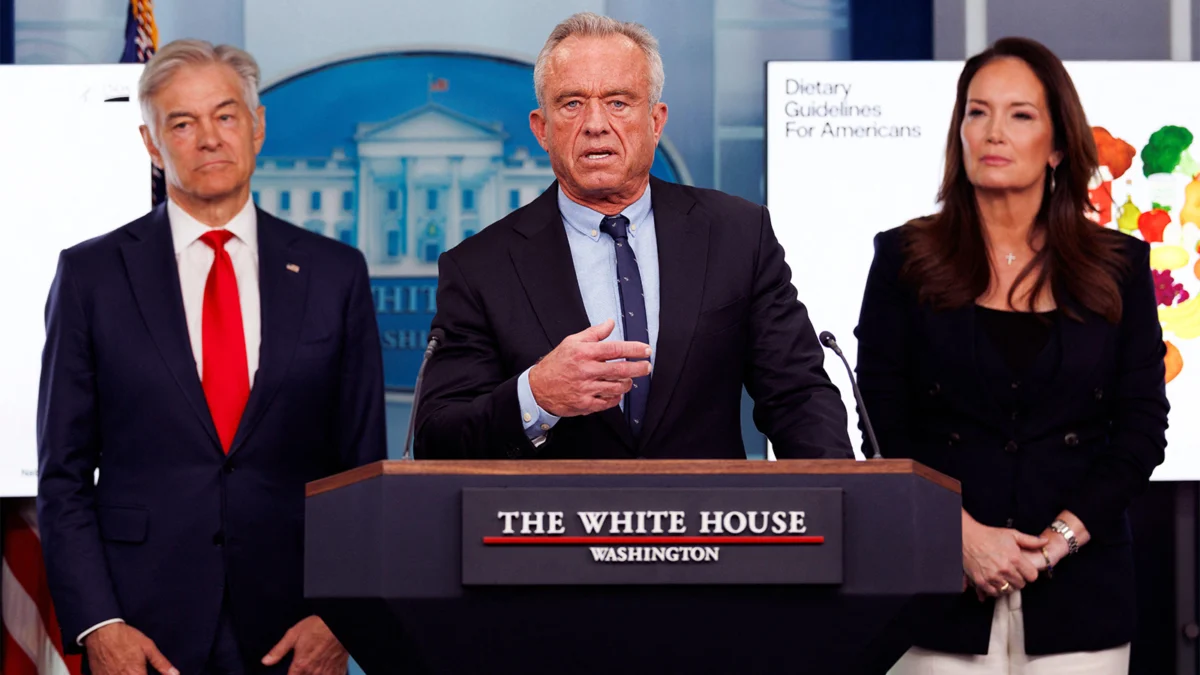
In a landmark legal challenge that threatens to upend the foundational nutrition policy of the United States, the Physicians Committee for Responsible Medicine (PCRM) has filed a lawsuit against the U.S. Department of Health and Human Services (HHS) and the U.S. Department of Agriculture (USDA). The nonprofit, a prominent advocate for plant-based nutrition and animal-welfare-focused medical research, alleges that the federal government bypassed established legal protocols to "ghostwrite" the 2025-2030 Dietary Guidelines for Americans in favor of industry interests.
The lawsuit, filed in federal court, claims that the government abandoned decades of transparency and rigorous scientific vetting in favor of a clandestine panel—rife with conflicts of interest—that ultimately produced guidelines characterized by critics as scientifically unsound and heavily influenced by the meat and dairy sectors.
The Core Allegations: Transparency Under Siege
At the heart of the PCRM’s complaint is the assertion that HHS and the USDA violated the Federal Advisory Committee Act (FACA). FACA is a critical piece of legislation designed to ensure that federal advisory committees operate transparently, with balanced membership and public access to their deliberations.
PCRM alleges that the administration established a "secret panel" to review and revise the dietary recommendations, effectively sidelining the volunteer Dietary Guidelines Advisory Committee (DGAC), a group of 20 experts who spent two years synthesizing the latest nutritional research. According to the complaint, the government hand-picked nine individuals for this secondary panel without public notice or adequate vetting for financial conflicts. Investigative reporting suggests that several members of this secondary panel maintain robust professional and financial ties to the beef, dairy, and egg industries, raising alarms about the impartiality of the resulting federal advice.
"The government allowed the meat and dairy industries to ghostwrite the Dietary Guidelines," said PCRM President Neal Barnard, MD, in a press statement. "They put money in industry’s pocket and cholesterol in Americans’ arteries."
A Chronology of a Process Disrupted
The creation of the Dietary Guidelines for Americans has historically been a meticulous, multi-year process. Every five years, the DGAC compiles a comprehensive scientific report—often spanning hundreds of pages—that serves as the foundation for the final guidelines issued by the government.
The Standard Procedure
- The DGAC Cycle: Over a 24-month period, 20 nutrition and obesity experts conduct a systematic review of the evolving scientific literature.
- The Scientific Report: The DGAC submits a massive, evidence-based report to the federal agencies.
- Agency Review: While HHS and the USDA are not legally obligated to follow the DGAC’s recommendations, they have traditionally treated the report as the "gold standard" for determining national nutrition policy.
The 2025 Deviation
The most recent cycle, however, diverged sharply from this established path.
- Transition of Power: The DGAC submitted its final 400-page scientific report during the transition to the second Trump administration, which saw Robert F. Kennedy Jr. installed at the helm of HHS.
- The Retraction Controversy: In August of the previous year, several abstracts related to the DGAC’s work were mysteriously retracted from a major nutrition conference, signaling to observers that the administration might be actively working to dismantle or bury the committee’s findings.
- The "Few Pages" Mandate: Kennedy signaled early in his tenure that he intended to simplify the guidelines, suggesting they should be reduced to a few pages. This alarmed experts who feared that complex, evidence-based nutrition science would be reduced to slogans.
- The January Release: When the 2025-2030 guidelines were released, the public was met with an "inverted food pyramid" and content that DGAC members described as "sloppy," "riddled with errors," and characterized by "cherry-picked evidence."
Voices from the Frontlines: Expert Discontent
The frustration among the scientific community is palpable. Dr. Fatima Cody Stanford, an obesity medicine physician at Harvard Medical School and a member of the recent DGAC, noted that the current situation is unprecedented.
"This is the first time in history since 1980, when the Dietary Guidelines Advisory Committee began informing the guidelines, that we saw this lack of transparency," Dr. Stanford told MedPage Today. "I think this really speaks volumes to what we’re seeing under this current administration."
Dr. Stanford’s sentiments were echoed by Christopher Gardner, PhD, a nutrition expert at Stanford University. Dr. Gardner, who also served on the DGAC, expressed a sense of professional betrayal. He noted that during the committee’s tenure, members were held to extremely rigid transparency standards—including requirements that federal staff be present for any and all discussions, even on weekends—to ensure the integrity of the process.
"Standard scientific and political procedures are not being followed, and you can’t let that lie. Somebody has to show outrage," Gardner said. "People have spent decades setting that process up so that it’s as transparent as possible, and they’re bypassing all of it."
Gardner raised a poignant question regarding the administration’s strategy: Since the federal government is under no legal obligation to adopt the DGAC’s advice, why bother creating a "secret panel" at all? The bypass of legal procedure suggests a desire not just to ignore the science, but to actively replace it with a narrative curated by specific industry stakeholders.
Implications for Public Health
The potential consequences of these compromised guidelines are significant. The Dietary Guidelines for Americans are not merely academic; they influence school lunch programs, military rations, SNAP benefits, and the nutritional standards for hospitals and nursing homes across the country.
Erosion of Scientific Consensus
One of the most profound fears among experts is the damage to public trust. Nutrition science is already prone to intense public debate and misinformation. By creating a process that appears to favor industry lobbying over consensus-based research, the government risks undermining the credibility of the entire public health infrastructure.
"I fear that the public will get more confused about who to listen to," Dr. Gardner added. "There is scientific consensus, but it is nuanced and granular. When you simplify it to the point of error for the sake of political or industry agendas, you make it impossible for the average American to make informed decisions."
The Legal Path Forward
The PCRM is asking the federal court to intervene by:
- Withdrawing the current 2025-2030 Dietary Guidelines.
- Mandating that any future revisions strictly comply with the Federal Advisory Committee Act.
- Requiring full disclosure of the selection process and potential conflicts of interest regarding the "secret panel."
While the legal battle will likely take months to unfold, the case has already sparked a broader conversation about the influence of corporate lobbying on federal health agencies.
Conclusion
The lawsuit filed by the Physicians Committee for Responsible Medicine represents a clash between the traditional, evidence-based approach to public health and an emerging, politically driven model of governance. As the court weighs the merits of the FACA violations, the scientific community remains on edge, watching to see whether the integrity of the U.S. Dietary Guidelines—a document that shapes the health of over 330 million people—can be restored, or if the process has been permanently altered to serve those with the loudest voices in the boardroom.
For now, the "inverted food pyramid" stands as a symbol of a deep, systemic rift between the scientific establishment and the current administration’s health policy, leaving Americans to navigate a nutritional landscape that is increasingly clouded by controversy and, according to experts, fundamentally flawed.