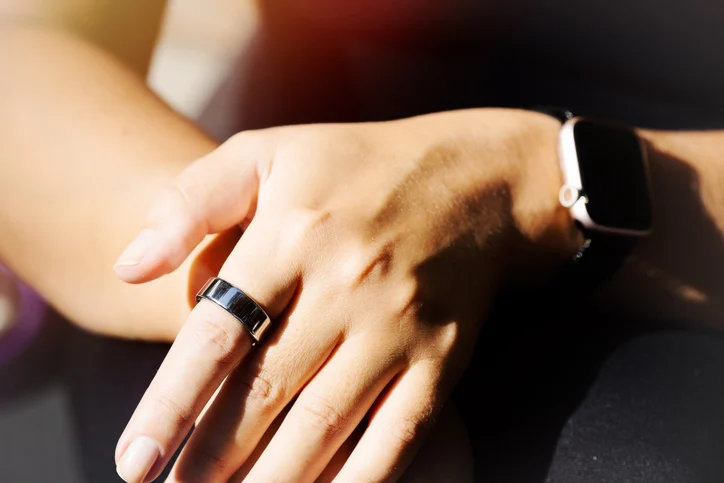
The booming market for wearable health technology is facing a significant legal reckoning. Oura, the manufacturer of the popular smart ring, has been named as the defendant in a class action lawsuit filed in a California federal court, alleging that the company’s marketing claims regarding sleep-stage tracking accuracy are fundamentally deceptive.
The lawsuit, which seeks both an injunction against the company’s marketing practices and monetary damages for affected consumers, strikes at the heart of the "quantified self" movement. As consumers increasingly rely on non-clinical devices to manage their well-being, the gap between consumer-grade estimates and medical-grade data has become a focal point of litigation.
The Core Allegations: Challenging the 95% Claim
At the center of the dispute is Oura’s assertion that its ring offers up to 95% accuracy in tracking sleep stages. The plaintiff, California resident Madison Surber, argues that such figures are technically impossible for a consumer-grade wearable.
Surber, who purchased an Oura Ring 4 Gold for over $500 in 2025, asserts that her purchase decision was heavily influenced by the company’s marketing. She contends that had she known the limitations of the device—specifically that it lacks the ability to monitor brain activity and eye movements, which are the clinical requirements for true sleep staging—she would not have purchased the device or would have significantly devalued it.
The complaint alleges that Oura’s reliance on proxy signals—such as heart rate, heart rate variability, breathing patterns, and physical movement—is insufficient to justify the high-accuracy claims presented in their marketing materials. The lawsuit highlights a 2025 study published in the journal Nature, which evaluated the efficacy of the ring over 45 nights of data and reported an accuracy rate of approximately 53%, a stark contrast to the 95% figure touted by the company.
A Chronology of the Dispute
The tension between Oura’s marketing and the scientific community did not emerge overnight. The following timeline outlines the evolution of the current legal battle:
- Pre-2025: Oura establishes its reputation as a leader in the sleep-tracking wearable market, consistently marketing its device as a sophisticated tool for sleep optimization.
- Early 2025: Madison Surber purchases an Oura Ring 4 Gold, allegedly relying on marketing claims of 95% accuracy in sleep-stage monitoring.
- 2025: A study published in Nature provides data suggesting that Oura’s sleep-stage detection accuracy is significantly lower than claimed, placing it closer to 53% in certain conditions.
- August 2026: A formal complaint is filed in California federal court by the Clarkson Law Firm on behalf of Surber and a potential class of similarly situated consumers.
- Post-Lawsuit Filing: Oura initiates a public defense strategy, publishing multiple blog posts and white papers aimed at clarifying its methodology and reaffirming the scientific validity of its algorithms.
The Science of Sleep: Data vs. Estimation
The technical crux of the argument lies in the difference between "monitoring" and "estimating." In a clinical environment, sleep staging is determined via polysomnography (PSG). This gold-standard process involves the use of scalp electrodes to record electroencephalogram (EEG) data for brain waves and sensors to monitor eye movements (EOG).
Oura, like many other wearable manufacturers, does not perform these functions. Instead, it utilizes proprietary AI algorithms to translate physiological signals into a "best guess" of a user’s sleep stage.
Shawn Collins, an attorney at Stradling, suggests that the lawsuit may hinge on a legal battle over "substantiation." He notes that while Oura does not claim to be a clinical-grade medical device, the legal question is whether their 95% accuracy claim is supported by the peer-reviewed clinical studies they cite. If Oura can prove that its validation studies against PSG meet legal standards for scientific rigor, they may find themselves on firm ground. However, the plaintiff’s strategy appears to focus on the prominence of disclaimers. If a consumer is hit with a "95% accuracy" headline but the "not a medical device" disclaimer is buried in fine print, the company could be vulnerable to claims of misleading advertising.
Official Responses and Defensive Strategy
In response to the litigation, Oura has remained steadfast in its defense. In a statement provided to MedCity News, a company spokesperson emphasized the legitimacy of their methodology:
"Like other consumer sleep wearables, Oura Ring estimates sleep stages using multiple physiological signals… There is well-documented, peer-reviewed independent scientific evidence that sleep stages are associated with distinct, measurable, reproducible changes in physiology, which is why these signals are reliably used to classify sleep stages."
The company further clarified that its algorithm was developed using more than 1,200 nights of data and has been validated against polysomnography in multiple peer-reviewed studies. Oura reiterated that its products are not intended to serve as medical devices or substitutes for clinical sleep studies. "We’re committed to continuing to clearly communicate what Oura measures, what it estimates, and how members should use that information," the spokesperson added. "We dispute the allegations and will defend against them in the appropriate legal forum."
Broader Implications: The Trust Gap in Health Tech
The case against Oura is more than just a dispute over a specific product; it is a reflection of a growing "trust gap" in the wearable technology industry.
Shashi Shankar, CEO of Novellia, observes that the fundamental issue is not necessarily a technical failure of the hardware, but a lack of clarity regarding the utility of the data. "Wearables are pretty good at surfacing signals—like sleep patterns, heart rate, activity—that prompt people to pay attention to their health," Shankar notes. "Where wearables fall short today is anchoring those signals to a patient’s clinical reality—their history, their conditions, their outcomes."
According to Shankar, the industry is currently at a crossroads. As companies look to partner with pharmaceutical giants—such as Oura’s collaboration with Eli Lilly—there is a push toward "pharmaceutical-grade validation." For wearables to transition from simple wellness gadgets to tools that hold clinical credibility, they must move beyond general marketing claims and toward integration with longitudinal medical data.
The Challenge of Consumer Expectation
The legal battle also highlights the difficulty of managing consumer expectations in an era of hyper-personalized data. When a device tells a user they had a "bad night’s sleep" based on an algorithm, that user often feels an emotional reaction. If the underlying data is perceived as inaccurate, that trust is shattered.
Legal experts monitoring the case believe that if the court finds in favor of the plaintiff, it could force a massive shift in how wearable companies market their products. We could see a move toward more conservative language, clearer warnings, and a higher burden of proof for "accuracy" percentages across the entire health-tech sector.
Conclusion: A Turning Point for the Industry
The lawsuit against Oura serves as a warning shot to the wearable tech industry. As these devices become more deeply integrated into the daily lives of millions, the standards for transparency and scientific accuracy will inevitably rise.
Whether the court sides with Oura’s defense of its peer-reviewed methodologies or agrees with the plaintiff that the marketing oversteps the bounds of reality, the outcome will likely redefine the relationship between technology companies and the health-conscious public. For now, the case remains in its early stages, but it has already succeeded in forcing a long-overdue conversation about what we really mean when we talk about "tracking" our health.
As the legal process unfolds, consumers, clinicians, and tech developers alike will be watching closely to see where the line is drawn between effective wellness tracking and actionable medical truth.