












As we navigate the decades, we often focus on cardiovascular health, cholesterol numbers, and blood pressure readings. However, there is a silent, physical marker of vitality that often goes overlooked until it is too late: functional upper-body strength. Whether you are lifting a heavy suitcase into an overhead bin, carrying groceries, or simply pushing yourself up from a seated position, your arm and chest strength are the primary tools of independence.
For those aged 60 and older, the natural, age-related decline in lean muscle mass—a process known as sarcopenia—can lead to a loss of autonomy if not proactively managed. But how do you measure your current baseline? According to Luka Hocevar, a seasoned coach with 21 years of experience and the founder of Vigor Ground Fitness, the answer is a classic movement that has stood the test of time: the pushup.
The Science of the "Moving Plank"
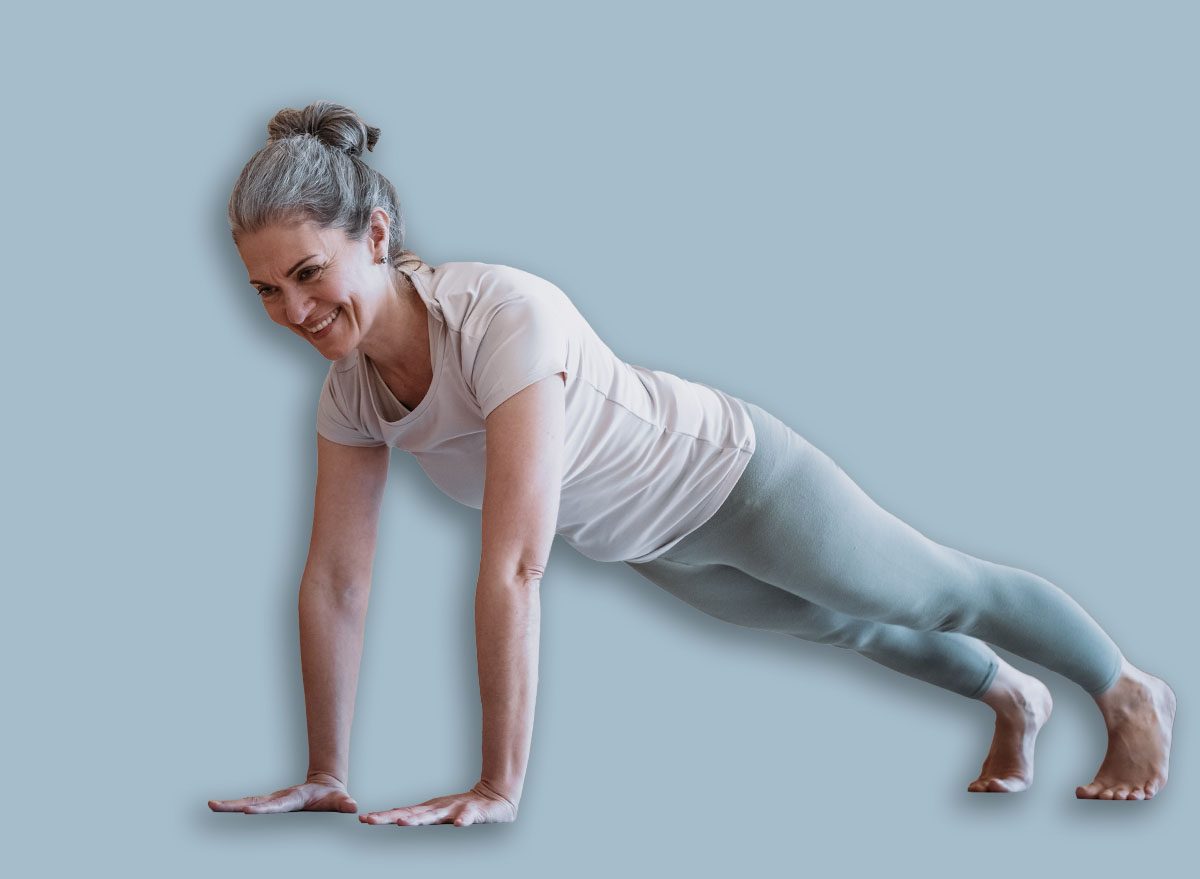
At its core, the pushup is far more than a chest exercise. It is a compound, functional movement that demands coordination across multiple muscle groups. Hocevar defines the pushup as a "moving plank," emphasizing that its utility extends well beyond the pectoral muscles.
"A pushup measures relative upper-body strength and muscular endurance, but it is also a vital test of core integrity, shoulder health, and scapular stability," Hocevar explains. When you lower your body to the floor and press back up, your body is forced to maintain a rigid, neutral spine. This requires the deep stabilizing muscles of the core to fire continuously, preventing the lower back from sagging.
Furthermore, the movement challenges the serratus anterior and the rotator cuff—muscles essential for long-term shoulder health. By testing your ability to perform this movement, you aren’t just measuring how much weight you can push; you are measuring the structural integrity of your entire kinetic chain.
Why Upper-Body Strength is a Longevity Multiplier
The implications of maintaining strong arms and a stable core in your 60s and beyond are profound. The functional utility of this strength is seen in "activities of daily living" (ADLs). Research has consistently shown that individuals with higher levels of muscular strength exhibit greater mobility and a lower risk of falls.
Consider the act of catching yourself if you trip on a sidewalk. The split-second reaction required to extend your arms and stabilize your body against the ground is a high-intensity pushup movement. Without the necessary upper-body power and reactive strength, the risk of injury from such a fall increases significantly.
Beyond safety, there is the "Quality of Life" factor. Independence is tied to our ability to manipulate our environment. The strength required to perform a pushup is the same strength required to open heavy doors, maneuver furniture, or participate in active play with grandchildren. When you lose the ability to perform these movements, you become dependent on others for tasks that were once trivial.
Chronology of Muscle Loss: The "Use It or Lose It" Reality
To understand why this test is so critical for the 60+ demographic, one must understand the timeline of physiological change. Starting in our 30s and 40s, we begin to lose lean muscle mass at a rate of roughly 3% to 5% per decade. If left unchecked, this accelerates after age 60.
This isn’t just about aesthetics; it is about metabolic health. Muscle tissue is metabolically active; it helps regulate blood glucose levels and keeps our metabolism efficient. When we allow that muscle to atrophy, we aren’t just losing strength—we are altering our body’s ability to manage energy.

The "pushup test" serves as a wake-up call. Many individuals believe they are "fine" because they are pain-free, but "pain-free" is not the same as "physically capable." By establishing a benchmark today, you create a timeline for maintenance. If you can perform ten pushups at 60, the goal is to maintain that capacity at 65, 70, and beyond, effectively "buying" your future independence through current effort.
The Elite Benchmarks: What Should You Aim For?
Coach Hocevar emphasizes that the "elite" label is not about ego, but about functional reserve. Having a surplus of strength means that if you experience a period of illness or inactivity, you have a buffer before you drop into a state of frailty.
For Men (60+):
- Elite: 20+ continuous repetitions.
- Advanced: 12–19 repetitions.
- Intermediate: 5–11 repetitions.
- Novice/Needs Attention: 0–4 repetitions.
For Women (60+):
- Elite: 15+ continuous repetitions.
- Advanced: 8–14 repetitions.
- Intermediate: 3–7 repetitions.
- Novice/Needs Attention: 0–2 repetitions.
Note: These benchmarks assume a full-range-of-motion pushup, where the chest touches the floor or reaches a depth where the upper arms are parallel to the floor, without compromising spinal alignment.
Official Perspectives: The Role of Progressive Loading
The medical and fitness community generally agrees that resistance training is non-negotiable for aging populations. The National Institute on Aging highlights that strength training can reduce the symptoms of arthritis, improve balance, and help maintain weight.
However, Hocevar warns against jumping into a high-repetition program without proper preparation. "The worst thing you can do is try to force a standard pushup with poor form," he says. "That is the fastest way to develop shoulder impingement or wrist strain."

Instead, the approach should be one of "progressive loading." If you cannot complete a full pushup on the floor, you should not be discouraged; you should simply change the angle of the lever.
Bridging the Gap: A Strategy for Improvement
If your current score is below the intermediate range, your goal should be to move toward a floor-based pushup through gradual regression.
The "Wall to Floor" Progression:
- The Wall Pushup: Stand facing a wall, arms length away. Lean in, touch your chest to the wall, and push back. This minimizes the gravity-load on your shoulders.
- The Elevated Surface: Move to a sturdy kitchen counter or a sofa. The lower the surface, the higher the intensity.
- The Bench/Rig Pushup: If you are in a gym, use a barbell set at a height that allows you to complete 10 reps with perfect form. Over the course of 4–8 weeks, lower the bar one notch at a time.
- The Knee Pushup: Once you can perform 15 reps on an elevated surface, transition to the floor, but keep your knees on the ground. This reduces the weight load by approximately 30–40%.
- The Full Pushup: When you can hit 15 knee-pushups with perfect core tension, you are ready to attempt a standard, full-body pushup.
Implications for the Future
The pushup is a diagnostic tool that reveals the state of your physiological capital. By taking the time to test yourself, you are taking ownership of your aging process.
It is important to remember that strength is a skill that must be practiced. If you perform this test and find yourself in the "needs attention" category, do not view it as a failure—view it as a clear roadmap. The human body is remarkably adaptive, even well into our 80s and 90s. The process of building back that strength will not only improve your pushup score, but it will also likely improve your energy levels, your posture, and your overall confidence in your physical capabilities.
Ultimately, the pushup test isn’t about being an athlete; it is about being a human being who is capable of navigating the world with strength and autonomy. Whether you are aiming for that "elite" 20-rep mark or simply looking to improve your score from zero to five, every repetition is an investment in your future self.

Final Thoughts: Consistency Over Intensity
As you begin your journey toward better upper-body health, keep one rule in mind: consistency always beats intensity. It is far more effective to perform three sets of five "perfect" pushups three times a week than it is to attempt one massive, poorly executed set that leaves you injured.
Listen to your body. If you feel pain in the joints, adjust the angle. If you feel the burn in your muscles, you are on the right path. Stay the course, keep your core engaged, and remember that with every push, you are actively pushing back against the limitations often associated with aging. Your arms are your primary tools for navigating the physical world—keep them strong, keep them mobile, and keep them ready for whatever comes next.