





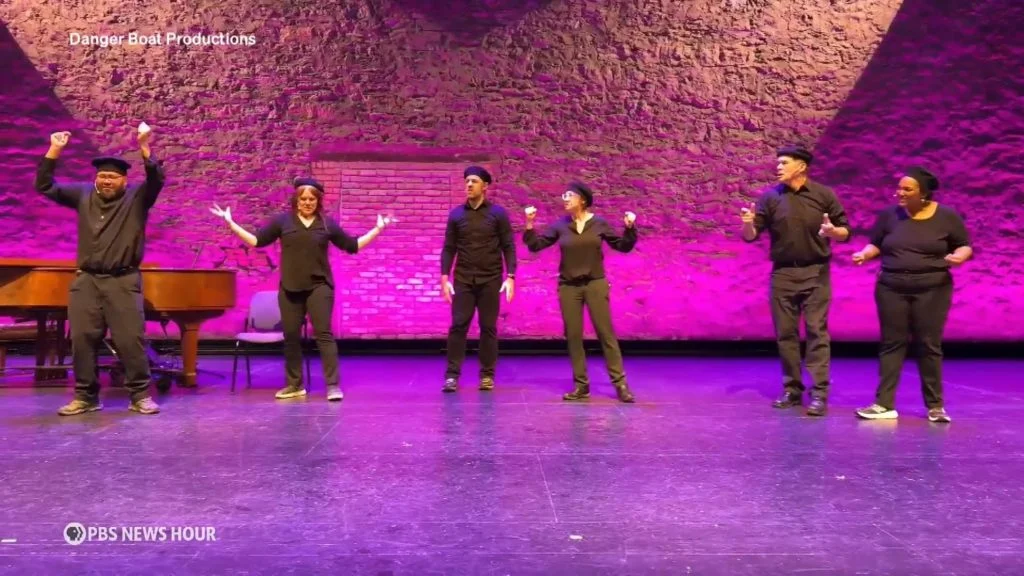
In the high-stakes environment of a world-renowned medical institution, the sound of laughter and the sight of adults tossing imaginary balls might seem like a departure from clinical rigor. Yet, at the Mayo Clinic in Rochester, Minnesota, this "silly" behavior is part of a sophisticated, evidence-based initiative aimed at one of the most complex challenges in modern medicine: the treatment and care of patients with Alzheimer’s and dementia.
As the global population ages, the medical community is racing to find effective interventions for neurodegenerative diseases. While pharmacological research continues to seek a "cure," a growing movement is focusing on how we interact with those who have lost their cognitive footing. By integrating the arts and humanities into the clinical space, the Mayo Clinic is proving that, sometimes, the most effective medical intervention isn’t a pill, but a new way of communicating.
The Intersection of Improv and Neurology
The core of this unconventional approach lies in the principles of improvisational theater. Tane Danger, a Minneapolis-based improv artist and the Mayo Clinic’s first artist-in-residence through the Dolores Jean Lavins Center for Humanities in Medicine, is teaching health professionals that the skills used on a comedy stage are remarkably transferable to the bedside.
"Improv is about listening, thinking on your feet, and accepting the reality of the moment," Danger explains. In the context of dementia, where a patient’s reality is frequently shifting and unpredictable, traditional, rigid communication methods often fail. When a patient with dementia becomes agitated or confused, a caregiver’s natural inclination is often to correct them—to insist on the "right" reality. Improv offers a different path: validation.
The "Yes, And" Philosophy
The cornerstone of the workshop is the fundamental improv rule: "Yes, and." In a theatrical sense, it means accepting what your partner has offered and building upon it. In a medical sense, it is a revolutionary tool for de-escalation.
Angela Lunde, a specialist at the Mayo Clinic’s Alzheimer’s Disease Research Center, illustrates the shift: "If a patient says, ‘Let me out of here, I don’t know you,’ a caregiver’s standard response is often, ‘No, you can’t leave; I’m your nurse.’ This leads to an argument that nobody can win."
Under the "Yes, and" framework, the caregiver might instead say, "Yes, Mr. Richards, I can see you are feeling upset and trapped, and I am going to do my best to ensure you are comfortable here." By validating the emotion behind the words rather than fighting the inaccuracy of the claim, the caregiver preserves the patient’s dignity and lowers the patient’s anxiety.
A Legacy of Healing: The Role of Humanities in Medicine
The improv workshop is not an isolated experiment. It is a vital component of a broader philosophy at the Mayo Clinic that recognizes the "human spirit" as a critical factor in physical recovery. Since the 1980s, the Dolores Jean Lavins Center for Humanities in Medicine has been dedicated to integrating art, music, and performance into the patient experience.
Dr. Scott Breitinger, the center’s medical director, argues that the physical environment of a hospital—often sterile and intimidating—must be tempered with beauty and meaning. "Individuals come from around the world to Mayo Clinic for our clinical innovation," Dr. Breitinger notes. "But equally important is how we care for and rejuvenate the human spirit."
The clinic’s walls are adorned with works from ancient artisans and modern masters like Dale Chihuly and Auguste Rodin. These selections are not merely decorative; they are curated to foster hope, serenity, and support.
Arts at the Bedside and Musical Therapy
The initiative extends beyond passive observation of art to active participation. The "Arts at the Bedside" program allows patients, such as transplant recipients facing the existential anxiety of surgery, to create their own art. For these individuals, the creative process offers a necessary mental respite from the "unknown" of their prognosis.
Music, too, serves as a pillar of this strategy. Mayo Clinic holds the distinction of being the only medical center in North America to feature a permanent carillon, which rings out daily recitals. Furthermore, live concerts—featuring everyone from professional musicians to nurses—are held regularly. For staff like registered nurse Molly Beecher, these performances are more than just entertainment; they are a "mental break" from the high-stress environment of clinical care.
Evidence and Data: Why Art Matters
Critics of "arts-in-medicine" programs sometimes dismiss them as peripheral to the core work of healing. However, Katie Van Buren, the Director for Humanities in Medicine at Mayo, points to a growing body of research that supports the clinical efficacy of these interventions.
"The literature demonstrates, for patients, that there are multiple positive impacts," Van Buren explains. Her team tracks outcomes related to:
- Stress Relief: Measurable reductions in cortisol and other physiological markers of stress.
- Pain Management: Patients who engage with the arts often report a lower perception of pain, requiring less reliance on pharmacological analgesics.
- Emotional Support: A sense of community and reduced isolation, particularly for long-term care patients.
These findings suggest that when a patient feels "seen" and "heard"—whether through a musical performance or a validated conversation with a nurse—their nervous system responds, creating a more favorable environment for the body to heal.
Implications for the Future of Healthcare
The integration of arts and improv into the clinical setting marks a shift in how medical institutions define "treatment." For too long, the patient was viewed primarily as a collection of symptoms to be managed. The Mayo Clinic’s model suggests that the patient is a human being with a shifting, personal reality that must be navigated with empathy.
Bridging the Gap in Dementia Care
The implications for Alzheimer’s and dementia are particularly profound. As the disease progresses, patients lose the ability to navigate the logical, linear world. If medical staff are only trained in logic, they become alienated from their patients. By teaching clinicians how to be "improv-capable," the Mayo Clinic is equipping the next generation of doctors and nurses with the emotional agility to meet patients where they are.
As Dr. Jeeva Palanisamy, an internal medicine resident, observed after completing the improv training, the biggest takeaway was the discovery of a "common reality" with patients. Even when a patient’s memory or cognitive function is failing, the underlying emotions remain, and the ability to validate those emotions can transform a potentially volatile interaction into a moment of human connection.
Conclusion: A More Humane Medicine
The Mayo Clinic’s experiment with improv and the arts is a reminder that the most advanced medical technology in the world is only as effective as the human relationship behind it. In the darkness of a dementia diagnosis, or the anxiety of a major surgery, the arts provide a "light"—a way to find comfort, meaning, and connection.
Tane Danger, reflecting on his role, describes the work as some of the most meaningful of his career. "The relationships and connections that people have in a healthcare space are obviously some of the most important, meaningful in somebody’s entire life," he says.
As the medical community continues to push against the advance of Alzheimer’s, the lessons from Rochester offer a clear directive: we must not only treat the disease but also nurture the human beings who are living through it. By embracing the unpredictable, the creative, and the compassionate, institutions like the Mayo Clinic are setting a new standard for what it means to heal.