










Published: August 30, 2026
From the Yoga Journal Archives: Originally appearing in the November–December 1976 issue.
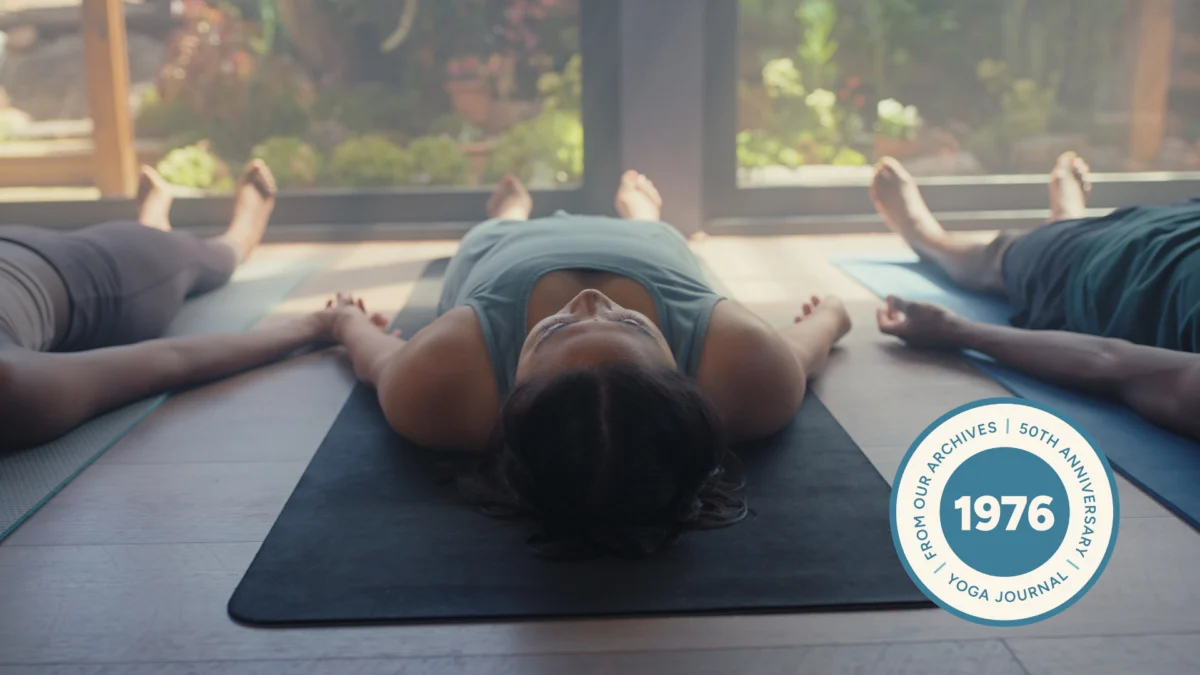
While the modern fitness landscape is often dominated by high-intensity movement, the most profound work in a yoga practice frequently occurs when the body stops moving entirely. Savasana, or "Corpse Pose," is paradoxically regarded by seasoned practitioners and masters alike as the most difficult asana to perform correctly. Despite its appearance as a simple period of rest, Savasana serves as the essential bedrock of the entire yogic discipline.
The Core of the Practice: Integration and Presence
At its heart, Savasana is a bridge between the physical exertion of a yoga sequence and the integration of that experience into the practitioner’s daily life. After the body has been challenged, stretched, and strengthened, Savasana provides a vital window for the nervous system to process the work. It is during this period of stillness that the knowledge gained through the preceding asanas is internalized, effectively becoming part of the practitioner’s physical and mental fabric.
For many Americans, this period of stillness represents a rare departure from the frantic pace of modern existence. It is a dedicated time to do nothing but inhabit the present moment. In a culture driven by productivity, the act of experiencing sensations, thoughts, and bodily feelings—without judgment or interpretation—is a radical departure from the norm. This state of non-judgmental observation is, in itself, the nascent stage of meditation. Whether one is a novice or a lifelong practitioner, Savasana offers an entry point into a profound internal silence.
The Chronology of Awareness: From Surface to Subtlety
The evolution of a Savasana practice follows a distinct trajectory, moving from the coarse to the subtle. Initially, the practitioner may merely notice the rhythm of their breathing. However, with consistent practice, the window of perception widens.
Students often report a heightened awareness of their own physiological rhythms. This might begin with the rhythmic beat of the heart, gradually expanding to a sensitivity toward the pulse in various limbs. Eventually, the student may perceive the nuanced differences in pulse timing between the left and right sides of the body, a reflection of the intricate function of the circulatory system.
This deepening contact with internal processes is more than a parlor trick of the senses; it is a clinical key to self-regulation. By tuning into the internal balance—or imbalance—of the body, the practitioner develops the capacity to identify physiological stress before it manifests as illness. This heightens the potential for self-healing and long-term health maintenance.
The Learning Curve: Transitioning from Conscious Effort to Automatic Calm
Learning Savasana is a developmental process, much like learning to walk. A child must consciously coordinate their limbs to take a step; an adult does so through an automatic, unconscious process. Similarly, the novice student of Savasana often struggles with the instruction to "relax."
Psychologically, relaxation is elusive when pursued as a command. Much like the irony of being told not to think of a specific object, the forced effort to relax often triggers mental tension. However, as the practice of Savasana becomes a recurring element of a well-rounded routine, the conscious struggle fades. Through repetition, the skill of relaxation migrates from the conscious mind to the unconscious.
When this transition occurs, the practitioner achieves a state of "automatic relaxation." Ideally, this state is not confined to the yoga mat; it filters into the rest of the day, acting as a natural, physiological buffer against stress. The benefits of the pose thus extend far beyond the 10 or 15 minutes spent on the floor, influencing the body’s hormonal and nervous system responses to the challenges of daily life.
Taming the "Drunken Monkey": Mental Discipline in Savasana
Perhaps the most daunting hurdle in Savasana is the mind itself. During the first few minutes of stillness, the mind rarely remains quiet; instead, it tends to run rampant, chasing memories, anxieties, and to-do lists.
Swami Vivekananda, a prominent disciple of the legendary Sivananda of Rishikesh, famously described this erratic state of the human mind as a "drunken monkey"—agitated, jumping from branch to branch without purpose or pause. Savasana serves as the arena where this "drunken monkey" is confronted. By observing the mind’s tendency to waver, the practitioner takes the first step toward cessation of that wavering. Over time, the mind ceases to be a wild, autonomous force and becomes a servant of the will, transforming into a tool for mental clarity, peace, and evolution.
The Symbolism of the Corpse: A Philosophical Framework
The name "Savasana"—derived from the Sanskrit sava (corpse) and asana (pose)—is frequently misunderstood. It is not an invitation to morbidity, but rather a profound metaphor for transformation.
In the pose, the student adopts the physical stillness of the dead, yet the mind remains acutely alert. It is a state of "dying to the old." By letting go of past patterns, rigid ego structures, and outdated habits, the practitioner prepares the internal ground for something new to be born. It is a rehearsal of the ultimate surrender. By practicing the release of the physical form and the mental chatter, the student learns to navigate the fear of the unknown. Savasana is, in this sense, a preparation for the moment, for the stresses of life, and for the final, inevitable transition of death.
Supporting Data and Historical Context
The practice of Savasana has been validated over decades by the experiences of teachers like B.K.S. Iyengar, whose seminal work, Light on Yoga, remains a cornerstone of the discipline. The efficacy of the pose is supported by the observed physiological shifts in practitioners, including:
- Reduction in Cortisol Levels: Consistent practice of restorative postures is linked to a decrease in stress hormones.
- Heart Rate Variability (HRV): Practitioners show improved autonomic nervous system balance.
- Improved Proprioception: The ability to sense one’s body in space and internal state improves significantly with long-term stillness.
Implications for Modern Health
In our contemporary, high-speed society, the implications of Savasana are more relevant than ever. As modern medicine continues to explore the mind-body connection, the ancient wisdom of Savasana is increasingly recognized as a non-pharmacological intervention for anxiety, hypertension, and burnout.
By dedicating time to "die" to the distractions of the day, we invite a higher degree of self-awareness. When we learn to stand back and watch the flow of our sensations and thoughts without becoming attached to them, we gain the perspective necessary to navigate the world with grace.
As B.K.S. Iyengar emphasized, the goal is not to escape reality but to engage with it from a position of centeredness. Savasana remains the most difficult pose not because of the physical requirement—which is minimal—but because of the immense discipline required to remain present, still, and aware in a world that constantly demands we be elsewhere.
For the modern student, the invitation remains the same as it was in 1976: Lie down, breathe, and observe. In the stillness, you may find that the most significant journey is the one that happens while you are perfectly still.