









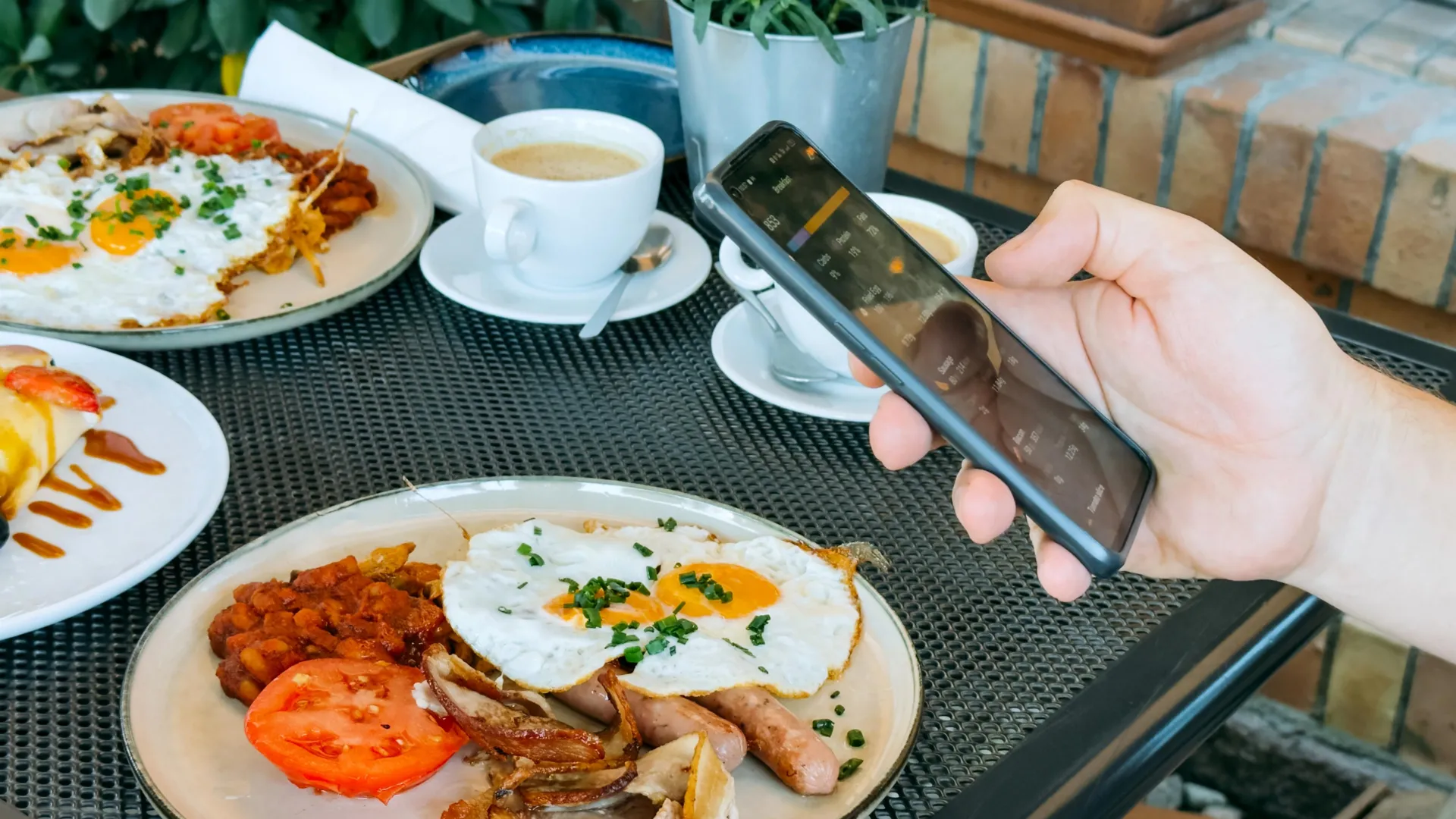
In the quest for weight management and metabolic health, technology has promised a frictionless future. Gone are the days of laboriously weighing ingredients on a kitchen scale or manually logging every gram of protein and fat into a spreadsheet. Today, a new generation of artificial intelligence (AI)-powered apps allows users to simply snap a photograph of their dinner plate, with the software instantly calculating the nutritional value of the meal.
However, a groundbreaking study presented at NUTRITION 2026—the flagship annual meeting of the American Society for Nutrition—suggests that this convenience comes at a significant cost to accuracy. Researchers from the National Institute of Diabetes and Digestive and Kidney Diseases (NIDDK), part of the National Institutes of Health (NIH), have found that these AI tools consistently underestimate the caloric and fat content of meals by a considerable margin. As millions of health-conscious consumers rely on these digital logs to dictate their daily intake, the discovery that these apps may be missing hundreds of calories per meal raises urgent questions about the reliability of "photographic dieting."
The Mechanism of Digital Estimation
To understand the scope of the problem, one must first understand the mechanism behind the technology. AI-powered calorie tracking functions through a sophisticated blend of computer vision and pattern recognition. When a user uploads an image, the app’s algorithms attempt to segment the photo, identifying distinct food items based on shape, color, and texture. Once identified, the software attempts to estimate the volume or portion size of those items. Finally, the app cross-references these visual estimations with internal nutrition databases to generate a caloric tally.
While the convenience is undeniable, the reliance on visual estimation introduces a myriad of variables. Lighting, the angle of the photograph, the depth of the bowl, and the presence of hidden ingredients (like oils or sauces) can fundamentally confuse an AI’s training model. Despite the popularity of these apps among those tracking their health, the scientific community had yet to conduct a rigorous, controlled evaluation of their performance—until now.
A Chronology of Scientific Inquiry
The research project, led by Aaron Hengist, a postdoctoral visiting fellow at NIDDK, and Olivia Charles, a postbaccalaureate intramural research training fellow, emerged from the broader context of clinical nutrition research at the NIH Clinical Center.
The investigation was structured in phases to ensure the highest degree of scientific integrity:
- Phase One: Establishing the Baseline: Researchers leveraged the NIH’s controlled metabolic kitchen, where meals are prepared with precision to the nearest 0.1 gram. This provided a "gold standard" against which the apps could be tested.
- Phase Two: Photographic Standardization: The team captured standardized images of 102 distinct meals, spanning both standard and low-carbohydrate (ketogenic) diets.
- Phase Three: Comparative Analysis: These images were processed through four popular platforms: MyFitnessPal, LoseIt!, CalAI, and Appediet.
- Phase Four: Expansion and Validation: Following the initial findings, the researchers expanded their dataset to include more than 200 additional meals to determine if specific dietary patterns—such as high-fat keto meals—impacted the error rate of the AI models.
The findings were presented by Olivia Charles on July 25, 2026, at the NUTRITION 2026 conference held in National Harbor, Maryland. The presentation served as a wake-up call for both app developers and the consumer base.
Supporting Data: The Magnitude of the Error
The data presented at the conference were stark. Across all four tested applications, the AI consistently failed to account for a significant portion of the energy density of the food. On average, the apps underestimated caloric intake by 250 to 345 calories per meal. To put that in perspective, an individual eating three meals a day could unknowingly consume upwards of 750 to 1,000 calories more than their app reports—a gap large enough to completely derail a weight-loss program or a medical nutritional intervention.
The discrepancy was not limited to total calories. The apps also struggled significantly with macronutrient breakdowns, particularly fat. On average, the AI underestimated fat content by approximately 30 grams per meal.
The researchers noted some nuance in the failures:
- Performance Variance: MyFitnessPal and LoseIt! demonstrated slightly higher accuracy when analyzing higher-calorie meals compared to lower-calorie ones, though they still failed to reach a high degree of precision.
- Carbohydrate Consistency: Interestingly, all four apps produced more consistent, albeit still imperfect, estimates for carbohydrates than for other macronutrients.
- The Keto Challenge: The most significant hurdle appeared to be the ketogenic diet. Because these meals are inherently high in fat and often lack the visual "bulk" of carbohydrate-heavy foods, the AI struggled to quantify the energy density, consistently undercounting the fat content.
Official Responses and Expert Perspectives
The researchers have been cautious but firm in their assessment of the technology. "Photo-based calorie tracking apps are very popular, especially for people trying to manage their health or lose weight," said Aaron Hengist. "However, the accuracy of many of these apps has not been thoroughly evaluated. Our study helps address this question by looking at whether these apps can reliably estimate calories."
The consensus among the NIDDK team is that while the technology shows promise, it is currently not a standalone solution for precise caloric monitoring. Hengist emphasized a pragmatic approach for current users: "People using a photo-based tracking app without adjusting the portions or entering the amounts of food should take the results with a grain of salt. These apps tend to underestimate calories, especially from fats, so what they actually ate is likely higher than what the app shows."
It is important to note that the findings presented at NUTRITION 2026, while reviewed by a committee of experts, have not yet undergone the full peer-review process required for publication in a major scientific journal. As such, the researchers urge the public to view these results as preliminary. However, the rigor of using a controlled metabolic kitchen lends significant weight to the study, suggesting that the "missing calories" are a systemic issue rather than a random fluke.
Implications for the Future of Digital Health
The implications of this research are twofold: they affect the individual user attempting to manage their weight, and they set a new standard for how AI in healthcare should be regulated and validated.
For the Consumer
For the average user, the study serves as a warning against "passive logging." Relying solely on a photograph to track intake is akin to estimating one’s bank balance by looking at a pile of receipts without adding the numbers. To improve accuracy, the researchers suggest a hybrid approach:
- Manual Verification: Use photo-based tools as a starting point, but manually adjust the portion sizes or confirm the ingredients for high-fat or complex meals.
- Understanding Limitations: Acknowledge that the app is an estimate, not a scientific measurement. If the goal is weight loss, assume the "hidden" calories are at the higher end of the error range.
- Focus on Trends: Use the apps to track eating patterns and frequency rather than fixating on the precise caloric count of a single, ambiguous meal.
For the Tech Industry
The burden of improvement falls on the developers of these AI tools. If the technology is to be considered a legitimate health tool, companies must improve their training sets. The study highlights that AI models are currently "blind" to the energy density of fats—a critical flaw for any tool intended for dietetics. Future iterations of these apps will likely need to incorporate more user-input data, such as allowing users to easily flag the cooking method (e.g., "fried in butter" vs. "steamed") to help the AI adjust its estimations.
A Path Forward
The researchers suggest that the most accurate results will come from integrating photo-based tools with traditional, validated methods of dietary reporting. By combining the ease of AI with the precision of manual entry, users can capture the best of both worlds.
As we move toward an era of personalized nutrition, the "Digital Calorie Gap" highlights the limitations of treating nutrition as a purely visual experience. Until AI can "see" the density of a sauce or the fat content of a steak with the same precision as a laboratory scale, the most powerful tool in nutrition remains the human eye—supported, but not replaced, by the machine.