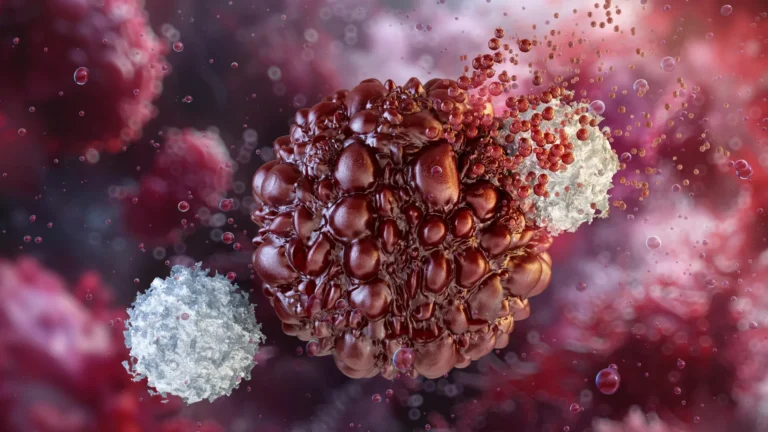












In a significant development for oncology, researchers at the Dartmouth Cancer Center (DCC) have uncovered evidence that a long-standing, FDA-approved blood pressure medication could serve as a powerful catalyst for modern cancer therapies. The study, recently published in the Journal for ImmunoTherapy of Cancer, suggests that telmisartan—a drug widely prescribed for hypertension—can significantly enhance the efficacy of PARP inhibitors, a class of targeted drugs that have revolutionized the treatment of various malignancies.
By boosting the body’s immune response and sensitizing tumors that were previously resistant to standard treatment, this inexpensive and widely available medication could potentially expand the patient population eligible for life-saving targeted therapies.
The Core Discovery: Telmisartan as a Therapeutic Catalyst
The central finding of the Dartmouth study is the synergy between telmisartan and olaparib, a PARP inhibitor. PARP inhibitors function by exploiting specific defects in how cancer cells repair damaged DNA, effectively trapping the cells in a state of irreparable genetic instability that leads to cell death. However, this mechanism has a significant limitation: it is primarily effective in tumors with specific homologous recombination DNA repair deficiencies, such as those linked to BRCA gene mutations.
Many patients whose tumors lack these specific genetic vulnerabilities find that PARP inhibitors are ineffective. Furthermore, even in patients who initially respond well, the development of therapeutic resistance is a common and devastating hurdle. The DCC research indicates that telmisartan can bridge this gap by forcing tumors to become sensitive to PARP inhibitors, regardless of their underlying DNA repair status.
The Mechanism of Action
The research team identified two primary pathways through which telmisartan exerts its anti-cancer influence:
- DNA Damage Amplification: In preclinical models, the combination of telmisartan and olaparib induced higher levels of DNA damage within cancer cells compared to olaparib alone.
- Immune System Activation: The combination treatment triggered a heightened immune response, specifically by increasing the production of type I interferons. These signaling molecules act as an "alarm system," alerting the body’s immune defenses to the presence of malignancy and facilitating the destruction of tumor cells.
Chronology of the Research and Clinical Translation
The journey from initial hypothesis to clinical trial has been marked by rigorous investigation and a strategic focus on drug repurposing.
- Preclinical Foundation: The Dartmouth team began by screening various medications to identify compounds that could enhance the tumor-killing capacity of standard therapies. Through extensive laboratory experimentation, they identified telmisartan’s unique properties.
- Differentiation within the ARB Class: A critical stage of the study involved comparing telmisartan with other drugs in the angiotensin II receptor blocker (ARB) family. The researchers discovered that telmisartan possesses unique biological properties distinct from its peers, making it a "stand-out" candidate for oncological applications.
- Mechanism Identification: Once the synergy was confirmed, the team delved into the molecular interactions, identifying the down-regulation of PD-L1—a protein that helps cancer cells "hide" from the immune system—as a significant secondary benefit of telmisartan.
- Launching Human Trials: Following the success of preclinical results, the DCC moved rapidly to translate these findings into clinical settings. Currently, two phase-one-style clinical trials are underway, testing the combination therapy in real-world patient populations.
Supporting Data and Scientific Implications
The potential for telmisartan extends beyond its interaction with PARP inhibitors. The drug’s ability to reduce PD-L1 levels inside tumor cells suggests that it may also improve the efficacy of various immunotherapies. By stripping away the "cloaking" mechanism that allows tumors to evade T-cell detection, telmisartan could serve as a valuable adjuvant in modern cancer care.
A Unique Pharmacological Profile
The researchers emphasized that not all ARBs are created equal. While many medications in the same class share similar cardiovascular benefits, telmisartan’s specific molecular structure allows it to interact with cancer cells in ways that other blood pressure medications cannot. This "off-target" effect is the cornerstone of the study’s excitement.
Dr. Tyler J. Curiel, MD, MPH, FACP, the study’s senior and lead author, noted that the data suggests telmisartan could improve the efficacy of various chemotherapy classes and immunotherapies across a wide array of cancer types, provided the underlying biological mechanisms are engaged.
Official Responses and Clinical Perspectives
Dr. Tyler J. Curiel has been a vocal advocate for the potential of this repurposed drug, emphasizing both its clinical utility and its economic accessibility.
"This study shows that a common, safe, tolerable, convenient, and inexpensive drug may significantly improve how well an important class of cancer therapies works," Dr. Curiel stated. He highlighted that because telmisartan is an oral medication with an established safety record and is well-tolerated even by patients who do not suffer from hypertension, it is uniquely suited for rapid integration into current cancer treatment protocols.
Regarding the ongoing clinical trials, Dr. Curiel expressed cautious optimism. "We are encouraged by what we are seeing so far," he remarked. One trial is specifically targeting men with metastatic, castration-resistant prostate cancer, a notoriously difficult-to-treat condition. According to the research team, the first participant in this study exhibited an "exceptional response," providing an early, albeit anecdotal, signal of the combination’s potential. A second trial has since commenced, enrolling patients with platinum-resistant ovarian cancer.
Broader Implications for Oncology
The implications of this research are far-reaching, touching upon the future of drug discovery and patient access to medicine.
Overcoming Drug Resistance
One of the most persistent challenges in oncology is the phenomenon of acquired resistance, where tumors evolve to bypass the toxic effects of chemotherapy and targeted agents. If telmisartan can indeed sensitize resistant tumors, it could potentially extend the lifespan of existing drugs, providing patients with more options before moving to more aggressive or experimental treatments.
Democratizing Cancer Treatment
The cost of modern cancer therapies, such as PARP inhibitors and immune checkpoint inhibitors, is a significant barrier to care. By pairing these high-cost specialty drugs with an inexpensive, generic medication like telmisartan, the healthcare system could potentially improve outcomes without the prohibitive costs associated with developing entirely new, proprietary chemical entities.
The Path Forward: Future Research
While the early results from the prostate and ovarian cancer trials are promising, the researchers caution that larger, multi-center trials are necessary to confirm these findings. The team at Dartmouth continues to analyze data from these cohorts, looking for biomarkers that might predict which patients are most likely to benefit from the addition of telmisartan.
Furthermore, the study opens the door for further investigation into whether other "old" drugs possess hidden, anti-cancer capabilities. This "drug repurposing" movement is gaining significant traction, as it leverages existing safety data to speed up the delivery of new treatments to patients who have exhausted standard options.
Conclusion
The findings from the Dartmouth Cancer Center represent a beacon of hope for patients who have found limited success with standard targeted therapies. By repurposing a widely available blood pressure medication, researchers have uncovered a potential mechanism to "re-sensitize" tumors to treatment and mobilize the immune system against cancer.
As the ongoing clinical trials progress, the medical community will be watching closely to see if telmisartan can translate its preclinical promise into widespread clinical success. If successful, this research could fundamentally shift the paradigm of combination therapy, proving that sometimes, the most effective tool in the fight against cancer is one that has been sitting in our medicine cabinets all along.
Funding for this research was provided by the Guyre fund and the Gmelich fund at Dartmouth Cancer Center, supporting the team’s mission to innovate and improve cancer patient outcomes through rigorous, patient-centered science.