











By Sydney Halleman
Published September 2, 2026
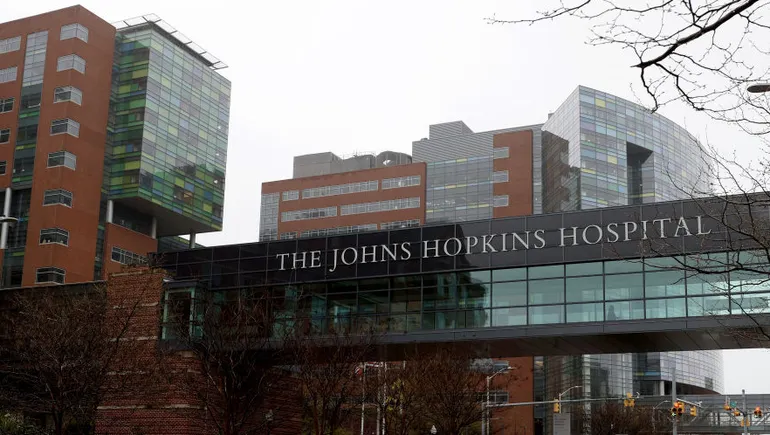
Johns Hopkins Health Plans (JHHP), the managed care arm of the prestigious Johns Hopkins health system, has initiated a critical leadership transition. Following the departure of long-time CEO James Holland, who exited last month to helm the Medicaid division at national insurance giant Humana, the Baltimore-based insurer has appointed its current Chief Financial Officer, Daniel Chojnowski, to serve as interim CEO.
This move, announced via the company’s corporate channels on Tuesday, is designed to provide immediate institutional stability. As the organization navigates a complex period of financial tightening and shifting regulatory landscapes, the board has tasked Chojnowski with maintaining operational continuity while a nationwide search for a permanent successor gets underway.
The Core Facts: A Strategic Pivot
The appointment of Chojnowski marks a significant moment for JHHP, which manages coverage for nearly 400,000 members across Maryland and the broader Mid-Atlantic region. By elevating a financial expert to the top executive spot, the organization is signaling that its immediate priority is fiscal discipline and strategic recalibration.
JHHP, which is jointly owned by the Johns Hopkins Health System and the Johns Hopkins School of Medicine, provides a diverse portfolio of insurance products, including Medicare Advantage, Tricare, employer-sponsored coverage, and Medicaid. The insurer noted that Chojnowski’s background represents the "modern CFO"—an executive who has transcended traditional accounting roles to become a key architect of organizational strategy.
"Daniel embodies the modern CFO, which has evolved from the number-crunching budget guard to a strategic partner, helping to steer organizational decisions," the company stated in its official announcement.
Chronology of Change
To understand the gravity of the current situation, one must look at the recent timeline of events:
- Seven-Year Tenure Ends (August 2026): James Holland, who guided JHHP for seven years, officially resigned to join Humana. His departure was viewed by industry analysts as a major loss, given his deep integration within the Mid-Atlantic provider-payer ecosystem.
- The Search Begins (Late August 2026): Immediately following Holland’s exit, the board began formalizing the search for a permanent CEO.
- Interim Appointment (September 2, 2026): Daniel Chojnowski steps into the interim role. His mandate is to stabilize the ship while the board evaluates candidates who can navigate the dual pressures of being a provider-owned health plan in a volatile market.
Prior to his tenure at Johns Hopkins, Chojnowski spent over a decade at Martin’s Point Health Care, a nonprofit insurer, where he served in various capacities, including a four-year stint as CFO. This deep experience in the nonprofit health insurance space is expected to be vital as he manages JHHP through its current fiscal challenges.
Supporting Data: The Financial Headwinds
The transition comes at a time when regional health plans are facing unprecedented economic headwinds. According to recent financial statements, JHHP reported a loss of approximately $45 million in its most recent fiscal year. While the organization generated $2.5 billion in premium revenue, rising operating expenses and mounting medical costs significantly outpaced this intake.
Industry experts point to a "triple threat" currently plaguing provider-owned health plans:

- Increased Medical Spending: Post-pandemic utilization rates have remained elevated, with patients seeking more complex and expensive care.
- Reimbursement Pressures: Many insurers, including JHHP, have publicly criticized government programs—specifically Medicare and Medicaid—for reimbursement rates that they argue fail to keep pace with the actual cost of care delivery.
- Market Saturation: National insurance carriers with larger economies of scale are increasingly encroaching on regional markets, making it difficult for smaller, provider-led plans to maintain competitive margins.
The financial data highlights a precarious balancing act for Chojnowski. As he steps into the CEO office, his background as a CFO will be tested, as he must balance the mandate to provide high-quality care to 400,000 members while simultaneously reversing the $45 million deficit.
Official Responses and Corporate Sentiment
The board’s decision to tap Chojnowski was not merely a placeholder move but a calculated choice to leverage his familiarity with the company’s internal financial architecture. In the corporate statement, leadership emphasized that Chojnowski’s transition from the finance department to the executive suite is a natural progression of his role as a "strategic partner."
While the search for a permanent CEO is ongoing, there is no public timeline for when a final decision will be reached. Analysts suggest the board will likely look for a leader who has experience not only in managed care but also in the unique dynamics of provider-owned organizations, where the priorities of the hospital system and the health plan must remain aligned.
Industry Implications: The "Provider-Payer" Struggle
The struggles at Johns Hopkins Health Plans are not occurring in a vacuum. The broader healthcare industry is currently witnessing a widespread retreat of provider-owned health plans.
Earlier this year, the insurance division of Providence, a major nonprofit health system, announced that it would be winding down operations after failing to reach an agreement to sustain its Medicare Advantage business. Similarly, other regional powerhouses, such as Baylor Scott & White in Texas, have recently curtailed their participation in Medicaid and Affordable Care Act (ACA) markets, citing an inability to maintain profitability in the face of skyrocketing clinical costs.

The Future of Provider-Owned Plans
The "provider-payer" model, which was once hailed as the future of integrated, value-based care, is currently under intense scrutiny. The premise was that by owning both the hospital and the insurance plan, organizations could streamline care and reduce waste. However, the current economic climate has exposed the risks of this model: when medical expenses rise, the losses are felt on both sides of the balance sheet.
For JHHP, the path forward involves a delicate navigation of these systemic issues. The appointment of an interim CEO with a strong financial background suggests that the board is prioritizing a "back-to-basics" approach:
- Operational Efficiency: Cutting administrative overhead without compromising patient outcomes.
- Strategic Consolidation: Reviewing the profitability of specific plan offerings to ensure long-term viability.
- Regulatory Advocacy: Continuing to push for more favorable reimbursement rates from state and federal regulators to account for the actual costs of care.
The Road Ahead
As Daniel Chojnowski settles into his new role, the healthcare community will be watching closely. His ability to guide JHHP through this fiscal recovery will serve as a bellwether for other provider-owned insurers struggling to survive in a market increasingly dominated by national giants.
The task is daunting: he must stabilize an organization with a $45 million hole in its budget, maintain morale during a period of leadership uncertainty, and ensure that the 400,000 members in the Maryland area continue to receive the care that has become synonymous with the Johns Hopkins brand.
For now, the focus remains on steady leadership. With a decade of experience in the nonprofit insurance sector and a deep understanding of the financial levers at JHHP, Chojnowski represents the board’s best bet for navigating the storm until a permanent captain can be found. The coming months will be defining for both the interim CEO and the long-term future of one of the Mid-Atlantic’s most significant health insurance providers.