








In a groundbreaking discovery that fundamentally shifts our understanding of the tumor microenvironment, researchers at the University of Oklahoma have unveiled a sinister mechanism by which triple-negative breast cancer (TNBC) manipulates the body’s own immune system to facilitate its survival and expansion. The study, published in the journal Cell Death & Differentiation, suggests that aggressive tumors act as master manipulators, recruiting immune cells to "invite" nerve networks into the tumor core—a process that acts as a catalyst for cancer progression.
This discovery moves beyond the traditional focus on cancer cells alone, identifying a sophisticated, multi-cellular collaboration that makes TNBC one of the most resilient and difficult-to-treat malignancies in modern oncology. By exposing this "nerve-recruitment" pathway, scientists are now looking at a potential therapeutic paradigm shift: rather than simply trying to kill the cancer, future treatments may focus on severing the communication lines that keep these tumors alive.
The Anatomy of a Hijacked System: Main Facts
For years, oncologists have observed a curious phenomenon: solid tumors are frequently laced with complex, dense nerve networks. While the presence of these nerves has been a known quantity, the "why" and "how" remained an enigma. Does the tumor simply grow into existing nerves, or does it actively pull them in?
The University of Oklahoma team, led by Dr. Maureen Cox, has provided a definitive answer. The research confirms that the process is active, not passive. The tumor acts as a biochemical beacon, attracting macrophages—immune cells that, in healthy tissue, are tasked with healing wounds and fighting off pathogens.
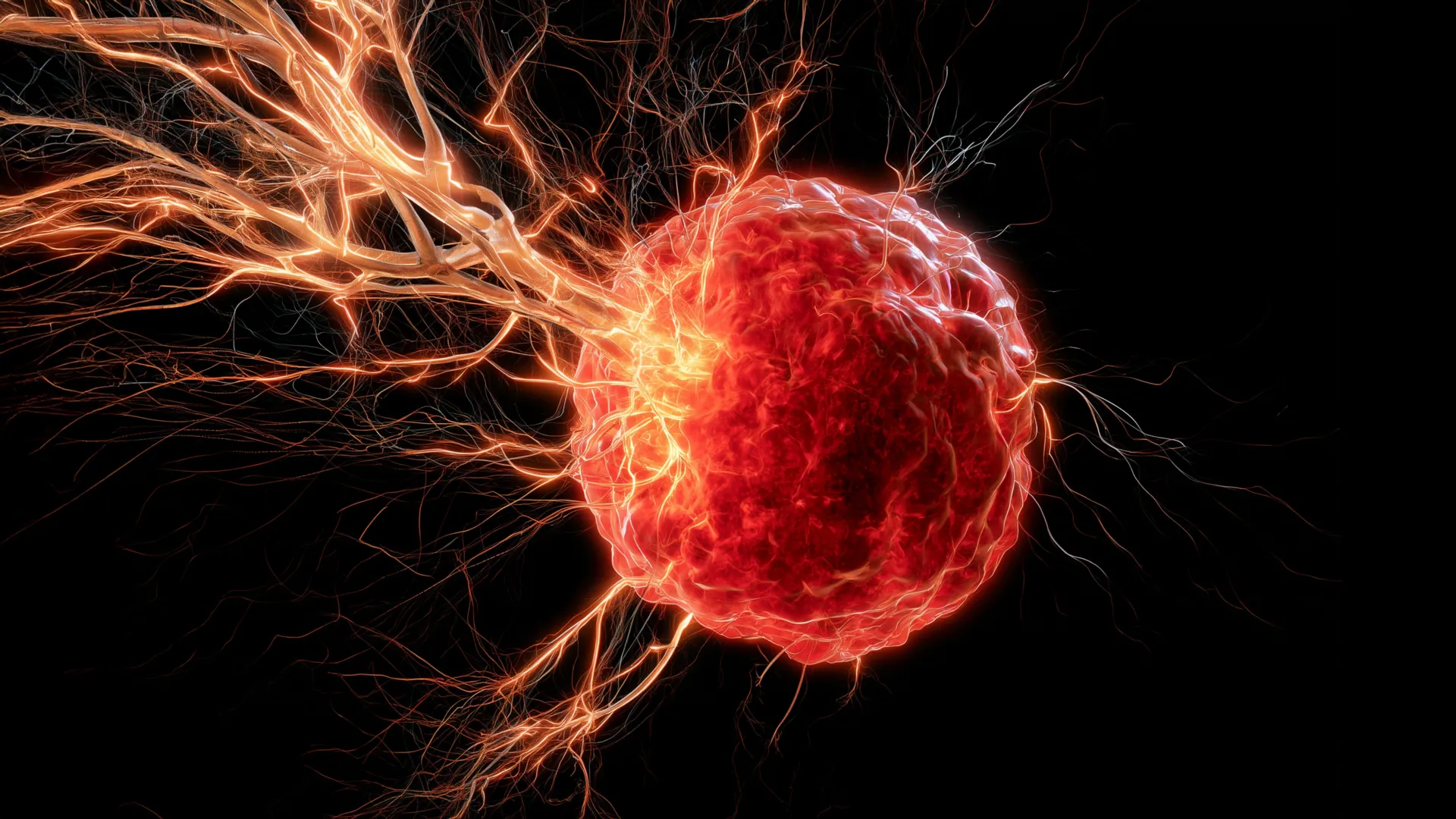
Once these macrophages infiltrate the tumor, they are "reprogrammed" by the cancer cells. Instead of protecting the body, they begin secreting a protein known as brain-derived neurotrophic factor (BDNF). Typically, BDNF is responsible for the survival and growth of neurons in the central nervous system. In the context of a tumor, however, it serves as a homing signal, effectively drafting nearby nerve fibers into the tumor’s architecture.
Once these nerves are embedded, they appear to create a protective, immunosuppressive environment. This creates a "safe harbor" where the cancer can thrive, shielded from the very immune system that should be destroying it.
A Chronological Breakdown of the Discovery
The journey to this discovery represents a multi-year effort to decode the complex signaling pathways within the tumor microenvironment.
Phase 1: Identifying the Anomaly (Early Research)
Scientists began by analyzing tissue samples from patients with triple-negative breast cancer. They noted a consistent correlation: tumors with high concentrations of nerve fibers were almost always accompanied by a high density of macrophages. This correlation suggested a link, but it did not prove causation.
Phase 2: Decoding the Signal
The research team moved to the lab to determine if macrophages were indeed the "architects" of this nerve infiltration. By observing the interaction between macrophage-conditioned media and neural cells in vitro, they identified BDNF as the primary messenger. They found that when macrophages were blocked from producing BDNF, the nerve cells stopped their migration toward the cancer cells.
Phase 3: Validation in Animal Models
The team transitioned to mouse models to observe the phenomenon in vivo. They utilized a therapeutic agent designed to inhibit BDNF signaling. The results were stark: in treated mice, the nerves failed to penetrate the tumor tissue. Crucially, the inhibition of nerve growth resulted in a statistically significant reduction in overall tumor growth, confirming that these nerves were not just bystanders—they were active contributors to the disease’s lethality.
Phase 4: Clinical Translation and Future Projections
The researchers cross-referenced these findings with human clinical data. They discovered that patients whose tumors exhibited the "macrophage-nerve-BDNF" signature had significantly worse survival outcomes, proving that this biological mechanism is not just a lab curiosity, but a critical factor in human cancer progression.
Supporting Data: Why This Matters
The data supporting this research is compelling, particularly when looking at the limitations of current TNBC treatments. Triple-negative breast cancer is defined by the absence of estrogen, progesterone, and HER2 receptors, making it unresponsive to the hormonal therapies and targeted drugs that have revolutionized treatment for other breast cancers.
- The BDNF Factor: The correlation between high BDNF expression and poor patient prognosis suggests that BDNF levels could eventually serve as a biomarker to identify patients at higher risk for aggressive metastasis.
- The Immunosuppressive Shield: The research indicates that the nerves themselves contribute to an immunosuppressive environment. By "quieting" the surrounding immune cells, the nerves prevent the body’s T-cells from recognizing and attacking the tumor.
- Therapeutic Viability: A major advantage of this discovery is that drugs capable of blocking BDNF signaling are already in existence. The researchers are essentially repurposing existing technology to address a new target, which could significantly shorten the timeline for clinical trials.
Official Responses: Insights from the Lab
Dr. Maureen Cox, an assistant professor in the Department of Microbiology and Immunology at the OU College of Medicine and a research member of the OU Health Stephenson Cancer Center, has been at the forefront of this work.
"Macrophages are the critical source for drawing nerves into the tumor," Dr. Cox noted during the presentation of the findings. "Although macrophages typically play a positive role in the body, they are facilitating a negative function in this scenario of breast cancer."
Regarding the clinical potential of the drug intervention, Dr. Cox expressed optimism. "It looks really promising that we can use this drug, which is already on the market, to target BDNF. We believe that the nerves are immunosuppressive, so if we can stop the nerves from growing in the first place, maybe we can boost the immune response to help fight the cancer."
The ultimate goal, according to Cox, is to "turn the anti-tumor immunity back on." By dismantling the nerve network, the researchers hope to remove the "mask" that the tumor wears, allowing the patient’s own immune system to identify the cancer and reject it naturally.
Implications: A New Era of Cancer Therapy
The implications of this research are far-reaching, potentially changing how oncologists view the "geography" of a tumor.
Beyond Breast Cancer
While the study focused on TNBC, the mechanism may be universal among solid tumors. The researchers have already begun planning investigations into high-grade ovarian cancer, another notoriously difficult malignancy to treat. If this "nerve-hijacking" process is common to many cancers, it could lead to a broad-spectrum therapy that targets the infrastructure of tumors rather than the specific genetic mutations of the cancer cells themselves.
Targeting the "Supply Lines"
Current cancer research is heavily invested in anti-angiogenesis—the process of starving a tumor by cutting off its blood supply. The discovery by the OU team suggests that we may need to add "neuro-disruption" to our arsenal. If nerves are indeed stimulating the formation of new blood vessels and providing a scaffold for cancer cell migration, then cutting these nerves could effectively "strangle" the tumor from two directions: depriving it of nutrients and preventing its spread.
The Metastasis Connection
One of the most dangerous aspects of cancer is metastasis—the process by which cancer cells break away from the original tumor and travel through the body. There is growing evidence that cancer cells use nerves as a "highway" to migrate away from the primary site. If this hypothesis is confirmed, blocking nerve recruitment could be a powerful tool in preventing secondary tumors, which are responsible for the vast majority of cancer-related deaths.
Research Support and Acknowledgments
The complexity of this study required significant institutional and federal backing. The research was made possible through the support of the National Institute of General Medical Sciences of the NIH (award numbers P20GM103447 and P20GM103639).
Furthermore, the project was supported by:
- Oklahoma’s Tobacco Settlement Endowment Trust (TSET): A primary funder of the Stephenson Cancer Center and the TSET Health Promotion Research Center.
- Oklahoma Shared Clinical and Translational Resources: Supported by an Institutional Development Award from the National Institute of General Medical Sciences (grant no. U54GM104938).
These partnerships underscore the importance of multidisciplinary research in tackling the most complex challenges in medicine. By combining advanced immunology, oncology, and neurology, the University of Oklahoma team has provided the medical community with a new target, a new perspective, and, most importantly, a new sense of hope for patients facing some of the most aggressive forms of cancer.
As the research moves toward clinical trials, the medical community will be watching closely to see if this "rewiring" of the tumor microenvironment can indeed be the key to turning the tide against cancer.