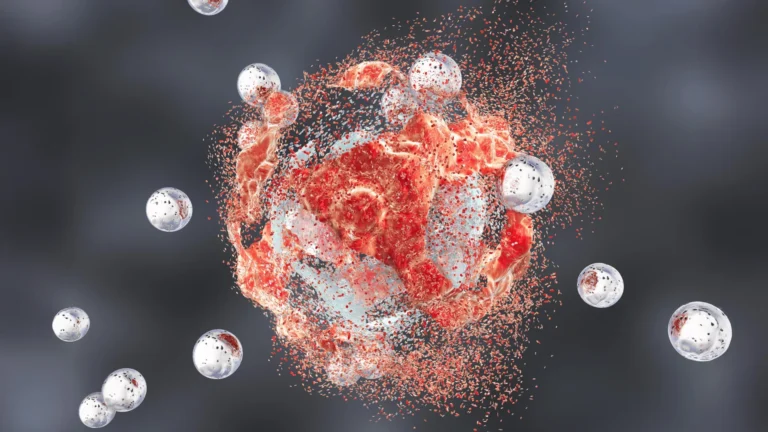









The history of medicine is punctuated by "what if" moments—those singular, audacious questions that, when pursued with rigor, fundamentally alter the human experience. In the field of cancer immunotherapy, where the goal is to harness the body’s own immune system to eradicate malignancy, the distance between a compelling laboratory theory and a life-saving clinical treatment is often measured in years, millions of dollars, and significant risk.
To bridge this "valley of death" between discovery and application, the Cancer Research Institute (CRI) has officially announced the recipients of its 2026 Clinic and Laboratory Integration Program (CLIP) and the Technology Impact Award. These grants represent more than just financial support; they serve as a strategic infusion of capital into the most promising, high-risk, high-reward research currently unfolding in the global oncology landscape.
The Catalyst for Innovation: Why Funding Boldness Matters
In contemporary cancer research, funding agencies often prioritize incremental progress—studies that offer a predictable, low-risk path to publication. However, the most profound breakthroughs, such as the development of checkpoint inhibitors or CAR-T cell therapy, required scientists to venture into uncharted territory.
The CRI’s dual-track funding approach is designed specifically to counteract the stagnation that can occur when research is tethered too tightly to conventional wisdom. By providing seed funding and sustained investment, the Institute allows scientists to "fail forward," refining their hypotheses until they reach a point of clinical readiness. This is the cornerstone of the CRI’s mission: to cultivate an ecosystem where bold, unconventional ideas are not just tolerated, but actively nurtured.
Chronology of Progress: From Concept to Clinical Reality
The evolution of cancer immunotherapy has been a long-term project of the Cancer Research Institute, which has spent decades identifying the bottlenecks in immune-oncology.
- 1953–1990s: Early foundational research focused on understanding the basic biology of immune cells and their interaction with tumor microenvironments.
- 2000s: The emergence of targeted therapies and early checkpoint blockade research necessitated a new way to fund "translational" science—work that explicitly moves from the lab bench to the patient bedside.
- 2010s: The establishment of the CLIP program formalized the integration of clinical data back into lab research, creating a feedback loop that has become the gold standard for immunotherapy development.
- 2026: The current cohort of awardees represents the next generation of this integration. These projects are not merely testing new drugs; they are developing the infrastructure for the next decade of precision medicine.
Supporting Data: The Impact of Translational Investment
The necessity of programs like CLIP is supported by clear clinical metrics. Historically, only a small fraction of laboratory discoveries make it into Phase I clinical trials. When they do, the failure rate is high. However, research supported by organizations that prioritize "bedside-to-bench" integration—like the CRI—consistently shows higher rates of successful biomarker identification and patient stratification.
Data indicates that when investigators are given the latitude to use novel computational tools and advanced imaging systems—the very things supported by the Technology Impact Awards—the timeline for clinical trial recruitment can be optimized. By identifying which patients are most likely to respond to a specific immunotherapy before a trial begins, researchers can reduce the noise in clinical data, saving years of development time and millions of dollars in inefficient trial designs.
Official Perspectives: Shaping the Future of Oncology
For CRI CEO Alicia Zhou, PhD, the 2026 awards are a testament to the necessity of intellectual fearlessness.
"Progress in cancer immunotherapy depends on scientists who are willing to challenge conventional thinking and pursue bold new approaches," Dr. Zhou stated during the announcement. "These projects reflect the kind of innovative, high-impact science that has the potential to improve outcomes for patients and shape the future of cancer treatment. We aren’t looking for safe bets; we are looking for the next paradigm shift."
Dr. Zhou’s sentiment highlights a shift in the oncology community. The "one-size-fits-all" approach to cancer treatment is rapidly becoming a relic of the past. The current trend is toward hyper-personalization, where the immune system is "reprogrammed" or "boosted" based on the unique genetic signature of both the patient and the tumor. The CLIP investigators are the architects of this new, personalized reality.
The 2026 CLIP Projects: Connecting Lab to Clinic
The Clinic and Laboratory Integration Program (CLIP) is fundamentally about communication. It requires researchers to operate in a dual capacity: they must be scientists who can interpret complex genetic data in a laboratory setting, and they must be clinicians who understand the daily realities of patient care.
The 2026 CLIP projects focus on several key areas, including:
- Overcoming Immune Evasion: Developing methods to strip away the "cloaking" mechanisms that tumors use to hide from T-cells.
- Enhancing Persistence: Investigating why some immune responses fade over time and engineering cells to remain active for longer durations.
- Cross-Disciplinary Integration: Using clinical trial samples to generate "molecular maps" that help other researchers understand why certain treatments fail in specific patient populations.
By focusing on these areas, the CLIP awardees are creating a blueprint for the next generation of combination therapies, where multiple agents work in concert to dismantle a tumor’s defenses.
The Technology Impact Awards: New Tools for an Invisible Enemy
While CLIP focuses on the application of science, the Technology Impact Awards focus on the apparatus of science. Often, the reason a researcher cannot solve a problem is not a lack of intelligence, but a lack of visibility. We cannot treat what we cannot see or measure.
The 2026 Technology Impact Awardees are working on:
- Advanced Imaging Platforms: Technologies that allow researchers to watch, in real-time, how immune cells infiltrate a solid tumor.
- Computational Systems: AI-driven models that can predict how a patient’s immune system will react to a specific therapy, effectively "testing" the treatment in a virtual space before it ever reaches the patient.
- Novel Biological Tools: Synthetic proteins and sensors that can "flag" hidden cancer cells that are currently invisible to the human eye and standard imaging equipment.
These technologies are the "force multipliers" of the cancer research world. A single, well-designed imaging platform can be used by hundreds of labs globally, effectively accelerating the pace of discovery across the entire field of oncology.
Implications: A Future Immune to Cancer?
The long-term implication of these investments is a shift toward a world where cancer is no longer a terminal diagnosis, but a manageable—or even curable—chronic condition. By funding these projects, the Cancer Research Institute is effectively shortening the distance between the "bold idea" and the "standard of care."
As these 2026 awardees begin their work, the broader scientific community will be watching closely. The success of these projects will likely dictate the direction of pharmaceutical investment and clinical trial focus for the remainder of the decade.
For the patient, the impact is more immediate. It means that treatments will become increasingly precise. It means fewer side effects, as therapies become better at distinguishing between healthy tissue and malignant cells. And, perhaps most importantly, it means that the "unanswerable questions" of today are being dismantled, piece by piece, by the brightest minds in the field.
Conclusion: The Path Forward
The 2026 CLIP and Technology Impact Awards serve as a vital reminder that scientific progress is not an inevitable, automated process. It is a human endeavor that requires passion, sustained investment, and the courage to explore the unknown.
As we look toward the future, the work being done by these researchers offers more than just academic data; it offers hope. It suggests a future where our immune systems—our most powerful biological defense—are fully empowered to do what they were evolved to do: protect us. Through the continued support of the Cancer Research Institute, that future is not just a possibility; it is a developing reality, one breakthrough at a time.
For those interested in the ongoing progress of these projects, the Cancer Research Institute will provide regular updates on their website, tracking the evolution of these investigations as they move from the laboratory bench toward the clinic, and ultimately, toward the patients who need them most.