










The modern bedroom, once a sanctuary of rest and restoration, is increasingly under siege by a silent, invisible antagonist: the rising global thermometer. As climate change reshapes the planet’s weather patterns, the human body is finding it progressively difficult to perform one of its most essential biological functions—falling and staying asleep. Emerging research indicates that as nighttime temperatures climb, we are witnessing a systemic decline in sleep quality that threatens physical health, cognitive performance, and public safety on a global scale.
The Biological Barrier: Why Heat Disrupts Rest
To understand the crisis, one must first understand the biology of slumber. Sleep is not a passive state; it is a highly regulated physiological process that relies heavily on thermoregulation. Under normal conditions, the human body undergoes a rhythmic drop in core temperature to initiate the sleep cycle. This cooling process is a vital cue to the brain that it is time to shift from wakefulness to deep, restorative rest.
When the external environment—the air in your bedroom—remains persistently warm, this natural heat dissipation is sabotaged. The body struggles to shed excess warmth, leading to increased restlessness, frequent awakenings, and a reduction in the duration of deep, slow-wave sleep. Even if an individual manages to drift off, the quality of that sleep is often compromised by the struggle to maintain thermal equilibrium, leaving them groggy, irritable, and physically exhausted the following day.
A Chronology of the Sleep Deficit
The correlation between rising temperatures and sleep loss has been documented with increasing alarm over the last several decades.
- The 1970s Baseline: Researchers tracking historical data have noted that since the early 1970s, the amount of temperature-related sleep loss has at least doubled across nearly every city studied. This period marks the beginning of a steady, anthropogenic shift in climate patterns.
- The 2022 Milestone: A landmark study published in the journal One Earth analyzed over 7 million sleep records alongside local meteorological data. The findings were definitive: warmer nights directly correlate with reduced sleep duration. When nighttime temperatures exceeded 86°F (30°C), sleep duration dropped by approximately 14 minutes. Even moderate warmth—temperatures above 77°F (25°C)—significantly increased the probability of an individual failing to achieve the recommended seven hours of sleep.
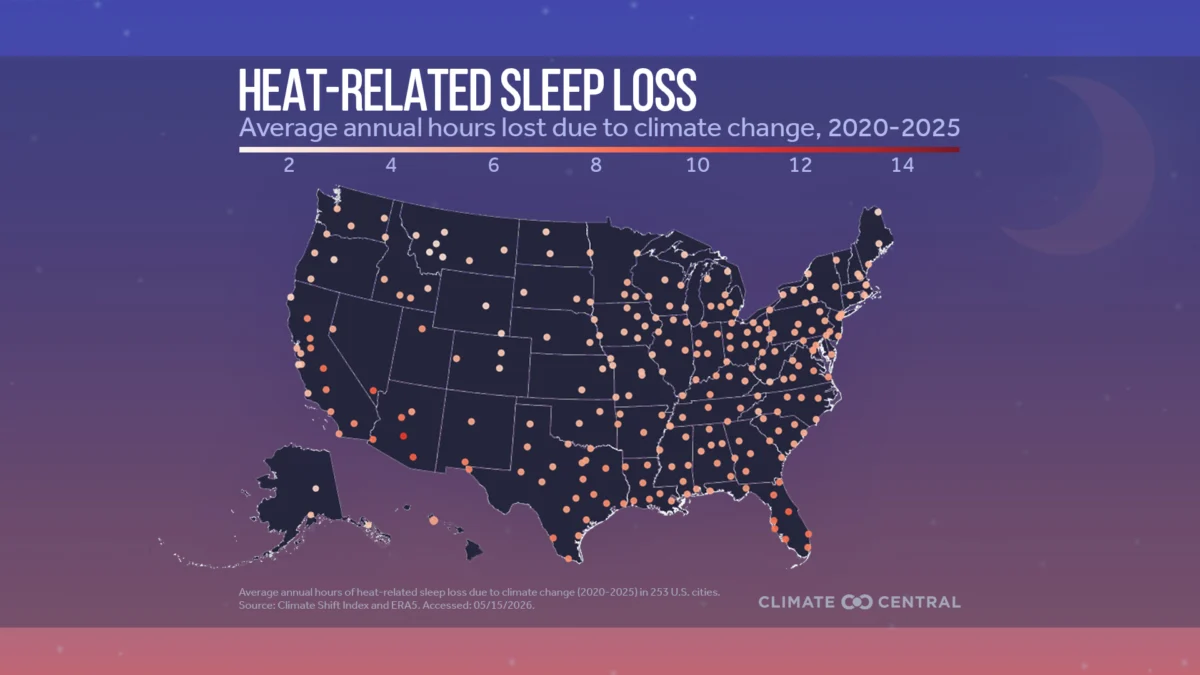
- The 2020–2025 Assessment: A recent analysis by Climate Central quantified the toll in human hours. The report estimated that global high nighttime temperatures stripped the average person of nearly 56 hours of sleep per year during this five-year window.
- The 2026 Heatwaves: The summer of 2026 provided a real-world snapshot of this trend. A YouGov poll conducted during a severe heatwave in the United Kingdom revealed that 65% of adults struggled to sleep, with nearly half of those reporting a loss of three or more hours of sleep per night.
Supporting Data: The Geography of Sleeplessness
The impact of climate-linked sleep loss is not distributed equally. It is a phenomenon dictated by infrastructure, geography, and socioeconomic status.
In the United States alone, the Climate Central analysis identified that residents in 253 cities lost an average of 36 hours of sleep annually due to excessive heat. The hardest-hit regions were those already prone to high temperatures, including Arizona, California, Florida, and Nevada, where residents faced a loss of seven to nine hours of sleep per year.
Globally, the crisis is even more pronounced in regions with limited access to modern cooling technology. Parts of the Middle East, southern India, Southeast Asia, and West Africa are reporting some of the highest losses in sleep duration. These areas are suffering from a "double-jeopardy" effect: the baseline climate is already hot, and the lack of robust, affordable climate control makes the rising temperatures during the night inescapable.
Furthermore, the data suggests a lack of biological adaptation. There is little evidence to suggest that humans are "getting used to" hotter nights. Instead, the physiological sensitivity to heat remains constant, implying that as long as nights continue to warm, our sleep health will continue to erode.
The Cognitive and Societal Implications
The consequences of losing even a few minutes of sleep per night are cumulative. While 14 minutes may seem negligible to the average person, the "sleep debt" incurred over months of hot weather manifests in profound ways.
A study published in PLOS Medicine focused on 44 young adults during a 2016 Boston heatwave. The findings were striking: students living in buildings without air conditioning displayed significantly lower scores on tests measuring attention, processing speed, and working memory. These cognitive deficits demonstrate that the impact of a hot night extends far beyond the bedroom. When the population is chronically underslept, productivity in the workplace drops, educational outcomes suffer, and public safety—particularly in fields requiring high vigilance—is compromised.

Moreover, the physical toll is significant. Sleep is when the body repairs tissue, regulates hormones, and consolidates memory. Chronic sleep deprivation linked to environmental heat has been associated with a weakened immune system, cardiovascular stress, and increased risk for metabolic disorders.
Addressing the Crisis: Official Perspectives and Solutions
Public health organizations and climate researchers are increasingly treating this issue as a critical public health emergency. The consensus among the medical community is that sleep health must be integrated into climate adaptation strategies.
The Role of Technology and Policy
Air conditioning is the most effective current defense against heat-related sleep loss. However, it is a double-edged sword. While it provides immediate relief, the increased energy demand required to run cooling units in hot climates can lead to higher greenhouse gas emissions, further fueling the cycle of climate change. Experts are now calling for urban planning initiatives that include:
- Green Infrastructure: Expanding urban tree canopies and green roofs to mitigate the "urban heat island" effect, which keeps cities significantly warmer at night than their rural counterparts.
- Cooling Resilience: Ensuring low-income housing is equipped with energy-efficient cooling technology.
- Public Cooling Centers: Establishing accessible, overnight cooling shelters for the most vulnerable populations during extreme heat events.
Individual Strategies for Thermal Comfort
While systemic changes are necessary, individuals can take proactive steps to reclaim their sleep environments:
- Passive Cooling: Utilize blackout curtains or heavy drapes to block sunlight during the day, keeping the bedroom cooler for the evening.
- Strategic Ventilation: If the air outside is cooler than the air inside, open windows at night. If the outside air remains hot, keep windows closed to maintain the cooler internal temperature.
- Bedding Choices: Opt for breathable, natural fibers like cotton or bamboo that wick moisture and allow for better airflow.
- Biological Hacks: A warm shower before bed can actually help the body shed heat more efficiently by dilating blood vessels, facilitating the body’s natural cooling process as you enter the bedroom.
The Path Forward: When to Seek Professional Help
It is vital to distinguish between a few restless nights and chronic sleep disorders. If heat-related sleep problems persist to the point that they interfere with daily function, work performance, or mental health, it is time to consult a medical professional.
Persistent insomnia, excessive daytime sleepiness, or sleep-related anxiety should not be ignored. AASM-accredited sleep centers offer comprehensive evaluations for those whose sleep has been chronically compromised. Whether through cognitive behavioral therapy for insomnia (CBT-I) or medical interventions, addressing sleep debt is a crucial component of maintaining overall health.
The Bottom Line: Protecting Our Rest
Climate change is not merely a political or environmental issue; it is a personal, physiological one. By destabilizing the temperature of our nights, it is directly attacking our ability to recover from the stresses of the day.
As we look to the future, the integration of climate-resilient architecture, the reduction of urban heat islands, and the adoption of healthier sleep hygiene practices will be essential. We must treat sleep not as a luxury, but as a biological necessity that requires protection in a warming world. Healthy sleep is the bedrock of a healthy life, and preserving it requires a collective commitment to both individual action and global environmental stewardship.
Medical review by Dionne Morgan, MBBS, FCCP.