










By Jonathan Gardner | September 14, 2026
The landscape of lung cancer treatment—long dominated by the singular, massive success of Merck & Co.’s Keytruda (pembrolizumab)—is facing a period of intense, high-stakes disruption. As the pharmaceutical industry pivots toward the next generation of immunotherapy, a new contender has emerged from a partnership between Summit Therapeutics and its Chinese partner, Akeso.
At the World Conference on Lung Cancer in South Korea, the companies unveiled the latest survival data from the Phase 3 “HARMONi-2” trial. The results not only met the high bar set by the medical community but exceeded expectations, suggesting that ivonescimab—a dual-acting “bispecific” antibody—may represent a significant clinical advancement over the current standard of care.
Main Facts: A Shift in the Oncology Paradigm
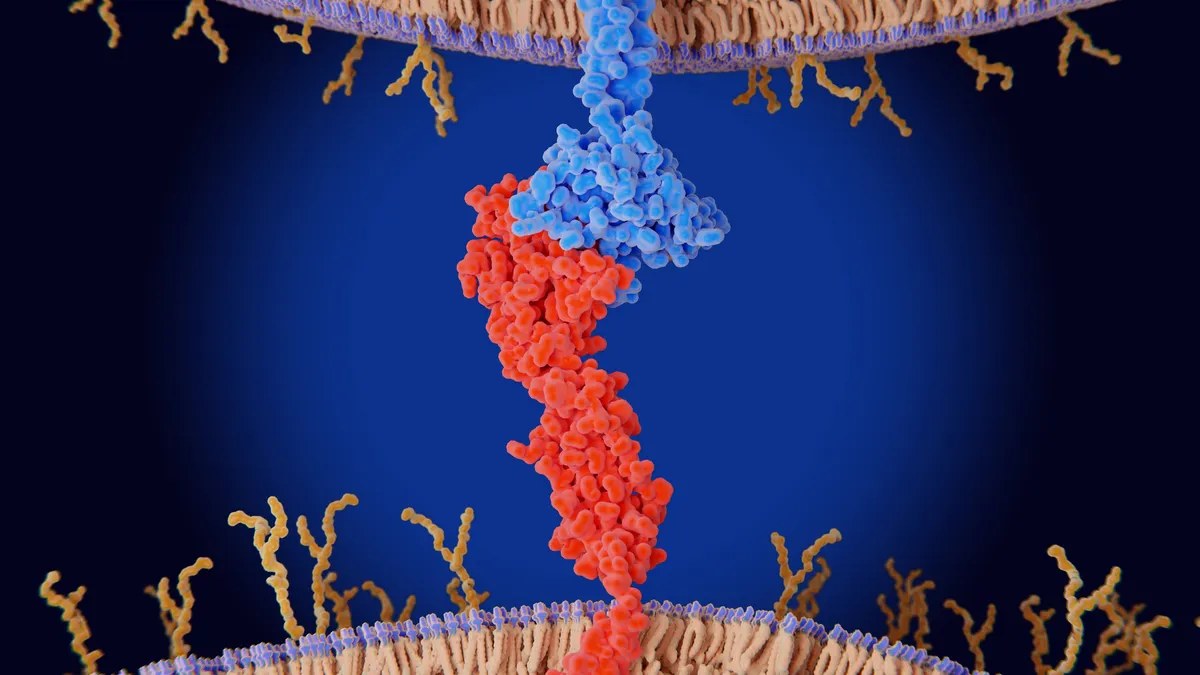
The HARMONi-2 trial represents a landmark moment in thoracic oncology. Ivonescimab is engineered to simultaneously target two pathways: PD-1, an immune checkpoint protein that cancer cells use to evade the body’s defenses, and VEGF, a protein that promotes the growth of new blood vessels that feed tumors. By hitting both targets in a single molecule, ivonescimab aims to “unlock” the immune system more effectively than drugs that target PD-1 alone.
The headline data from the study are striking: patients treated with ivonescimab achieved a median overall survival of 30.8 months, compared to 22.6 months for those receiving Keytruda. This eight-month improvement in median survival is a significant margin in advanced non-small cell lung cancer (NSCLC). Furthermore, the relative risk of death was reduced by 27% in the overall study population, providing a robust statistical foundation for the drug’s potential as a “backbone” therapy.
The Chronology of Development: From China to the Global Stage
The journey of ivonescimab to the global stage has been characterized by rapid development and, at times, healthy skepticism from Western markets.
- Early Development (2020–2023): Akeso, based in China, spearheaded the initial discovery and clinical testing of the drug. The company quickly recognized the potential of combining anti-PD-1 and anti-VEGF mechanisms, a strategy that had previously been tested through the combination of two separate drugs but never as a single, engineered bispecific molecule.
- The HARMONi-2 Milestone (2024–2025): As the trial progressed, it became one of the most closely watched studies in oncology. It was the first late-stage trial to signal that a bispecific therapy could outperform Keytruda in delaying disease progression.
- Regulatory Validation (May 2024): Ivonescimab secured its first major regulatory win in China, where it was approved for use in combination with chemotherapy for patients with EGFR-mutated NSCLC. This approval provided the proof-of-concept needed for Summit Therapeutics to accelerate its global expansion plans.
- The World Conference on Lung Cancer (September 2026): The presentation of mature overall survival data at this year’s conference marks the transition of ivonescimab from a regional success story to a potential global challenger to the multi-billion-dollar Keytruda franchise.
Supporting Data: Dissecting the Efficacy
The power of ivonescimab appears most pronounced in specific, high-need patient populations. The HARMONi-2 trial specifically examined patients based on their PD-L1 expression levels—the same biomarker used to determine eligibility for Keytruda monotherapy.
In the sub-group of patients with high levels of PD-L1 expression, the results were even more compelling than in the general trial population. In this group, ivonescimab reduced the relative risk of death by 42%. This is a critical finding because this specific patient cohort is the primary market for Keytruda as a single-agent therapy. If ivonescimab can consistently demonstrate superior survival outcomes in this group, the argument for keeping Keytruda as the sole standard-of-care becomes significantly weaker.
Analysts have been parsing these numbers with intensity. TD Cowen’s Tyler Van Buren highlighted that these data “not only validate ivonescimab’s earlier progression-free survival benefit, but also strengthen confidence that a PD-1/VEGF bispecific can outperform PD-1 monotherapy on the endpoint that matters most to physicians.”
Official Responses and Market Skepticism
Despite the optimism surrounding the HARMONi-2 data, the medical and investment communities remain divided. The skepticism is rooted in the history of drug development trials conducted primarily within China.

Historically, Western regulators and analysts have questioned whether clinical trials run in China can be directly extrapolated to global populations. Concerns center on differences in patient demographics, underlying disease biology, and existing standard-of-care practices.
Daina Graybosch of Leerink Partners has been a prominent voice of caution. While acknowledging the strength of the ivonescimab data, she has noted that the overall survival numbers must be viewed in the context of a rapidly evolving competitive landscape. Specifically, she pointed to data regarding "Sac-TMT," an antibody-drug conjugate (ADC) developed by Merck in collaboration with the Chinese biotech firm Kelun. That drug demonstrated a 45% reduction in the relative risk of death in similar populations.
“The HARMONI-2 data adds uncertainty on whether a ‘bio-better’ VEGF/PD-1 agent or a ‘bio-better’ chemo-ADC is more likely to inherit Keytruda’s massive revenues,” Graybosch wrote in a recent investor note. This sentiment underscores a broader trend: the industry is currently witnessing a “arms race” between bispecific antibodies and sophisticated antibody-drug conjugates.
Implications for the Future of Oncology
The implications of the ivonescimab data extend far beyond the balance sheets of Summit and Akeso. We are witnessing the beginning of the "post-Keytruda" era, where the industry is moving toward more complex, multi-targeted therapies.
1. The Death of Monotherapy?
For over a decade, PD-1/PD-L1 inhibitors have been the cornerstone of cancer care. However, the success of ivonescimab suggests that monotherapy may soon be considered insufficient. The “dual-action” mechanism—hitting both the immune checkpoint and the vascular supply—appears to be the new gold standard for efficacy.

2. The Global Clinical Trial Debate
The success of the HARMONi-2 trial will likely force regulators like the U.S. FDA to continue refining how they evaluate data generated from non-Western clinical trials. If ivonescimab achieves approval in the U.S. and Europe based on these data, it will signal a new era of globalized drug development where high-quality clinical evidence from any region is weighted equally.
3. Physician Decision-Making
For oncologists, the introduction of ivonescimab presents a complex choice. If the drug continues to show superior survival, physicians will be pressured to switch patients to the new therapy. However, the sheer size of the data set for Keytruda—compiled over years of real-world use—provides a level of clinical comfort that a newer drug will take time to replicate.
4. Financial Stakes
Keytruda is arguably the most successful drug in the history of the pharmaceutical industry, generating tens of billions in annual revenue for Merck. The entry of a direct competitor that offers a clear survival advantage in a head-to-head trial is a direct threat to that revenue stream. As Merck and other legacy players work to protect their market share with their own next-generation compounds (like the aforementioned Sac-TMT), the competitive pressure will likely lead to lower prices and better access for patients—or, conversely, a market fragmented by competing "gold standards."
Conclusion
The data presented at the World Conference on Lung Cancer in 2026 has provided the clearest evidence yet that the era of simple PD-1 inhibition is coming to a close. Whether ivonescimab becomes the definitive successor to Keytruda remains to be seen, as it faces stiff competition from emerging ADCs and the weight of established clinical habits.
However, one thing is certain: the battle for the future of lung cancer care is no longer being fought over whether to use immunotherapy, but rather, which immunotherapy provides the most comprehensive survival benefit. For Summit Therapeutics and Akeso, the path forward involves continuing to bridge the gap between their clinical successes in Asia and the rigorous expectations of the global oncology market. The medical community will be watching the next round of trials with bated breath, as the results will define the standard of care for the next generation of cancer patients.