










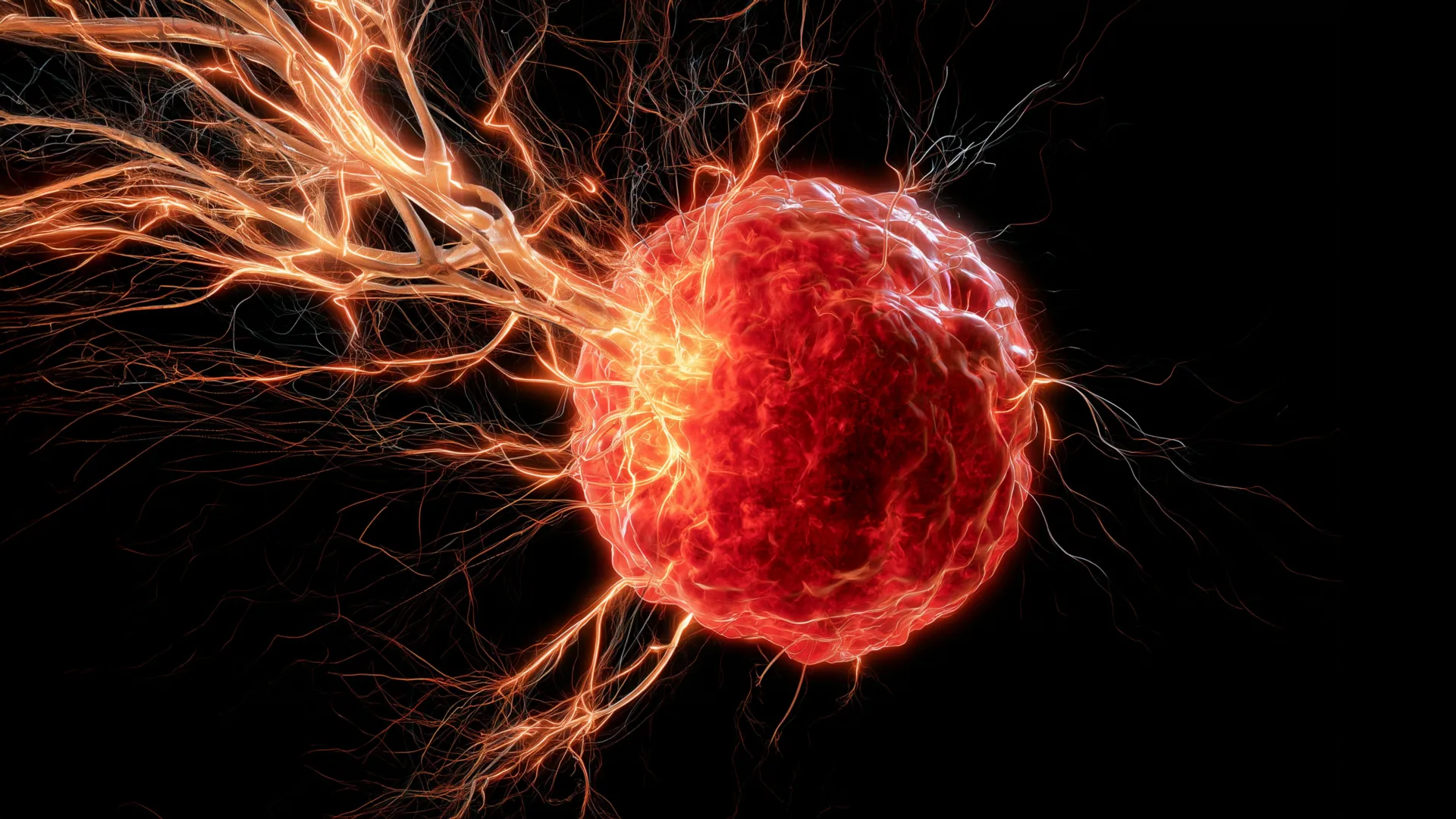
In the complex biological battlefield of oncology, the focus has traditionally been on the direct confrontation: chemotherapy, radiation, and surgical excision of malignant cells. However, groundbreaking research from the University of Oklahoma (OU) has illuminated a darker, more sophisticated layer of cancer’s survival strategy. Scientists have discovered that triple-negative breast cancer (TNBC)—one of the most aggressive and treatment-resistant forms of the disease—actively manipulates the body’s own immune system to "recruit" nerves into the tumor, effectively building a biological infrastructure that fuels its own expansion.
This discovery, published in the journal Cell Death & Differentiation, suggests that tumors are not merely passive clusters of rogue cells. Instead, they act as active architects, signaling to the immune system to facilitate the development of a neural network that protects the cancer from the body’s natural defenses.
The Neural Infrastructure of Tumors: A Chronology of Discovery
For decades, clinicians and researchers have noted a curious phenomenon: solid tumors are frequently laced with dense networks of nerves. While the presence of these nerves was long documented, their origin and function remained a subject of intense academic debate. Did the nerves simply get caught in the tumor’s expansion, or was the tumor actively inviting them in?
The recent study led by Dr. Maureen Cox, an assistant professor in the Department of Microbiology and Immunology at the OU College of Medicine and a member of the OU Health Stephenson Cancer Center, provides a definitive answer to this long-standing mystery.
The Mechanism of Recruitment
The research team identified that TNBC tumors utilize macrophages—specialized immune cells tasked with clearing debris and fighting infections—as their unwitting accomplices. Under normal physiological conditions, macrophages are the body’s diligent custodians. However, within the microenvironment of a triple-negative breast tumor, these cells are reprogrammed.
The study found that these tumor-associated macrophages begin secreting high levels of brain-derived neurotrophic factor (BDNF). While BDNF is a critical protein for the growth and survival of healthy nerve cells in the brain, its presence within a breast tumor triggers a pathological response: nearby nerves are signaled to sprout, migrate, and infiltrate the cancerous tissue.
From Observation to Intervention
Once the research team understood this signaling pathway, the project shifted toward experimental validation. Using mouse models, the researchers introduced a drug designed to block BDNF signaling. The results were striking: by interrupting the communication line between the macrophages and the nerves, the researchers successfully prevented the neural infiltration. Consequently, the tumors showed a marked decrease in growth rate, providing the first tangible proof that this "nerve-trapping" mechanism is a critical driver of malignancy.
Supporting Data: Why This Matters for Patients
The implications of this study are not confined to laboratory mice. To determine the clinical relevance of their findings, Dr. Cox and her team analyzed longitudinal data from patients diagnosed with triple-negative breast cancer.
The analysis revealed a consistent, troubling pattern: patients whose tumors exhibited high concentrations of macrophages and elevated levels of BDNF consistently faced poorer survival outcomes. This correlation suggests that the "nerve-recruitment" process is not a biological quirk, but a significant factor in the clinical progression of the disease.
Furthermore, the data underscores why TNBC is so notoriously difficult to treat. Because the nerves appear to suppress the immune system’s ability to recognize and attack the tumor, patients with high levels of neural infiltration may be inherently resistant to standard immunotherapies. By effectively "hiding" behind a veil of nerve-induced immunosuppression, the cancer manages to evade the very cells designed to destroy it.
Expert Perspectives: Dr. Maureen Cox on Shifting the Paradigm
The research has garnered significant attention for its potential to move beyond the traditional "slash and burn" methods of cancer treatment. Dr. Maureen Cox emphasizes that the goal is to shift the therapeutic focus from merely attacking cancer cells to dismantling the infrastructure that keeps them alive.
"Macrophages are the critical source for drawing nerves into the tumor," Dr. Cox explained. "Although macrophages typically play a positive role in the body, they are facilitating a negative function in this scenario of breast cancer."
Regarding the clinical application of her findings, Dr. Cox expressed cautious optimism about the use of existing pharmaceuticals. "It looks really promising that we can use this drug, which is already on the market, to target BDNF," she noted. "We believe that the nerves are immunosuppressive, so if we can stop the nerves from growing in the first place, maybe we can boost the immune response to help fight the cancer."
This approach—repurposing existing drugs to disrupt the tumor microenvironment—could significantly accelerate the timeline for bringing these findings to clinical trials, potentially offering new hope to patients who have exhausted traditional treatment options.
The Broader Implications: Metastasis and Future Directions
The discovery of this neural-immune connection opens several new avenues for oncological research. The scientific community is currently investigating two primary theories regarding why tumors prioritize nerve recruitment:
1. The Nutrient Pipeline
There is growing evidence that nerves may stimulate angiogenesis—the formation of new blood vessels. By recruiting nerves, the tumor may be creating a sophisticated delivery system for oxygen and nutrients, essentially "wiring" itself into the body’s circulatory and nervous systems to ensure a steady supply of energy for unchecked growth.
2. The Highway to Metastasis
Perhaps more alarmingly, preliminary research suggests that nerves may act as a physical "highway" for cancer cells. As tumor cells detach from the primary site, they may use these recruited nerve fibers as conduits to migrate, or metastasize, to distant organs. If true, blocking nerve recruitment could be a vital strategy in preventing the spread of cancer, which remains the leading cause of mortality in breast cancer patients.
Expanding the Scope
The research team is not stopping with breast cancer. Given the aggressive nature of high-grade ovarian cancer, Dr. Cox and her colleagues are preparing to test whether this same intervention—blocking the macrophage-BDNF-nerve axis—can yield similar results in ovarian oncology. If the mechanism is found to be universal among solid tumors, it could represent a fundamental shift in how we understand the "ecosystem" of cancer.
Toward a Future of Immune Rejuvenation
The ultimate goal of this research is as ambitious as it is clear: to turn the body’s anti-tumor immunity back on. By identifying the mechanisms—like BDNF signaling—that tumors use to "blind" the immune system, scientists are learning how to restore the body’s natural surveillance capabilities.
"Ultimately, we want to turn the anti-tumor immunity back on in cancer patients so their own immune systems can reject the tumors," Dr. Cox stated.
This work serves as a powerful reminder that cancer is a master of mimicry and manipulation. By co-opting the body’s own healing mechanisms—specifically the nerve-repair pathways mediated by macrophages—tumors have historically found ways to survive and thrive. However, by shining a light on these hidden biological pathways, researchers at the University of Oklahoma are providing the blueprints for a new generation of targeted therapies.
Acknowledgments and Research Support
This critical research was made possible through the support of several key institutions. Funding was provided by the National Institute of General Medical Sciences (NIGMS) of the NIH (award numbers P20GM103447 and P20GM103639). Additional support was provided by Oklahoma’s Tobacco Settlement Endowment Trust (TSET), a primary funder of the Stephenson Cancer Center and the TSET Health Promotion Research Center at the University of Oklahoma. Further infrastructure support was provided by the Oklahoma Shared Clinical and Translational Resources through an Institutional Development Award from the NIGMS (grant no. U54GM104938).
As the scientific community digests these findings, the path forward is becoming increasingly clear: the future of cancer treatment lies in understanding the complex dialogue between the tumor and its host. By silencing the signals that invite the cancer to grow, we may finally be able to silence the disease itself.