






For many adults over 65, the simple act of walking—once an unconscious, fluid motion—begins to change. It often starts subtly: a slight hesitation at the curb, a preference for shorter strides, or the feeling that a walk around the neighborhood is more exhausting than it used to be. While treadmills are excellent tools for cardiovascular health, they are not the only way to maintain mobility. In fact, according to Certified Strength and Conditioning Specialists (CSCS), building the foundational strength required for a stable, powerful gait requires targeted, functional movement.
By focusing on specific standing exercises that mimic the mechanics of walking, older adults can restore their balance, improve their stride, and regain the confidence to navigate the world independently.
The Mechanics of Aging and Mobility: Why Strength Matters
As we age, our bodies undergo physiological changes that directly impact our gait. Research published in journals such as The Journals of Gerontology highlights that even small declines in muscle mass, particularly in the lower body and core, can shift how we distribute weight during a stride. This often leads to a "shuffling" pattern, which increases the risk of trips and falls.
"Walking is a complex, full-body coordination task," says Jarrod Nobbe, MA, CSCS. "When we lose strength in the hip flexors or the outer glutes, our body compensates. We might lean too far forward or shorten our step to feel more secure. By training the muscles involved in the gait cycle while in a standing position, we are essentially ‘reprogramming’ the body to move with efficiency again."
The Chronology of Decline
- Early Stage: Mild fatigue during long walks; a slight reduction in step length.
- Intermediate Stage: Increased reliance on handrails; visible changes in posture (forward lean).
- Advanced Stage: Fear of uneven surfaces; increased "shuffling" to maintain a center of gravity, which often leads to decreased physical activity, creating a cycle of further muscle atrophy.
Intervening with strength training during the early and intermediate stages can effectively break this cycle, restoring not just the ability to walk, but the quality of the movement.
5 Standing Exercises to Restore Walking Strength
These exercises are designed to be "functional," meaning they train the body to perform better in real-world scenarios. They require no expensive machinery—only a sturdy chair, a wall, or a counter for balance.
1. The Standing March: Cultivating Knee Lift
The "shuffling" gait is often a result of weak hip flexors. When the hip flexors are unable to lift the leg properly, the foot drags.
- The Science: Strengthening the hip flexors and core allows for a more pronounced "swing phase" in your gait, which is essential for clearing obstacles like curbs or uneven pavement.
- How to Execute: Stand tall with your feet hip-width apart. Hold onto a stable counter. Slowly lift one knee toward your chest until your thigh is parallel to the ground. Hold for a second, then lower with control. Alternate sides.
- Targeted Muscles: Hip flexors, quadriceps, glutes, and deep core.
- Recommendation: 2–3 sets of 8–12 reps per side.
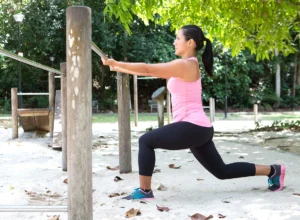
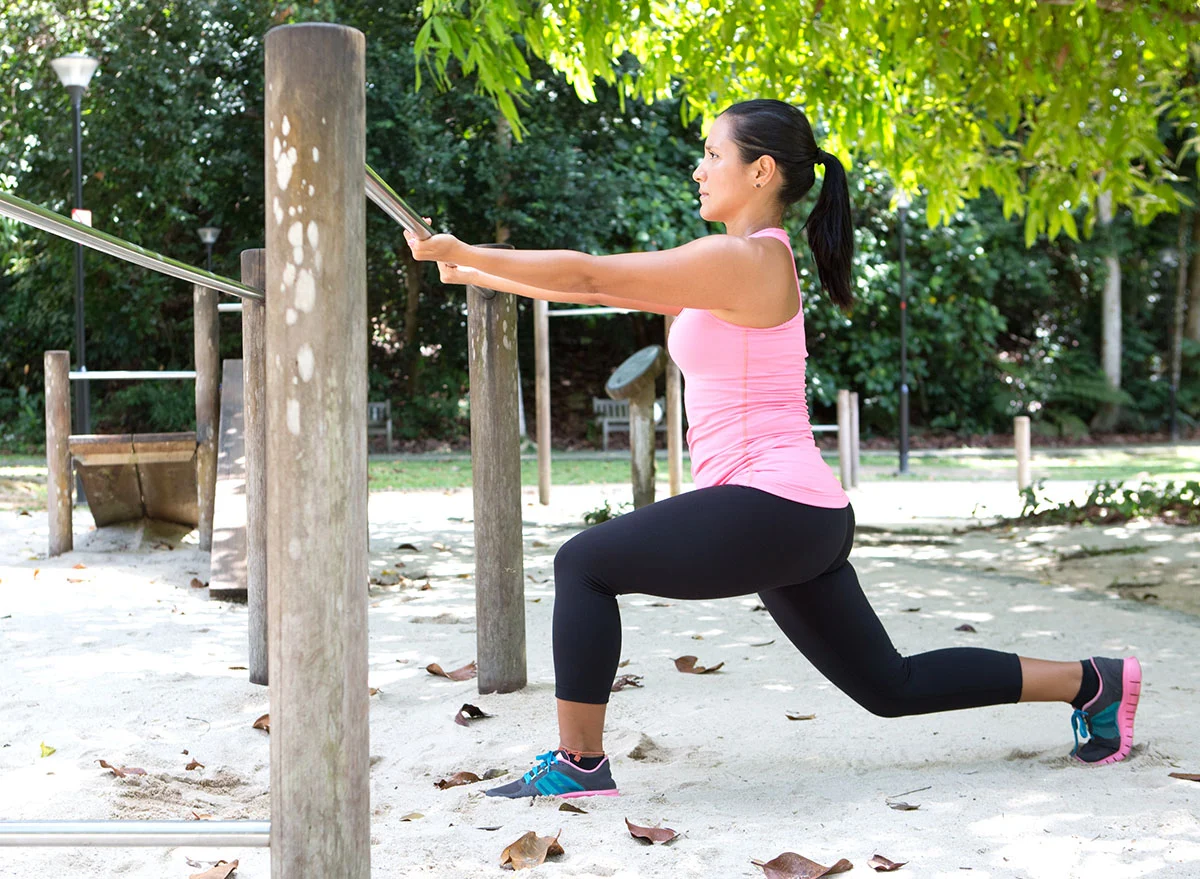
2. Supported Reverse Lunge: Building Power and Stability
The reverse lunge is superior to the forward lunge for older adults because it places less sheer force on the knee while emphasizing the glutes and hamstrings.
- The Science: Walking is effectively a series of single-leg movements. This exercise trains the quads and glutes to absorb weight and push off, simulating the propulsion needed to walk up stairs or tackle hills.
- How to Execute: Stand facing a counter or wall for support. Take a controlled step backward with one foot, lowering your back knee toward the floor. Keep your front shin vertical. Use your front heel to drive yourself back to the starting position.
- Targeted Muscles: Quads, glutes, hamstrings, and calves.
- Recommendation: 2–3 sets of 6–10 reps per side.
3. Standing Calf Raise: The Final Push
The calf muscles are the unsung heroes of the gait cycle. They provide the "push-off" power that propels you forward into your next step.

- The Science: Weak ankles and calves lead to a flat-footed, heavy walk. Strengthening these muscles increases the "spring" in your step and stabilizes the lower leg, reducing the risk of ankle sprains.
- How to Execute: Stand tall, holding a support. Rise onto the balls of your feet, lifting your heels as high as possible. Pause at the top, then lower your heels slowly. Avoid bouncing; the eccentric (lowering) phase is where much of the strengthening happens.
- Targeted Muscles: Gastrocnemius, soleus, and the intrinsic muscles of the foot.
- Recommendation: 2–3 sets of 10–15 reps.
4. Mini-Band Lateral Walk: Pelvic Stability
Many people experience side-to-side "wobble" while walking. This is often due to weakness in the gluteus medius, a muscle that stabilizes the pelvis.
- The Science: When you lift one leg to take a step, the gluteus medius on the standing leg must fire to keep your pelvis level. If it’s weak, your hip drops, leading to an unstable, waddling gait.
- How to Execute: Place a resistance band around your knees or ankles. Stand with feet hip-width apart, knees slightly bent. Take a small, controlled step to the side, then bring the other foot to meet it. Keep tension on the band throughout.
- Targeted Muscles: Outer glutes (gluteus medius), hip stabilizers, and core.
- Recommendation: 2–3 sets of 5–8 steps in each direction.
5. Heel-to-Toe Walk: Precision and Balance
This is a classic physical therapy drill for a reason. By narrowing your base of support, you force your brain and body to coordinate balance and placement.
- The Science: This exercise builds proprioception—your body’s ability to sense its position in space. By practicing a "tightrope" walk near a wall, you improve your ability to place your feet accurately, which is vital for navigating crowded areas or narrow paths.
- How to Execute: Stand near a wall. Place one foot directly in front of the other, so the heel of the front foot touches the toes of the back foot. Focus on a point in front of you. Take slow, deliberate steps.
- Targeted Muscles: Calves, ankles, core, and glute stabilizers.
- Recommendation: 2–3 rounds of 8–12 steps.
Implications for Long-Term Health
The decision to incorporate these standing moves into a weekly routine has significant implications for long-term health. According to recent data from the National Institute on Aging, muscle-strengthening activities are just as critical as aerobic exercise for maintaining functional independence.
The "Use It or Lose It" Reality
When individuals stop challenging their balance and strength, the neural pathways that control these movements begin to diminish. By practicing these five moves 2–4 days per week, older adults aren’t just building muscle; they are maintaining the "neurological map" required for confident movement.
Expert Perspective: Consistency Over Intensity
Jarrod Nobbe emphasizes that the goal is not to train like an athlete, but to train for life. "You don’t need to be in the gym for hours," Nobbe explains. "Consistency is the primary driver of success. If you can perform these movements while you’re waiting for the coffee to brew or during a commercial break, you are building a reservoir of strength that will pay dividends for years to come."
Conclusion: Starting Your Journey
Rebuilding walking strength after 65 is a gradual process. It begins with the acknowledgment that movement is a skill that must be maintained. By integrating these standing exercises—Standing Marches, Supported Reverse Lunges, Calf Raises, Lateral Walks, and Heel-to-Toe walks—you are providing your body with the stability and power it needs to remain active.
Safety First: Before starting any new exercise program, consult with your primary care physician, especially if you have a history of balance issues or orthopedic injuries. Always utilize the support of a wall or sturdy chair until you feel fully confident in your balance.
The goal is not to reach perfection, but to ensure that every step you take is a steady, confident, and powerful one. Whether you are walking through the park, shopping for groceries, or simply navigating your home, these movements will ensure that your strength keeps pace with your life.
References & Further Reading
- National Institute on Aging: "Physical Activity and Older Adults."
- Journal of Gerontology: "The Role of Lower Limb Power in Mobility After 65."
- PMC10643563: "The Impact of Functional Resistance Training on Gait Stability."
- PMC3940510: "Age-Related Changes in Human Walking Mechanics."