










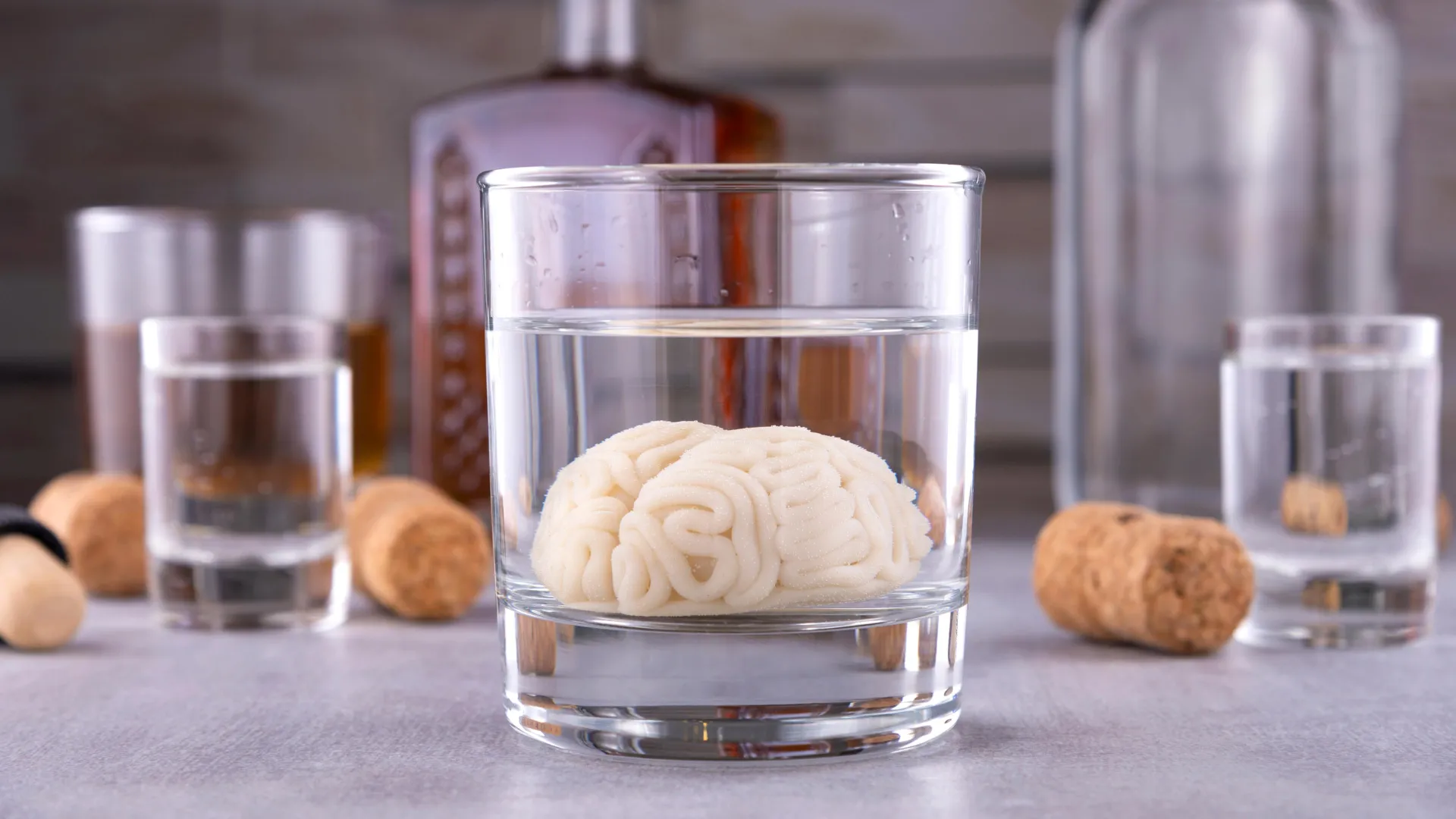
For millions of Americans, the decision to stop drinking is framed as a straightforward path to recovery. Health campaigns like "Dry January" tout the immediate physiological benefits of sobriety—improved sleep, better liver function, and mental clarity. However, addiction researchers have long suspected that the biological reality of abstinence is far more complex. New, groundbreaking research suggests that the very act of abstaining from alcohol may, in some individuals, trigger neurobiological changes that paradoxically heighten the risk of relapse.
This revelation challenges the traditional clinical reliance on total abstinence as the primary goal of addiction recovery. By examining the brain’s reaction to forced sobriety, scientists are beginning to uncover a mechanism that turns the brain against itself, creating a biological "itch" that makes returning to alcohol not just a behavioral lapse, but a physiological imperative.
The Science of Aversion-Resistance: A New Paradigm
To investigate why recovery is so often interrupted by relapse, researchers utilized a mouse model to simulate the human experience of long-term alcohol consumption followed by a period of forced abstinence. The study focused on a phenomenon known as "aversion-resistant alcohol intake."
In the experiment, mice were given long-term voluntary access to alcohol. Following this, they were subjected to a period of forced abstinence. When the alcohol was reintroduced, it was spiked with quinine—a substance that makes liquids taste intensely bitter. Typically, mice will avoid bitter substances. However, a significant subset of the abstinent mice displayed a compulsive behavior: they continued to consume the alcohol despite the repulsive taste.
More alarmingly, these mice drank significantly larger quantities of the bitter alcohol than those who had not experienced a period of forced abstinence. This suggests that the physiological state of withdrawal or post-abstinence alters the brain’s reward-processing circuitry, overriding the natural survival instinct to avoid noxious stimuli in favor of seeking out the addictive substance.
The BNST: The Brain’s "Relapse Switch"
Central to these findings is a small but critical region of the brain known as the bed nucleus of the stria terminalis (BNST). Long implicated in the regulation of anxiety, stress, and fear, the BNST is now emerging as a focal point for understanding the neurobiology of alcohol use disorder (AUD).
By monitoring cellular activity in the BNST, researchers observed a direct correlation between this brain region’s firing patterns and the mice’s compulsive drinking behaviors. When abstinent mice were returned to the environment where alcohol was previously available, they began attempting to drink from the spout—even when it contained only plain water. This "seeking behavior" was accompanied by spikes in BNST activity.
Notably, those mice that had developed the most intense cravings for the bitter, alcohol-laced solution showed more than double the activity in the BNST compared to their counterparts who had not undergone forced abstinence. Perhaps most significantly, this hyper-activity was detectable before the mice were even given access to the alcohol, suggesting that the BNST functions as a predictive marker for impending relapse.
Chronology of a Public Health Crisis
The scale of the alcohol epidemic in the United States has reached a critical juncture, necessitating a reevaluation of how we categorize and treat substance use disorders.
- 1999–Present: Over the past two and a half decades, the number of individuals diagnosed with alcohol use disorder in the U.S. has effectively doubled.
- 2022–2024: Alcohol-related mortality rates continued to climb, with 2024 data indicating that deaths associated with alcohol use were 4.5 times higher than those attributed to opioids.
- Late 2025: Research efforts, including the study of BNST activity, gained momentum as clinicians noted the failure of traditional abstinence-only models to curb the rising tide of addiction.
- Early 2026: Peer-reviewed publications in journals such as Neuron and Molecular Psychiatry began detailing the link between BNST hyperactivity and aversion-resistant intake in mammalian models, providing a concrete neurobiological basis for what clinicians have observed for years.
Supporting Data: A Nation in the Grip of AUD
The statistics regarding alcohol in the United States are staggering, yet the public remains largely under-informed about the risks. Over 80% of Americans aged 12 and older will consume alcohol at some point in their lives, and approximately 10% of that population—nearly 30 million people—will develop an alcohol use disorder.
Despite the prevalence of the condition, our diagnostic and treatment capabilities remain fundamentally limited. While the Food and Drug Administration (FDA) has approved various medications for AUD, the high rate of recidivism suggests that these treatments are not addressing the root neurological drivers of the disease. The disconnect between clinical intent and patient outcomes is rooted in our inability to identify "at-risk" individuals before they return to harmful patterns.
Official Responses and Clinical Implications
The medical community has historically relied on "harm reduction" as a pillar of opioid addiction treatment, yet this approach has been slower to gain traction in the context of alcohol. The new research on the BNST could change that.
If human trials confirm that the BNST acts as a biological "canary in the coal mine," it could lead to the development of a screening tool to identify patients who are at a higher risk of relapse during early abstinence. By identifying these individuals, clinicians could shift from a one-size-fits-all approach to a personalized medicine model—potentially utilizing more aggressive interventions or pharmacological support for those whose brain activity suggests a high vulnerability to relapse.
The Path Forward: What Lies Ahead
While the current findings are promising, they also illuminate the vast gaps in our understanding. The specific mechanisms driving the surge in BNST activity remain elusive. Researchers are currently working to identify which distinct populations of brain cells within the BNST are responsible for encoding this "relapse signal." If these cells can be mapped, they may serve as specific targets for future therapies, potentially allowing scientists to "dampen" the activity that drives compulsive drinking.
The next phase of this research is already underway. Dr. Jennifer Blackford and her team are currently investigating BNST activity in humans struggling with AUD who are in the early stages of abstinence. Should their findings mirror those observed in mice, it would represent a monumental shift in addiction science.
Bridging the Gap Between Neuroscience and Recovery
The ultimate goal is to translate these laboratory discoveries into clinical practice. If we can successfully use brain imaging or other biomarkers to screen for BNST hyper-activity, we could provide patients with a "biological weather report." Knowing that their brain is currently in a high-vulnerability state could empower patients to seek additional support, adjust their medication, or alter their environmental triggers before a relapse occurs.
This transition from reactive to proactive treatment is essential. We are currently treating a chronic, life-threatening neurological condition with social and behavioral tools alone. By incorporating the emerging science of the BNST and the biology of the abstinent brain, we can begin to offer a more nuanced, compassionate, and effective path to recovery.
As the public continues to grapple with the normalization of alcohol in social settings, these scientific insights serve as a necessary, if sobering, reminder: addiction is not a failure of willpower, but a complex challenge of the brain. Understanding the biological underpinnings of why the brain struggles to remain sober is the first step toward reclaiming lives from the cycle of dependency.